Author Archives: hisdesertrose

The Flipside

Standard

This past fall I posted a blog entitled, “The Truth About Fairy-tales” in which I wrote about the Fairy-tale Heart of God.  I mentioned the wonderful way that He created men and women to find relationship (friendship, romance, etc.) with each other.  This is really a continuation of those ideas.  Through some recent goings-on in my life, the Lord has been showing me, very gently, my own inherent need for relationship – and the needs of others for the same thing.

When I use the term “relationship,” I am talking about all kinds of relationship.  We need romance as well as friendship.  We need to care for others and also be cared for.  We need light-hearted fun as well as wise counsel.  As human beings who bear the image of our Creator, part of our design is that we both need and crave relationships, for they are the sweet intimacy in which we share our hearts and lives with the people we are closest to.  And do you know that both the needing and the craving for relationship are good and healthy?  It is only how we choose to meet those inherent longings that can lead us to dark places and down paths we never intended to walk.

Do you feel fragile, ready to shatter at the slightest pressure?

Do you feel fragile, ready to shatter at the slightest pressure?

Just like everything else in creation, relationships have been tainted by the ugliness of sin.  Relationships often show signs of sin’s brokenness because they are the product of imperfect people.  Abuse, manipulation, deceit, neglect, betrayal of trust – these are most hurtful when they are perpetrated by the people we love, the people who should take care of us.  When we are hurt in relationships, we begin to shield ourselves, walking wounded.  Left to our own devices, we often become angry, bitter, or jaded.  We welcome self-pity and despair into our lives.  And then, most dreadful of all, we allow that brokenness to seep into our spirits and eat away at our God-given identity.  “Unloved, unwanted, broken, hopeless, useless, used, filthy, ashamed, guilty, dissatisfied – never whole” – these are some of the malicious lies that stain our lives when we let brokenness define us.

We then put up intangible walls to protect ourselves from greater hurt, not realizing that we are simply permitting our wounds to fester as we dwell in unholy, unnecessary agony.

Do you feel hollow, strong on the outside but empty and dead on the inside?

Do you feel hollow, strong on the outside but empty and dead on the inside?

Or perhaps your life has been fine and you’ve been surrounded by decent people.  You keep telling yourself that you should be content, that so many other people have faced deep hurts that you never had to experience.  Yet even as you tell yourself this, you feel hollow – something is missing, but you aren’t quite sure that is okay.  In spite of every relationship you have, nothing feels like it is truly enough – nothing feels quite satisfying.  You may think that Shakespeare was right: “Tis better to have loved and lost, than never to have loved at all” – that it is better to be wounded than simply to live and love shallowly.  Then, of course, you might feel bad for thinking such a thing, as though you were wishing pain upon yourself.  My question is, why should you have to be hurt deeply to love deeply?  Must others crush us in order for us to experience the fullness of love?  Where is the balance?

In truth, I think we all carry both a bit of brokenness and a bit of emptiness.  We find the flipside of fairy-tales in this paradox of longing and self-preservation.  When we feel broken or empty, we make desperate choices, seeking to meet our needs for relationship through unhealthy means.  Oftentimes this involves looking to people – or to one person – to meet all of our needs.  We create false visions, hoping that we can attain the wholeness we seem to be lacking: “If only I had a [mother, a husband, a best friend…], then I would be fine.”

We reject that which is lovely and right about fairy-tales, and we cling to that deceiving notion, that fairy-tale discontent that whispers, “If I just had…I would be whole.”  We forget about the endless Love Story written for us by the Fairy-Tale Heart of our Lord and look to people to be the source of our wholeness.  The problem with this mode of thought is that it is both selfish and, ultimately, self-destructive.  Still, our hearts yearn for the intimacy of relationship, and the desire to know and be known is so overwhelming that we are compelled to sate it.

Surely there must be a better way.

Be courageous and allow yourself to find healing in relationship, first with the One whose love is limitless and then with the beautiful, imperfect people around you.

Be courageous and allow yourself to find healing in relationship — first with the One whose love is limitless and then with the beautiful, imperfect people around you.

Whether you are wounded or simply feel hollow, the only thing that can bring restoration is our loving Savior, Jesus Christ, who bore every sin to ransom us from an empty, shattered existence.  We still need and long for relationship, but we cannot meet it through people alone.  No one person could ever love us enough or give us enough or care for us enough to make us whole.  No person, regardless of how much that person tries or wants to do so, can fully satisfy us.  And no matter how many people you gather around yourself, they can never give you all that you need.  The truth is that we cannot adequately love or be loved until we know the love of the One who first loved us and gave His life for us (Romans 5:8).  Because of sin’s curse, we need to first be healed – made whole – by Jesus in the area of relationship so that we can enjoy the happy human interaction that we so desire.  We cannot have the healthy relationships that we were created for until we find our wholeness in Jesus, who will never fail us and whose presence will never leave us.

Jesus is calling you into His Fairy-tale.  Will you let Him romance you today?

Rough Draft

Standard

I’m the girl with all the words, the person who always has something to say or an opinion to share.  I’ve never had an issue with having words.  Sharing those words, however, is another story entirely.  Sometimes I just don’t say all the things I want to say – all the things I should say.  I always have plenty of good things to say to and about people.  But why is it so hard to say the right things?

Yes, I’m the word girl, but sometimes that hinders me.  You see, I write.  (A lot, obviously.)  And I like all my words to come out perfectly.  Words are very important to me, so I always want to think them through before I share them.  That, however, is part of the problem.  I prefer to tackle conversation in the same way that I tackle writing: I create multiple drafts, proof, edit, and revise.

But real life doesn’t work that way.

I have more words than a dictionary (probably due in part to the fact that I do read the dictionary for fun) -- so why is it so hard to say the right thing?

I have more words than a dictionary (probably due in part to the fact that I do read the dictionary for fun) — so why is it so hard to say the right thing?

In real life, you don’t get to give everyone the third draft of what you want to say.  Sometimes you just have to say what is right – and sometimes you have to be okay with it being the “rough draft.”  I like to say exactly what I mean, precisely as I mean to say it.  When I can’t do that, sometimes I simply settle for saying nothing at all.  And that is a dangerous course of action. Why don’t I tell the people I love all the things I appreciate about them?  What makes it difficult to share about how they bless my life?  What makes it difficult to give compliments or to engage people in conversation?  What makes it so difficult to build relationships and share my words?  What makes it so difficult to share my heart and all the good thoughts I am already thinking?  The words are all there, but I just can’t get them out sometimes.

As I pondered this conundrum, Romans 10:14 came to mind.  In regard to sharing the Good News of Jesus Christ, Paul writes:

“How then shall they call on Him in whom they have not believed?  And how shall they believe in Him of whom they have not heard?  And how shall they hear without a preacher?

The passage goes on to describe the beauty of the Good News being brought, and that “faith comes by hearing and hearing by the word of God” (v. 15).  Being familiar with this verse, I have always thought, “Yes, yes – we do need to share the Gospel, because everyone should have the opportunity to hear about Jesus!”  I always took these verses strictly in the context of evangelism – “getting people saved” and all that.  Of course people need to be told about Jesus in order to hear!  The telling comes before the hearing, and the word of God is the foundation and the fullness of what we share – both in the sense of “the word of God” being Scripture and it being the person of Jesus Christ.  Amen!  Good stuff.

But what if there’s more to it than that initial telling?  God’s grace is very great, and His kindness toward me has been relentless.  What if I, out of neglect or fear, have been withholding the kindness of God from the people around me?  By not speaking up – or not acting – have I denied others opportunities to experience the kindness that God longs to lavish upon them?  “Oh, God forgive me.”  This is the cry of my heart as I fall to my knees in repentance.  This is my confession that I haven’t been living or loving as well as I should be – and it hurts to acknowledge that failure.

Not doing the wrong thing is not equivalent to actually doing the right thing.

Did I spew angry words from a heart full of hate?  Was I intentionally cruel or unkind?  Did I speak lies over people’s lives or spread ugly rumors?  Were my thoughts dark and my actions harsh?  No, but neither was I intentional about loving others well.  It really isn’t the thought that counts.

What do I mean by that?  You see, salvation isn’t the ultimate goal of Christianity; if it were, there would be no purpose for the lives we now lead.  Jesus could simply have rescued us from sin then brought us to dwell with Him in heaven, content at the Father’s side.  But the Good News doesn’t end with the Cross.  Life with Jesus is a journey that we walk out day by day, with each decision and every breath.  As sons and daughters of the living God, we are called to live completely new lives on this side of the Cross, lives devoted to the telling of His goodness.  Ours is not merely hope for the moment of salvation; our Hope is Jesus, who calls us to carry this Good News farther and deeper in our own lives and the lives of the people around us.

The kindness of our Lord is both relentless and intentional – and that kindness doesn’t end with the Cross.  I cannot – I will not withhold the fullness of God’s kindness from the people around me because of my own desire to have my words be “just right.”  There are times for getting it “just right,” but there are also times when we simply need to do what is right, obeying God’s nudging on our hearts and not worrying about perfection.  Life is messy and people aren’t perfect, but the sharing the kindness of God is never wrong.

Think about what Scripture — or church history, for that matter — might have looked like had Peter not corrected the onlookers’ misconceptions about Jesus and the outpouring of the Holy Spirit at Pentecost (Acts 2) because he wanted to make sure he could explain the Gospel perfectly?  What would we think if Paul had not taken the opportunity to minister wherever he went, at every opportunity, because he was worried about how his words might come across to others?  What would have happened if some of our Biblical heroes had not done the right thing in the moment — if Esther had not gone before the king to save the Jews (Es. 4-8) because she was worried about saying the wrong thing?  What if Ruth, who is part of the ancestry of Jesus Christ, had not courageously chosen an unorthodox course of action and married Boaz (Ruth 4)?  What if Abigail had not stopped David from killing Nabal (1 Sam. 25) — would David have been the man after God’s own heart that we remember today?  If people had not set aside their fears of human frailty and taken the opportunities God gave them to say and do the right things in the moment, Scripture would be empty of the rich legacies of obedience that we have.

Life is not a script or paper that you can edit until it is "just right"

Life is not a script or paper that you can edit until it is “just right”

I wish that I always had just the right words to respond to deep grief.  I wish that I always had the perfect words to counteract painful pasts and disappointed hopes.  I wish that I could always explain myself and share my thoughts with clarity so that people around me understand fully.  I wish that I always had just the right words for those important moments of life.  I wish that prayers always came out like they were in my head.  That would be great – but it isn’t really the most important thing.  The most important thing is to do what God says is right – even when it is difficult or imperfect.  When we don’t take the opportunities that God places before us, we tend to end up with missed adventures and regrets over the things we should have said or should have done when we had the chance.

Today I am deciding to live unafraid of imperfection.  I will speak the good things that I am thinking, and I will share my heart with the people around me.  I am choosing to do what is right in the moment, because it is in those raw, rough-draft moments that life is lived most freely and the kindness of God is experienced most fully.  I hope that you will choose to enjoy this adventure with me, embracing the unpolished, unadulterated goodness of God’s heart toward you and the people around you.

Crave

Standard

Is there anything that you cannot live without?  Something that, were you to lose it or not have it, your life would feel hollow?  Something that, once you have experienced it and lived with it, you simply cannot give up?  What is so intrinsic to who you are that you absolutely need it in order to live your life?

Selflessness – now that I have tasted it, I can’t forget it; I crave it.  The longing to be selfless, to serve, and to minister to others is what drives me.  I desire to live for something lasting, something bigger than myself, bringing the culture of heaven to the earth and revealing the kindness of the Father’s heart.  I have learned it, lived it, and loved it.  Wherever I can go, whatever I can do – I want to take every opportunity to serve.  Compelled by love – it feels as natural as breathing (2 Cor. 5:14-19).  It is not easy; sometimes passion hurts.  But through it all the craving remains.  Living in Africa, being a missionary kid and a pastor’s daughter, being head-over-heels in love with Jesus – I am ruined for life and so ready for the here-and-now of eternity, the fullness of heaven invading the earth.  Nothing else will satisfy.  Crave.

Merely existing cannot satisfy; our souls crave MORE.

Merely existing cannot satisfy; our souls crave MORE. What is your MORE?

Caught in the Westernized idea of Christianity that often (though perhaps unintentionally) advocates a go-big-or-go-home lifestyle, I used to believe that ministry and service had to create sweeping change.  I used to believe that I had to do something “big” and that only something big could be worthwhile in God’s kingdom.  It wasn’t that I consciously believed it; it was more like a disquiet deep within my spirit about the value and nature of ministry – but no more.  Now I am content to be the one who makes “little” change, one person at a time – and each of those lives will touch another life, and each of those yet another – until a cycle of change becomes sustainable at the deepest levels.  Crave.  Every person who is blessed by my writing, who hears the voice of God and feels His presence through my words and actions – it is both more than enough and only the beginning.  Crave.

Every moment there are possibilities, choices, and opportunities, and I long to live a life that takes full advantage of all of those moments.  I desire to live a life of selfless service. Crave.  I want my passion for God and for people to be part of my legacy – and legacies begin in the quiet, “little” moments.  Legacies aren’t something that simply happen after you die; legacies are built as you take the day-to-day opportunities to make the right choice.  Crave.  I want to seek out and eagerly embrace opportunities to serve, whether they are menial, prestigious, or just plain difficult.  Why?  Because I don’t know how to live any other way.  I can’t resist the craving for a life that is more than myself, more than the comfort of the moment.  Life is most beautiful when it is lived selflessly.  Crave.

I’d like to say I take every opportunity to serve – I don’t always do that, but I’d like to.  As I mentioned in “Open My Eyes,” ministry is seeing needs and meeting them.  It is a way of viewing life that allows you to see ministry opportunities to bring Truth of the Gospel and the love of Christ into any and every situation.  I know that not every will agree with my simple definition of ministry; I know all the arguments about definitions, duties, and ministry as a vocation.  I know that it is important to consider the specific gifts and dreams that God has placed within me.  But when I look at the life of Jesus Christ, I see a Man who poured out the relentless love of our Heavenly Father by noticing and meeting needs, whether physical, spiritual, or emotional. The ministry of Jesus sparked that cycle of sustainable, soul-deep change that we often strive to begin on our own.  The truth is that we don’t need to create change; we need to spread change by serving selflessly, leaving the rest to God’s Holy Spirit, who dwells within us and leads us to repentance.  Crave.  

Service is not about “doing more,” earning grace or recognition, or completing a duty.  It is about living wholeheartedly. Selflessness is not something you merely “do,” like reading a book or taking a shower.  Rather, it is a way you live your life that becomes a part of who you are.  That’s when the craving happens.  As the selfless love of Christ is indelibly etched into your soul, you come to the point where you can’t imagine living your life in any other way.  Crave.  I throw myself fully into everything I do because I only know how to live whole-heartedly.  To live as Christ lived is to live selflessly:

crossLet each of you look not only to his own interests, but also to the interests of others.  Have this mind among yourselves, which is yours in Christ Jesus, who, though he was in the form of God, did not count equality with God a thing to be grasped, but emptied himself, by taking the form of a servant, being born in the likeness of men.  And being found in human form, he humbled himself by becoming obedient to the point of death, even death on a cross.” — Philip. 2:4-8 ESV

Over the holidays I spent lots of time hanging out with good friends.  As we gathered after ice skating one night, we found that one of our group was missing.  When someone questioned where he was, my brother pointed and said, “Oh, he’s over there praying for someone.  That’s just how he is – he’s cool like that.”  When the craving runs deep, the loving and serving come naturally. Crave.  Is that “just how we are”?  Is that the lifestyle we pursue?  Are those the people we choose to build relationships with, people who crave nothing more than to live whole-heartedly, fully abandoned in the love of Christ?  That is the kind of woman I want to be, and those are the kind of friends I want to have around me.  Crave.

To give freely, serve joyfully, obey willingly, and love fully – I crave to live out the culture of heaven on the earth.  I admit, I am addicted.  The craving is what gets me up in the mornings with a song in my heart.  It’s what makes me want to spend hours listening to and laughing with the girls in my dorm.  It’s what gets me up in the night to tend to sick friends or care for my little sister.  It’s why I carried someone else’s luggage in addition to my own the entire length of a train when I saw she was weary.  It’s why I weep with longing for Africa, my heart breaking with desire to go back to the place my heart loves.  It’s what makes me eagerly seek out opportunities to serve and do ministry – to meet any need I can.  It’s why I’m sitting here late at night, writing when my heart is overflowing with words that I don’t want to lose.  I want every part of my life to reflect the nature of my God.  In the craving are depths of passion and the love of the Father’s heart that I have only just begun to discover.  Crave.  This is why I do what I do and why I am who I am.  When the craving becomes part of who you are, other ways of living become hollow until, eventually, they fade into nothingness.  When we allow the culture of heaven to define our lifestyle, the selfishness of our sin nature that once bound us no longer has any authority to control us.  Through the precious blood of Christ we are empowered to live selflessly – but more than that, we are empowered to live selflessly with joy.

And so, my dear friends, what do you crave?  Are you ready to respond to His call to live whole-heartedly?  Are you ready for Him to wreck your life with the craving for the kingdom-culture of heaven?

“For though I am free from men, I have made myself a servant to all, that I might win the more…I have become all things to all men, that by all means I might save some.  Now this I do for the gospel’s sake….” — 1 Cor. 9:19, 23 NKJV

Embrace the craving -- run wild in the precious freedom of a life lived selflessly.

Embrace the craving — run wild in the precious freedom of a life lived selflessly.

There Isn’t a Picture for That

Standard

A notification popped up on my Facebook newsfeed: “Your year in review – see your best memories from this year.”  I clicked on the link, and I must admit I was disappointed.  My entire year – a year of seeing God’s faithfulness, a year that was humbling, challenging, and good – was summed up in a paltry collection of seven pictures, all but one either being from our family photos in July or being from a week ago.  (Granted, had I posted more photos, there would have been more to see!)  My year was so much more than what Facebook remembered – or what people saw.

Under_Review-stampWhat is my “Year in Review” then?  It is dozens of moments deepening friendships through shared laughter, sorrows, and stories.  It was the unexpected renewing of a precious friendship I had resigned myself to setting aside.  It was God’s surprising me with new opportunities, perspectives, and solutions even when I felt I was floundering.  It was the relentless grace of my God shown through my family and friends as I tried – and failed – to be self-sufficient.  It was knowing what the right thing was – and being so terrified of doing it that I couldn’t stop shaking as I did it.

This year was the writing and posting of thirty-odd blogs, some painstakingly written over a number of years and finally completed.  It was the reality of late nights and early mornings as an RA.  (I am always perfectly serious when I say that I get weird when I am up too late).  It was the warmth of family and home – a love that I have learned to carry with me wherever I go.  It was CLEP tests, extra hours at work, and the seemingly endless renditions of “Step by Step” I sang to the little kiddos I watched as they drifted off to sleep.  It was the struggle of learning how to “let go and let God,” trusting Him completely – and the awe of watching Him begin to fit the pieces together in ways I could never have imagined.

My year was every quiet moment, every worship-filled dance, every frustrated huff, every cry of grief, and every joyous triumph.  And there isn’t a picture for that.

This year has been challenging mentally, physically, and emotionally; God has been stretching me, expanding my vision, and humbling me as only He can.  It was a year of growth and maturing.  I entered 2015 with my joy exhausted and my hope hanging on by a thread; I leave this year with passionate joy and an unshakeable confidence in the faithfulness of my God, who is my Hope.  And there aren’t pictures enough to show the beauty of it all as I have learned to embrace the days of grace.  There are no longer good days and bad days – as Graham Cooke says, there are only days of grace as we come to recognize the relentless kindness of our Heavenly Father.

Sometimes what we see is only part of the story.  My dear friends, what is the reality of your year in review?  Are you allowing your story to be defined by the goodness of God, or does it feel as superficial as a disappointing social media summary?  Are you are always scrutinizing your life, worrying about how others might see it?  Are there hurts or habits tainting your memories of this year?

For me, this has been a year of rediscovering joy and hope, and now the coming year is going to be different: a year of courage – courage to step into the fullness of what God has for me.  We all experience different seasons; some are lovely and some challenging, but all are overflowing with grace if we are willing to accept it.  I am going to celebrate the turn of the New Year with a night of worship in the company of dear friends.  I can think of no better way for me to thank the God of miracles for all He has done, is doing, and will still do.  Sometimes, there aren’t pictures; it is up to us to be intentional about the memories we keep.  As 2015 draws to a close, I encourage you to boldness: ask God to review your year.  What did He do this year, and what is He doing now?  Let your final authority in defining your story be the One who knows the end from the beginning and whose nature is relentlessly, perfectly Good in every way.    

As you enjoy the final hours of this year, take a few moments to listen to this song: “God of Miracles” by Chris McClarney.  May you embrace the coming year with the fullness of hope as you expect to see the goodness of our God.

Happy New Year, my friends!

new year countdown

The Night the Silence Broke

Standard

We like to dwell on the sweet holiness of the birth of Christ.  We like to keep our nice, quiet story of a little family with a new baby, sequestered in a stable in the tiny town of Bethlehem.  And as we observe with silent wonder and tender thoughts of newborns, I think we sometimes forget the power and the passion, the purpose that accompanied this night.  We forget the questions and the awe that must have accompanied these events for the people involved.  As much as I enjoy classic renditions of “Silent Night,” the song doesn’t provide a full picture of God’s intentions through the birth of Christ our Savior.

When the angel Gabriel appeared to Mary and told her that she would become pregnant by the Holy Spirit and give birth to the Son of God, it marked the first recorded words directly from God in about four hundred years.  (This also renders the song “Mary, Did You Know?” obsolete, but I digress.)  These four hundred years are the intertestamental period – the years between the end of the Old Testament and the beginning of the New Testament – and they are often known as the Silent Years.  Can you imagine?  Four hundred years of silence.  Four hundred years of closely-held hope, of quiet longing for the promised Savior-King.  One of the most beautiful Biblical passages prophesying about the Christ-child is Isaiah 9:1-7.  These verses speak of the coming Light, the Savior of Israel, who releases the people from oppression – a victorious Warrior who frees the nation.  Immediately following this proclamation is something that seems, at first glance, almost disjointed:

For unto us a Child is born, unto us a Son is given; and the government will be upon His shoulder.  And His name will be called Wonderful, Counselor, Mighty God, Everlasting Father, Prince of Peace.  Of the increase of His government and peace there will be no end, upon the throne of David and over His kingdom, to order and establish it with judgment and justice from that time forward and forever….” – Isaiah 9:6-7

"Adoration of the Shepherds" - painting by Bartolome Murillo

“Adoration of the Shepherds” – painting by Bartolome Murillo

But the Child lying in a manager that night in Bethlehem was in no way separated from the image of the Savior-King.  The night Jesus Christ was born, the silence was well and truly broken.  The “Silent Night” was actually the freedom-cry that heralded the reign of the Prince of Peace, as angels shouted aloud the glory of God Most High.  It was the shattering of death by the Giver of Life:

“Inasmuch then as the children have partaken of flesh and blood, [Jesus] Himself likewise shared in the same, that through death He might destroy him who had the power of death, that is, the devil, and release those who through fear of death were all their lifetime subject to bondage.” – Hebrews 2:14-15

What may have seemed, on the surface, to be a quiet night in a stable, was actually quite the opposite.  God spoke to us through His Son Jesus, who is the very Word, the express image – the exact representation of the Father (Heb. 1:1-4; Jn. 1:1-3; Col. 1:15-17).  Though God continues to speak, Jesus is the Perfect Revelation of the Father. (Check out Pastor Kevan’s message for more about who Jesus is — He is perfect theology!)  At the birth of Jesus, the Father’s intention was manifest in flesh and blood.  This salvation-cry of peace for the nations was declared loud and clear, the inauguration of a new Covenant and a new Kingdom.

And so, my dear friends, as we celebrate the birth of Christ, let it be with holy awe and full knowledge of the impact of that night upon our lives.  The gift of Emmanuel, God-with-us, was given without reservation.  May we rejoice as ones who live under the everlasting Government of the Prince of Peace, now free from fear of death by power of Christ Jesus, the silence-shattering Declaration of heaven.

My favorite Christmas song, in case any of you are wondering, is “O Come, O Come, Emmanuel” – the full power of the Savior-King, born to us for our salvation.  Amen!

Listen here: “O Come, O Come, Emmanuel” by Kim Walker-Smith

There Came a Day

Standard

“I never mess up.  I’m infallible.  I am always perfect, always strong, always on top of things” – said I never.

No, I would never say such things aloud because I consciously know they aren’t true.  However, I’ve felt those things.  You see, I pride myself in my ability to plan, to do everything with excellence no matter how much I have going on, to be always reliable.  It’s an odd thing, because it isn’t an “I’m so awesome” mentality; it is more of an “I’m strong, so I can take care of myself – and everybody else” mentality.  I struggle in asking for help, but the reverse isn’t true – I am always trying to find ways to make life easier for everyone else.  I consider it my personal obligation to take care of the people around me.  There is no challenge or responsibility I am unwilling to undertake – and I don’t consider failure as a possibility.  Why?  Because I simply don’t fail.  Usually, I don’t even find things to be difficult.  I am an excellent planner and very capable when it comes to making sure that things get done and needs get met.  Ah, infallible me, paragon of self-sufficiency!

But there came a day.

Gandalf meme

This is definitely how I felt…

There came a day, just before Thanksgiving, when I showed up to class and discovered I had forgotten an assignment.  No big deal, right?  It happens to everyone, right?  Wrong.  It has never happened to me before.  Since beginning college, I have had nightmares about that sort of situation: forgetting an assignment, being late to class – basically not doing what I was supposed to do and being where I was supposed to be.  It sounds silly, but I would wake up in a panic, heart racing, every time.

Failure – my deepest fear.

My teacher saw the look on my face (one of confusion coupled with abject horror) and quickly deduced that I had forgotten the assignment.  A smile spread over her face.  Her next words were, “I’m so proud to be the professor who got to experience this!)  My classmates fake-gasped and began to tease me about finally having forgotten something.  It felt like my world was spinning out of control – my control, that is.

That day, I discovered my own insufficiency.  But I discovered something else as well:  it was much less horrible than I had dreamed.  Since that day, I have not had a single bad dream about missing class or forgetting assignments.

Over the course of my fall semester at college, I have learned a great deal about failure, humility, and the true power of grace.  As an R.A. (resident hall assistant), there was a bulletin board that I never completed and an on-duty week in which I had to take a night off, having someone else complete my duties.  There is an email that I received two months ago from a friend that I never responded to (my dear friend, you know who you are!).  I had to wake up to an alarm twice – something I have never had to do in my entire life.  There was an assignment I chose not to do for one of my online classes.  I packed to come home, and there was a small menagerie of items I forgot to bring.  I simply couldn’t do everything.  I am not perfect, and though I know that is okay, I am not always okay with the idea (or rather, the reality) of not being able to accomplish everything on my own timeline and in my own way.  Funny how I seem to have endless inherent grace for others but refuse to cut myself any slack.

Humility – learning how to be “okay” with my own humanness and frailty and how to ask for help.

In 2 Corinthians 12, Paul speaks of being plagued by a certain weakness and of asking God to take it from him (v. 7-8).  I do not think he was wrong in desiring to be released unto full strength; after all, his intention was to serve God better.  However, Paul was wrong in his concept of what it meant to “serve God better,” and God corrected his thinking:

‘And He said to me, “My grace is sufficient for you, for My strength is made perfect in weakness.”  Therefore most gladly I will rather boast in my infirmities, that the power of Christ may rest upon me. Therefore I take pleasure in infirmities, in reproaches, in needs, in persecutions, in distresses, for Christ’s sake.  For when I am weak, then I am strong.’
– 2 Corinthians 12:9-10

Perhaps, my dear friends, it is not our intentions that need to be corrected but rather our methodsIf I define failure as not “having it all together,” that says something about my definition of success.  Do I really believe that “success” is equated with having it all together?  And does such a view mirror God’s definition of success and failure?  Is it really God’s desire for me to be self-sufficient?  The answer to each of those questions is a resounding “no.”  Self-sufficiency leaves no room for God to display His goodness – and not only does it restrict the revelation of His goodness; it also restricts the degree to which His power, His Holy Spirit, is going to work through us.  After all, if I am all I need, it renders Jesus’ sacrifice and the outpouring of the Holy Spirit quite useless.

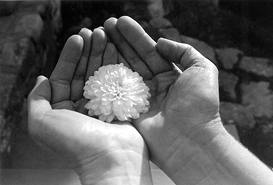
hands with flowersPart of humility involves learning how to accept grace.  I of all people am hardest on myself.  I am often uncomfortable with the truth of my having limitations that I didn’t choose.  But there came a day when I couldn’t do it all.  I am living in those days now, and through it I am learning to live in the grace of my Heavenly Father more freely and fully.  The prayer of my heart is no longer “Make me strong.”  Rather, it has come to be more like this: “Sustain me with Your loving-kindness, for I am frail flesh in need of Your very breath.  Show me all the heights and depths, the vast expanse and the gentle whisper of grace.”

May we learn to define success and failure according to the standards of heaven and the heart of our good Father.  Life is not easy, but we can learn “to take pleasure…for Christ’s sake” because He is strong in our weakness.  There came a day – a day in which grace became an immanent reality – and I want to live daily in that revelation.  I invite you to join me on my journey into the depths of grace, for grace is always best displayed in community.


Beyond the Veil

Standard

During the school year, I enjoy being part of a wonderful church family near my college.  I choose to go there not only because of their solid Biblical teaching but also because of their commitment to and open practice of the gifts of the Holy Spirit, including prophecy, healing, and words of knowledge – something I am passionate about.  Now, I share all that to preface a brief story: someone shared a word of encouragement during a church service a few weeks ago.  This person shared several things about God’s love, yet it was the final thing that was said that caught my full attention: “Jesus is ready and waiting to go through the veil for us.”  (Don’t quote me on the precise wording, but that was the gist of it).  Essentially, this person said that Jesus is going to go beyond the veil for us, in our place.  Please understand that I am not criticizing, and I am not saying that this was not a word from the Lord.  The wording of it, however, caused me to think.  There is a concept in this that must be scrutinized, for even as this word was shared, my mind shouted, “But the veil was torn when Jesus died on the cross!”

“And Jesus cried out with a loud voice, and breathed His last.  Then the veil of the temple was torn in two from top to bottom.” – Mark 15:37-38 (also Matt. 27:50-51 and Lk. 23:45)

The truth is that Jesus already went beyond the veil for us: “the forerunner has entered for us” (Heb. 6:19).  Great – Jesus went beyond the veil for us.  That’s dandy, but what does it mean for us now?  What is this veil-thing about anyway?  To answer those questions, we need a little bit of background knowledge, so indulge me for a few moments as I get a little nerdy with Biblical history….

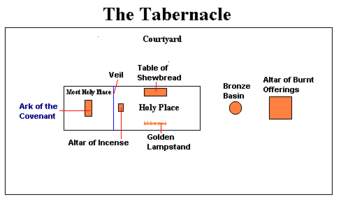
Here’s the (very brief) version of what “the veil” is and represents in Scripture: in the Old Testament, the Lord instituted the Law for His people to follow.  He commanded that a dwelling place be built for Him and that a heavy veil be hung in the Tabernacle (and later the Temple) to separate the Holy Place from the Most Holy Place (the Holy of Holies).

I know you were longing for a diagram...

I know you were longing for a diagram…

It was in the Most Holy Place that the presence of the Lord dwelt between the carved cherubim that topped the Ark of the Covenant.  Only the high priest of Israel could pass beyond the veil into the Most Holy Place – and that could be done only once a year and with the blood of a sacrifice for the sins of the Israelites (this was known as the Day of Atonement).  This particular veil was in place to restrict access to the fullness of the Lord’s presence – His holy glory – because, since the days of Adam and Eve, sin has separated us from full relationship with God.  (It would be fascinating to discuss all the uses of veils, including those to cover women, in Scripture, but I digress.)

The veil was torn.

The veil was torn.

Fast forward many hundreds of years: Jesus Christ, the sinless Son of God, took on flesh and became sin for us (2 Cor. 5:17), dying a horrific death on a cross and rising again in victory to release us from the power of sin (Rom. 8:2) and reconcile us to God the Father (2 Cor. 5:21; Rom. 5:10-11) by fulfilling the whole Law (Matt. 5:17).  As He died, the veil – the one that separated the Holy Place from the Most Holy Place – was torn in half from top to bottom.  God the Father reconciled us to Himself through the death of His Son Jesus because it pleased Him to do so; no longer are we enemies but rather are now holy, blameless children of the King of Kings.  Our peace was bought in Blood that we might have relationship with Him (Col. 1:19-22).  That’s what the tearing of the veil was about on the day Jesus died: access to the Holy of Holies, the living Presence of God, through relationship with Him.

God made a shocking and powerful statement in tearing the veil in the Temple, but what does that truly mean for us?  What place does the veil hold in our lives?

We know that Jesus has already gone beyond the veil for us, but He didn’t stop in merely “going beyond.”  In 2 Corinthians 3, Paul asserts that “the veil is taken away in Christ….when one turns to the Lord, the veil is taken away” (v. 14, 16).  This imagery of the veil being removed indicates the inauguration of the New Covenant, bought with Christ’s blood, which demolishes the Law of the old covenant and its fading glory.  Interestingly, even before the days of the Tabernacle, God’s first dwelling place among the Israelites, Moses spoke face to face with God on a mountain top.  When Moses came back down to the Israelite camp, he veiled his face to hide the radiance of God’s glory that clung to him – and that was merely a fading glory from being in the presence of God Most High.  But now, we all, with unveiled face, beholding as in a mirror the glory of the Lord, are being transformed into the same image from glory to glory” (2 Cor. 3:18, emphasis mine; check out all of chapter 3 to really dig into this subject).  This is how the veil relates to our daily lives.

We are reflect God's glory.

We all reflect God’s glory.

Jesus didn’t die so we could remain on the far side of the veil, restricted from the presence of the Father; we are called to a life beyond the veil.

We are invited to “boldly approach the throne of grace” (Heb. 4:16) because Jesus has become our High Priest, our Mediator before God the Father, and the Atonement for our sin.  In this same vein, Ephesians 3:12 tells us that we have “boldness and access with confidence through faith in [Jesus]” (emphasis mine) to all the mysteries of fellowship with the Father (check out Unveiled for a more in-depth look at this Ephesians passage).

And so I must ask: is there anything – works, effort, rules, sin – that we are allowing to separate us from the Presence of God?  My dear friends, are we unintentionally reconstructing the veil of separation that Jesus’ sacrifice tore down?  Are we putting up barriers where our Savior already made a way?  Because the Father is not restricting access to Himself.  The old veil of separation is gone; Jesus has made a new way for us:

“We have, then, my friends, complete freedom to go into the Most Holy Place by means of the death of Jesus.  He opened for us a new way, a living way, through the curtain [veil] – that is, through his own body.  We have a great priest in charge of the house of God.  So let us come near to God with a sincere heart and a sure faith, with hearts that have been purified from a guilty conscience and with bodies washed with clean water.”
– Hebrews 10:19-22 GNT, emphasis mine

Father, forgive us our ignorant efforts to hide from Your Presence, to separate ourselves again from You.  Show us how to fully honor the Gift that Jesus gave us through His sacrifice.  We want to live the full story of grace!  May we learn to dwell freely in the Holy of Holies, basking in the radiant light of Your Presence.  Amen.

Will you accept the Father’s invitation to live beyond the veil?

State Your Intentions

Standard

Have you ever wondered what it would be like for life to be perfect?  And what exactly would make life perfect?  Adam and Eve knew.  Once upon a time, life was perfect in the Garden of Eden…

“The Lord God planted a garden eastward in Eden, and there He put the man whom He had formed.  And out of the ground the Lord God made every tree grow that is pleasant to the sight and good for food…” – Gen. 2:8-9a

The chapter goes on to describe in greater detail this paradise God created and given to man.  Yet there is something that rivets me in these verses, more than the depiction of the idyllic location:

‘The tree of life was also in the midst of the garden, and the tree of the knowledge of good and evil….And the Lord God commanded the man, saying “Of every tree of the garden you may freely eat; but of the tree of the knowledge of good and evil you shall not eat, for in the day that you eat of it you shall surely die.”’ – Gen. 2:9b, 16

Rainbow Eucalyptus Grove by Todd Maurer

Rainbow Eucalyptus Grove by Todd Maurer

Often, when we sermonize about the Creation Story and the Garden of Eden, we zero in on the forbidden tree – the tree of the knowledge of good and evil.  We think about the perfect life Adam and Eve had, their sin in disobeying God’s command, and the consequences of the Fall.  But to think of that alone is to miss the heart of God in this passage.

What WERE God’s intentions in the Garden of Eden?

When we consider only the temptation represented by the tree of the knowledge of good and evil, our perspective of God’s intentions can quickly become muddled.  As we read above, every tree that the Lord caused to grow was pleasing and desirable.  Was He simply taunting Adam and Eve with something they were not allowed to have (knowledge of good and evil)?  God displayed His righteous and just nature by following through on the promised consequences for eating from this forbidden tree – but what about His goodness?  And this is where we must recall the fullness of the story: the two trees.  Though we often forget this crucial detail, glossing over it with eyes jaded by repeated exposure to the story, it is the key for understanding the intentions of God in the Garden of Eden:

“The tree of life was also in the midst of the garden, and the tree of the knowledge of good and evil.” – Genesis 2:9b

The two trees: the tree of life, and the tree of the knowledge of good and evil.  Two distinctly different trees, the first offering life and the second offering death.  This is fascinating in light of Genesis 2:16, which permitted Adam and Eve to eat from any tree’s fruit except that of the tree of the knowledge of good and evil.  Any other tree, including the tree of life – oh, can you see the implications of that?  Adam and Eve were given unrestricted access to the tree of life – this is the mysterious comingling of free choice and predestination within the framework of His love.  This is the sort of love that brings me to my knees.  Just as when I read in Ephesians about the grace of God (check out Intentional Grace), I am drawn again to the idea of God’s intentionality:

It has always been God’s intention to provide life.

The vastness of His plan, the eternal nature of His intentions, astounds me.  When Adam and Eve sinned by eating the forbidden fruit, they could no longer have unrestricted access to the tree of life (Gen. 3:22-24).  God banished Adam and Eve from the Garden and set angels to “guard the way to the tree of life” (Gen. 3:24).  Now that humans know both good and evil, He has made a Way for us to choose Him: Jesus Christ.  The Lord is good – only good and the only Good – and we must choose Him to have access again to life.  In the first chapters of the first book of Scripture, He reveals His intent to oforange tree of lifefer the tree of life – and He does the same in the last book of Scripture.  Revelation 22 is describing heaven, and this is what will be there:

“In the middle of its street, and on either side of the river, was the tree of life, which bore twelve fruits, each tree yielding its fruit every month.  The leaves of the tree were for the healing of the nations….Blessed are those who do His commandments, that they may have the right to the tree of life, and may enter through the gates into the city.” – v. 2, 14

His intentions have never been secret, and all His mysteries are revealed to us through Jesus Christ (check out Ephesians 3:8-12).  Though too often we focus on that which brought death, His focus has always been on that which brings Life.  Before He rolled out the heavens and hung the planets, before He ever created mankind, He was prepared to provide deliberate grace, offering the sweet Life that comes only from Him. He is the Giver of all good things, and every good and perfect gift comes from Him (Jas. 1:17) – deliberately, intentionally, purposefully.  This is love from the very beginning.

 “And therefore will the Lord wait, that He may be gracious unto you, and therefore He will be exalted, that He may have mercy upon you.” – Isaiah 30:18

hands with flowers

I Suggest You Run

Standard

Every day we have opportunities – opportunities to learn, to grow, to step into destiny, to embrace adventure.  Yet all too often we shrink back, afraid of where opportunity might take us, of not making the “right” choice, or of failure and disappointment.  Life, relationships, choices – I often fear doing the wrong thing.  My greatest fear in this is:  what if I take an opportunity and then it doesn’t work out somewhere down the road?  Does that make it wrong to take the opportunity?  Does that put me at fault because I “should have known better”?

I struggle most with these questions when I feel that God is asking me to take an opportunity and then it doesn’t have the results I expect.  Did I miss God’s voice?  Did I do something wrong?  I imagine you can relate to these questions.

The truth, however, is that God doesn’t ask us to know the beginning from the end – that is His job.

My parents told me something that, at the time, I thought was odd: “You don’t know until you know.”  What they meant is that sometimes you simply have to take the next step without trying to analyze all the steps that will come after.  God asks us to take one step at a time and let Him take care of the future.  The problem with my thinking is that I tend to look for the results I expect But if it isn’t my place to know the beginning from the end, how would I know what the end should look like?  Ecclesiastes 3:11 states that God “has made everything beautiful in its time.  Also He has put eternity in their hearts, except that no one can find out the work God does from beginning to end.”  We are designed with a yearning to know (and it is good!) that will never be fully satisfied on this side of heaven.  He knows the paradox of our fragile frames and our thirst for the fullness of eternity, and He is tender with us.  He unveils the splendor of our journey step by step so that we can learn to trust in Him and not in ourselves.  Trust would not be trust if there were no question of the path!  (Check out Timeless Trust for more on this subject.)  Someday we will know fully, but now we know only in part (1 Cor. 13:12).

puzzle piecesSometimes life feels like a jumble of puzzle pieces that have no box to tell you how many pieces there are or show you what the picture looks like.  I have two options: I can clumsily attempt to make the pieces fit – or I can simply trust God, the Master Designer, and allow Him to add the pieces and put them together into a masterpiece.

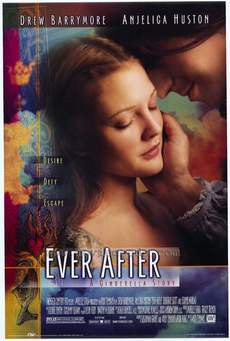
Every time I watch Ever After, I have to appreciate the meddling of Gustav, Danielle’s faithful friend, who sends Danielle’s true love searching for her.  In an excited panic, Danielle yells to her friend in disbelief, ‘“And now he is heading for my house!”’  With a bright grin, Gustav simply replies, ‘“Then I suggest you run.”’  Danielle’s face lights with delight, and she darts across the field to meet her love.  How I wish that were always my response to opportunity!  All too often, though, I hide from situations that I am uncertain of and wish that someone (particularly God) would tell me what the best choice is (i.e. the one that works out most agreeably in accordance with my expectations).

ever after

Potential does nothing unless you take the opportunities that are set before you.

Yet even as part of me shrinks back, there is another part of me that longs to stretch my legs and run freely into opportunity.  As I tackle my final year of college, I have many exciting (read, “terrifyingly exciting”) choices before me, choices that have me at a crossroads in some ways.  As I consider the potential outcomes and ramifications of each decision, my poor mind is spinning in circles.  But the truth is that God started me on this path long ago, whispering His faithful promises over my life and sheltering me in His grace.  It is not my job to BE God and know how everything will work out.  It is my job to TRUST, obey, and simply take the next step that is before me.  I will never know until I know – and only God knows what the fullness of my future looks like.  Though not knowing exactly what lies ahead bothers me, I know that God is good and that He wants me to focus on the opportunities He is giving me now.  After all, opportunity disregarded is nothing but wasted potential — a journey never taken, a life never fully lived.  And I know beyond a shadow of a doubt that I do not want to look back and see only “potential” in my life.  (Check out Live Wild for more on living adventurously.)

What opportunities have been set before you now?  What step is God asking you to take next, trusting Him with the results?  Perhaps it is time to simply start running and see where God will take you.  The results may not be what you expect, but consider that your expectations may be different that God’s intentions.  This is the essence of God’s working all things together for our good (Rom. 8:11).  Do not allow fear to make yours a life of wistful if-only thoughts and “great potential.”  God always uses all the pieces – nothing is wasted in the puzzle of your life because He already knows the end from the beginning (Is. 46:10) because He is the Beginning and the End (Rev. 1:8).  All your days were written by Him before one of them came to be (Ps. 139:16), and His intentions toward you are good (Jer. 29:11).  He longs for us to walk boldly with Him in His sure mercies (Is. 55:3), knowing that, ultimately, it is He who sustains us and nothing can snatch us from His hand (Jn. 10:28-30).

And so, my dear friends, I suggest you run.

Love from the Beginning: Intentional Grace

Standard

The book of Ephesians presents a magnificent picture of God’s radical grace.  There is so much content packed into this brief book.  As I read through Scripture, I often like to tackle one chapter at a time.  However, after I read the first three verses of Ephesians, I had to stop.  Have you ever thought about how truly amazing God’s grace is?  Grace is one of the overarching themes of Ephesians, and the first chapter alone is intense enough for one to spend weeks simply pondering its depths (hence I spent ten weeks reading through a six-chapter book).  Take a look at Ephesians 1:6-7:

“In Him we have redemption through His blood, the forgiveness of sins, according to the riches of His grace, which He made abound toward us in all wisdom and prudence…” (emphasis mine)

We all know the mad scramble for small reward. ("Pigtails and Parade Candy Scramble" by Meegan Reid)

We all know the mad scramble for small reward. (“Pigtails and Parade Candy Scramble” by Meegan Reid)

Paul, the writer of Ephesians, is famous for his run-on sentences, so this is only the first chunk of a theologically-loaded sentence.  But consider what these verses are saying: God has given us the abundance, the fullness of His grace “in all wisdom and prudence.”   His grace is no accident, and He has no qualms about having sent His Son Jesus Christ to die for our sins.  Everything about God’s grace is intentional.  He does not dispense grace as though He were tossing candy in a parade.  He does not fling it at us, requiring us to scramble around for bits of it, some receiving with abundance and others with lack.  Rather, He gives His grace as the perfect gift.  Think of the person who knows you best choosing a gift for you.  This person loves you and knows what the perfect gift is.  This gift is carefully planned, tenderly prepared, and freely given out of simple love.  That is how God gives His grace.  God’s grace is not willy-nilly; it is deliberate.  He planned to offer us this grace, choosing us “before the foundations of the world” (Eph. 1:4), another word for which is “predestined.”  And He offers this grace to each one of us.  There is nothing to which this grace can be compared; it is without equal because its Giver is without equal: the Lord of all creation, the King of heaven.  We have received every spiritual blessing through Christ (Eph. 1:3), being made “holy and without blame before Him in love” (v. 4) and adopted as sons with rights to a full inheritance sealed by the Holy Spirit (v. 5, 11, 13-14) – all because of His glorious grace.

Take a moment to consider:  Your Heavenly Father planned His goodness toward you.  What does this say about His will in regard to you?

golden giftIt is God’s will to show grace, sealing us as His own and drawing us to Himself.  It is His will to be good because His nature is good.  This is why it is His will that none “should perish but that all should come to repentance” (2 Pet. 3:9).  This is also why He takes no pleasure in death but instead calls out, “Turn and live!” (Ez. 18:32).  Everything about God’s grace is deliberate, set in place before the foundations of the world were laid and Adam first walked in His presence.  His grace is the most perfect, most thoughtful gift ever given, and He longs for each of us to accept its fullness.  It is only His grace that encompasses past, present, and future and brings us into alignment with Him.

Thus Ephesians presents one of the greatest paradoxes of all time: the comingling of destiny and choice.  Grace is a gift deliberately given that must be deliberately received.  Our choice does not alter the fact that it is offered freely and gladly, nor the fact that it is God’s will for us to choose it.  As Ephesians 1 tells us multiple times, it was His pleasure to give us grace; but more than that, it was the “good pleasure of His will” to do so (v. 5, 9, 11).  This was no whim, no fleeting bout of kindness.  It was not merely a good deed in response to a need.  Rather, this great grace was a deliberate act of His will: it is not only His desire to be good to us – it is part of His very nature. “Good” isn’t just something God does – it’s who He is.  It has always been and always will be His intention to provide grace.  It pleases Him to be good because that is who He is.  It pleased Him to make “known to us the mystery of His will” (Eph. 1:9): His grace, His goodness – nothing hidden, nothing withheld.  He longs for us to live freely and fully in His scandalously kind, utterly glorious gift.  He pursues us with relentless, intentional grace.  We do not deserve His grace, but dare we refuse a Gift He has literally poured His life into?

It is my desire to live unmasked and unashamed in the spacious place of His grace, and I hope that you will join me.  Embrace the good will of the Father toward you, and allow His grace-gift to saturate your life.