Author Archives: hisdesertrose

God Is Not Your Fairy Godmother — Part 2

Standard

Therefore, since we are receiving a kingdom which cannot be shaken, let us have grace, by which we may serve God acceptably with reverence and godly fear.  For our God is a consuming fire. (Heb. 12:28-29)

consuming fire

In in the first part of this post I mentioned God’s wrath and talked a bit about the importance of being sons of obedience versus sons of disobedience.  Let’s look at those concepts more closely.

pressure gaugeAccording to the book of Ephesians we once were slaves to Satan, “the prince of the power of the air, the spirit who now works in the sons of disobedience” (2:2); and we “were by nature children of wrath, just as the others” (v. 3).  When we think of God’s wrath, we often picture it as something that we incur by sinning.  Most people maintain a “fairy godmother” view of God even when they don’t obey; they don’t want to believe that a God who is Love (1 John 4:8) could possibly be wrathful.

However, God’s wrath exists not because of our nature but because of His nature; His wrath must be present as the validation of His righteous justice.  He does not have a “wrath gauge” that starts at “zero” and increases as we sin, waiting to erupt violently when the the full limit is reached.  We all were once sons of disobedience because “through [Adam] sin entered the world, and death through sin, and thus death spread to all men, because all sinned” (Rom. 5:12).  As the very definition of holiness, God must uphold the warning He gave to Adam and Eve in the garden that disobedience would be punished by death (Gen. 2:16-17).  Thus, His wrath existed before the creation of the world; it is part of who He is.

But here is the best part: God’s wrath does not merely prove His righteousness and justice; God’s wrath proves His goodness.  His wrath is not an evil thing.  Consider it.  If He displayed no wrath to the disobedient, how could we trust that He has our highest interests in mind and that His ways are best when we live in this broken world?  Without the existence of His wrath, His mercy would be meaningless.  Without the existence of His wrath, there would be no benefit in following Him over following the lusts of our flesh because good men could not receive His favor and wicked men would not receive His condemnation (Pro. 12:2).  Without the existence of His wrath, we would need to take the task of vengeance upon ourselves instead of “giving place to [God’s] wrath” (Rom. 12:19).  Without the existence of His wrath, we could not have faith that good will triumph over evil and that Christ will be fully revealed to reign victorious over the entirety of His creation.  Take a look at these verses, one from the Old Testament and one from the New:

earthen-vessel“The Lord has made all for Himself, yes even the wicked for the day of doom.” (Pro. 16:4)

 “What if God, wanting to show His wrath and to make His power known, endured with much longsuffering the vessels of wrath prepared for destruction, and that He might make known the riches of His glory on the vessels of mercy, which He had prepared beforehand for glory[?]” (Rom. 9:22-23)

These are heavy words, but what they mean is that without God’s wrath, there would be no such thing as blessing or mercy.  God, in the mystery of His eternal and infinite wisdom, planned before the foundations of the earth were laid, to display His goodness to humankind, the prize of His creation.

As “children of wrath” (Eph. 2:3), our inheritance was wrath.  Thus, before we were saved by grace through faith in Jesus Christ, we were partakers of God’s wrath, but now by the power of Jesus’ blood we have become partakers of God’s gracious and merciful favor, having been chosen by God to receive adoption as His children (Eph. 1:5).  Now, though we were once “sons of disobedience,” we have been made sons of obedience.

 “But God demonstrates His own love toward us, in that while we were still sinners, Christ died for us.  Much more then, having now been justified by His blood, we shall be saved from wrath through Him.  (Rom. 5:8-9)

We now know what exactly we saved been saved from, but what have we been saved for as sons of obedience?  If wrath is no longer our inheritance, what is our inheritance?

We’ll look at the answer in the last part of this post.

cliff_hanging

God Is Not Your Fairy Godmother — Part 1

Standard

Sleeping Beauty fairiesPeople often treat God like He is some sort of “good fairy,” sprinkling His “fairy dust” of blessing upon us if we obey and withholding it if we don’t.  But that is a wrong view of the importance of obedience, the wrath of God, and the goodness of God.

Because the Bible is really always the best place to start, let’s first look at the lives of people in Scripture to find out why obedience is so important.

By God’s word to Abraham the Israelites were promised their land long before they received it – that is why it was the “Promised Land.”  Their inheritance was already in place, their destinies mapped out according to God’s plan, but there was one requirement they had to fulfill in order to walk in the good things God already had in store for them: they had to obey.  Of course, we see how this works out: they end up wandering in the desert for forty years while the disobedient, unbelieving generation dies out and a new generation is raised up to inherit through obedience all the promises of God.

‘For we have become partakers of Christ if we hold the beginning of our confidence steadfast to the end, while it is said: “Today, if you will hear His voice, do not harden your hearts as in the rebellion.”  For who, having heard, rebelled?  Indeed, was it not all who came out of Egypt, led by Moses?  Now with whom was [God] angry for forty years?  Was it not with those who had sinned, whose corpses fell in the wilderness?  And to whom did He swear that they would not enter His rest, but to those who did not obey?  So we see that they could not enter in because of unbelief.’ (Heb. 3:14-19)

Do you understand what happened to the Israelites?  They did not enter into their inheritance because they did not have enough faith to walk in obedience.  Today most of us don’t have a specific piece of land that we have been promised as our inheritance – indeed the whole concept of inheritance may seem rather foreign – but as God’s children we each become heirs of the good things God has planned for us.  Like the Israelites, however, we in our foolishness tend to choose disobedience, rejecting the gifts we have been freely offered and causing ourselves to fall under God’s wrath.

The example of Saul could possibly be even more heart-wrenching.  The nation of Israel wanted a human king, so God did as they asked, though He warned them of the long-term consequences of their choice (1 Sam. 8).  Saul was Israel’s first king, and he ended up making some choices that had dire results.  However, though we may talk about Saul as being a poor king, Saul was the man God chose to reign over Israel (1 Sam. 9:15).  This is where the whole idea of “predestination” comes into play.  It is a rather intimidating word, and there is much conflict in the Church over whether we are “predestined” or have “free choice.”  I do not pretend to understand it all, as even Paul said in Romans that he didn’t comprehend all of the matter, but I would like to offer a couple thoughts.  Numerous passages of Scripture make it clear that God predestines us for certain things – Romans 9 being the major one – but at the same time we were created for freedom, freedom to choose.  We should not think of this as freedom to do whatever we please but rather as freedom to choose what is right.  We are always free to choose obedience. 

The man who obeyed received the kingdom.

The man who obeyed received the kingdom.

Though Saul could have chosen obedience, he chose disobedience.  Because God knows all things He knew what Saul would ultimately choose, but out of love He still gave Saul the chance to do the right thing and obey.  To the Israelite nation God said, ‘“If you fear the Lord and serve Him and obey His voice, and do not rebel against the commandment of the Lord, then both you and the king who reigns over you will continue following the Lord your God.  However, if you do not obey…but rebel…then the hand of the Lord will be against you”’ (1 Sam. 12:14-15).  Obviously the people didn’t take this warning very seriously because the chapter after God issued it we find Saul violating God’s commands and the people allowing him to do so!   God so deeply longed to bless Saul, and Saul cast aside God’s good plans for the momentary ease of disobedience.  After this account, Samuel voices the great sorrow of the Father’s heart: God wanted to establish Saul’s kingdom forever but now could not because of his disobedience.  Instead ‘“the Lord sought for Himself a man after His own heart”” (1 Sam. 13:14).  This man was David, a man who was not perfect and made mistakes but nevertheless earnestly desired to walk in obedience to God – he was a son of obedience.

Continuing Saul’s story from 1 Samuel, after Saul attempted to make up for his unlawful keeping of enemy livestock by saying he was going to sacrifice them to the Lord, the prophet Samuel told Saul, ‘“….To obey is better than sacrifice, and to heed is better than the fat of rams”’ (v. 22).  Saul then begged Samuel, “…[F]orgive my sin and come back with me, so that I may worship the Lord” (v. 25).  Samuel, however, upheld God’s word of judgment that Saul was no longer God’s chosen king for Israel.  It was not that Saul made a poor choice so God decided to take away his blessings; it was that Saul had already determined in his heart to disobey God and so was no longer able to take part in the good plans God had for him. Like the Israelites and Saul, we often are sorry after we disobey when we really should have just obeyed in the first place.  We are quick to do wrong but slow to accept unfavorable outcomes, at which point we express our regret in hopes of avoiding the consequences of our actions.

Growing up, whenever I disobeyed and then tried to display my true remorse, my daddy always told me, “I do not want you to be sorry; I want you to obey.”  (Think of this in light of my story about running into the road; there wouldn’t have even been a chance to be “sorry” had I not obeyed.)  Out of love, then, my parents had to discipline me for wrongdoing; and God must do the same thing, for when there are no consequences, we are wont to continue sinning once the initial remorse or fear of punishment wears off.  Hebrews 12:1-13 makes it very clear that “God disciplines us for our good, that we may share in his holiness” (v. 10) and that this discipline will result in “a harvest of righteousness and peace for those who have been trained by it” (v. 11).

I can truthfully say that obedience saved my life.  One Sunday afternoon when I was twenty months old (yes, months) I ran into the middle of Burton, which, if you don’t live in West Michigan, is a very busy street.  My daddy shouted, “Sabra, stop!”  And what did I do?  I stopped, because I was taught to always obey Daddy.  I stood there in the exact center of the road, completely still as traffic rushed heedlessly by, until my daddy could stop the cars and come out to get me.

I had to learn obedience through discipline and correction; but had my parents not taught me that, I would not be alive today.  I had to learn obedience as a daughter of my earthly parents, and I must do the same with my heavenly Father.  Even Jesus, “though He was a Son, yet He learned obedience by the things which He suffered” (Heb. 5:8).  Does that ruffle your theology a bit?  It still amazes me that Jesus had to learn obedience.

As fully adopted children of God the Father, we have the privilege of sharing in the discipline even as we share in the inheritance.

Going back to Hebrews 12, we read, ‘“For whom the Lord loves He chastens, and scourges every son whom He receives.”  If you endure chastening, God deals with you as with sons; for what son is there whom a father does not chasten?  But if you are without chastening, of which all have become partakers, then you are illegitimate and not sons’ (v. 6-8; emphasis mine).  This means that if we don’t receive God’s correction unto obedience, we don’t belong to the household of God.  Illegitimacy cares with it the stigma of not belonging, of not being equal to the true children.  Without obedience there can be no belonging.

The importance of obedience, then, is firmly rooted in this intricate mingling of the discipline and the inheritance.  The problem, however, lies in the fact that most people don’t really have a desire to obey God – and I am talking about Christians here!  Now that we have that established, I am sure you want to know what the consequences of disobedience might be: what’s the big deal with disobedience?  Isn’t it just our free choice?

More accurately we should be asking this question:

If we don’t obey, do we have any inheritance from God?

The next part of this post will explore the answer.

cliff-hanger

Crack In the Wall

Standard

I fully admit to being a sci-fi nut.  I was raised on Star Trek: The Next Generation and the classic Doctor Who TV series.  One of my family’s favorite activities is watching shows together and, as we do so, picking out interesting ideas and bits of wisdom for discussion.  We were watching the new Doctor Who series by BBC (at which point I must also admit to being a BBC nut), and something really stood out to me.

At the opening of season six, the Doctor (who, if you don’t know who he is, happens to be the most epic, time-traveling, world-saving, ingenious alien-guy ever) went to the house of a young girl named Amy Pond.  Now, little Amy had a crack in her wall – a scary crack.  It was no ordinary crack; it was a crack in the fabric of reality itself.  It had been there for a long time, and it always made Amy afraid.  As the years went by, the crack widened and deepened.  Amy tried so hard not to notice it, not to think about it.  But this displayed something valuable: brokenness left unchecked only perpetuates more brokenness; simply ignoring brokenness does not bring healing.

The Doctor and the crack in the wall

The Doctor and the crack in the wall

Sometimes our lives look a lot like little Amy’s wall – cracked.  We can ignore the cracks for a while, trying to cover them up or keep them on the periphery, but eventually they will cause problems.  As the years pass the cracks widen and deepen and we numb ourselves to the ongoing effects of our own broken places in an effort to avoid the pain.  Yet our puny efforts to escape reality are futile, for it is the very structure of our reality — our lives, our hearts — has sustained damage.  Unfortunately, we often try so hard to not look directly at our cracks that we can’t always see them for the brokenness that they represent.  Then others come near us they ask, “What is that crack doing on your wall?”  We never know quite how to answer because the crack has been there so long; we have grown used to living with the fear of having others seeing our “cracks” or perhaps even just with the fear of actually acknowledging our own brokenness.  But the question is, are we willing to receive help?  Are we looking for Someone with the power to save us?

Amy: Are you a policeman?

The Doctor: Why? Did you call a policeman?

Amy: Did you come about the crack in my wall?

The Doctor: ….The crack in your wall, does it scare you?

Amy: Yes.

The Doctor: Well then, no time to lose. I’m the Doctor. Do everything I tell you, don’t ask stupid questions, and don’t wander off.

crack in the wallYou see, sometimes we, like Amy, are looking to lesser authorities when the greatest Authority is before us, ready and waiting for us to become so desperate that we rely on Him completely.  Brokenness is not okay; fear is not okay.  Jesus died to take those things away from us.  He purchased them with His blood, so they really don’t belong to us anymore, though we often cling to them because we simply don’t know what else to do.

So I ask you: Are there “cracks” in your “wall” that are incapacitating you?  Cracks that fill you with fear?  Cracks that seem to ooze bad things into your life?  There is good news – our Doctor is here to make us whole.  His name is Jesus, and nobody can heal brokenness like He can.

‘”The Spirit of the Lord is upon Me,
Because He has anointed Me to preach the gospel to the poor;
He has sent Me to heal the brokenhearted,
To proclaim liberty to the captives
And recovery of sight to the blind,
To set at liberty those who are oppressed;
To proclaim the acceptable year of the Lord.”‘
— the words of Jesus in Luke 4:18-19 (emphasis mine)

No longer do we need to walk wounded, shoring up the cracks in our “walls” and trying to ignore the brokenness.  There is no better time to claim Christ’s freedom and healing in your life than right now.

Guardian of Hearts

Standard

On one of the final days of chapel of my first semester of college, the college president’s wife spoke.  She brought up a Scripture that I hadn’t thought about in a while:

“Above all else, guard your heart, for from it flow the wellsprings of life.” – Proverbs 4:23

wellspringShe made the interesting point that we need to be diligent in guarding our hearts in every area of our lives, both the weak places and the strong places.  I suppose I had never truly considered that I needed to guard the strong areas of my life.  The truth is, though, that pride should never stop us from keeping vigil in our lives.  My current environment has been a relatively safe place for God to teach me lessons from little things, which is far preferable to learning from bad experiences later.

I have never really been around or lived with any females in close quarters (other than my mom), so living in the girls’ dorm here at Trinity Bible College has been interesting.  Everyone is at a different stage of spiritual and personal growth, which I think is a beautiful thing, but if I am not careful, there are some dangerous traps I could fall into.

One of these “traps” is how I view myself.  It is, I think, more common for females to dislike themselves than for guys to dislike themselves; we are simply more prone to being weak in that area.  I, however, was always taught to love who God had created me to be and make the best choices I could for my body without worrying.  I have never disliked myself.  I live with a lot of other girls now though, and not all of them are comfortable or happy with themselves.  My sensitivity to moods and feelings was causing me to pick up on some negative self-image vibes.  Just a few days ago I caught my train of thought, and I was horrified.  It was as though I didn’t like myself!  I immediately declared those thoughts to be outrageous lies and repented for allowing them entrance into my life.  The lie was so cunning, so subtle that I didn’t recognize it for what it was: a lie.  It crept in so gradually that I didn’t even notice it at first.  As I mentioned in my “True Living” blog post, the problem with lies is that they simply aren’t true, and any area in which we are not living in complete Truth we are actually living in bondage.  (You can check it out here: https://hisdesertrose.com/2013/07/29/true-living/)  The most difficult thing to fathom about this lie was that it came in an area I had left unguarded because of my supposed strength!

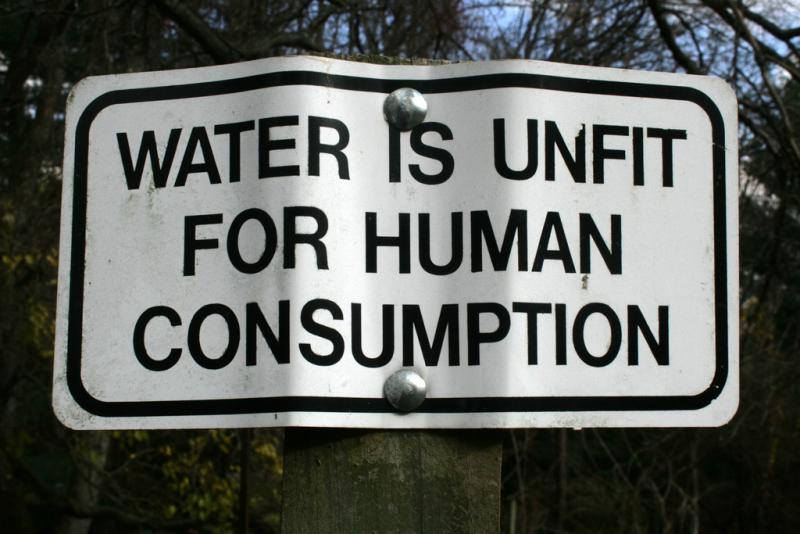
bad waterYou see, that is what Satan does.  It is true that he pressures us in our areas of weakness, but he also does a far more subtle work in our areas of strength.  First he feeds our pride.  Then he lulls us into complacency.  We become lax in guarding that “place of strength” and suddenly it has the potential for great weakness.  The realization that I had left myself vulnerable to the cares and the lies of the world was humbling.  As Christians it is our duty to guard every place of our hearts because it is from our hearts that the life and love of Christ flows.  When we fail to guard our hearts, poison begins to seep in and taint what is flowing out of us.  Guarding our hearts is necessary for our personal health, but it is also a vital part of our testimony as Christ-followers.

I desire to be a faithful guardian of my heart so that I am able to guard the hearts of those who can’t guard themselves.  Now, I can’t make choices for other people, so I can never guard someone else’s heart completely, but out of love and compassion I can step in to shore up their defenses.  I am not able to control the hearts of others, but I can offer my strength, adding it to theirs.  God does this for each one of His children daily, and I want to be a warrior-daughter after his own heart, protecting and bringing hope to the weary and broken.

flame heartMy prayer:  Help me to guard my heart well, Lord, and not be lulled into complacency.  Strengthen me; help me to keep a diligent vigil over every area of my heart, the strong places as well as the weak ones.  By becoming a faithful guardian of my own heart I will allow life to flow out of me into this broken world.  Equip and enable me to be a faithful and loving guardian of the hearts of others.  May I be a safe place, a haven in which the hearts of others can rest in Your peace and be refreshed by Your Love-Light, for You are the Prince of Peace and the ultimate Guardian of hearts. 

I Am a Dreamer

Standard

Dreams are a wonderful thing.  They are the intangible image of our hopes for the future.  Every so often I take a good long look at my dreams, encouraging myself and making sure they are in line with God’s dreams.  My dreams are so big and my passions so deep that I sometimes feel crazy in comparison to others.  I am serious.  This happened just a couple weeks ago.

dreamI want to write books that touch the nations.  When I say that, it sounds impossible.  I have wanted to write books since I was six, but for a while I let myself be stifled by people whose “dreams” were so small and safe that mine sounded crazy.  Then I learned something powerful: when God is involved, there is no such thing as impossible.  My writing will touch the nations.  That is the passion of God’s heart: that we learn to dream with Him.

I am not saying that you have to dream of colonizing space or something.  If your God-dream is to serve Him by being a cashier at Walmart for the rest of your life, go for it!  But sometimes we set things up as our “dream” — or we stop dreaming — because we know it is within the realm of possibility and we don’t want to be disappointed.  Oh yes, we are very, very afraid of disappointment.  We think that if our dreams are “reasonable” we will be able to fulfill them or live with the disappointment if they never come to be, but that is a lie.  Small hope brings small reward, and as living beings formed in the creative image of God, we starve slowly on small hope. 

Proverbs 13:12 tells us that “hope deferred makes the heart sick.”   This first and oft-quoted part of the verse doesn’t mean that disappointed hopes make us heart-sick but rather that lack of hope crushes our spirit.  Now let me tell you the second half of the verse, the part that I don’t hear often:

“[B]ut when the desire comes, it is a tree of life.”

Tree of Life by Mandie ManzanoThat is what our God-dreams being fulfilled are: a tree of life.  Ephesians 3:20 tells us that God is able to do exceedingly and abundantly more than all we could ever all or even imagine.  In Jeremiah 29:11 God says that He has plans for us, to give us a future and a hope.  Does the God of Scripture sound to you like a God who wants His people to be dwelling in the place of small hope?

For far too long we have been selling ourselves short, but Jesus Christ did not live and die so we could placate ourselves with no hope or even with small hope.  Dreaming is about participating in God’s creative, life-giving nature.  But some have forgotten how to dream, and that breaks our Father’s heart.  Our reconciliation to God the Father through the blood of Jesus Christ has set us free to dream with God.  If we are not dreaming with God, we are not yet living in the fullness of the good things God already has for us.  I am reminded of a line from Jason Upton’s “Burning in the Sky”:

“Some men only believe in what their eyes can see.
Some men only believe in what their minds conceive.”

Is dreaming with God scary?  No, it’s not.  It’s utterly terrifying.  The God-things we dream of are too big for us to handle on our own, which is why so many of us settle for less than what God wants for us.  But don’t you see?  That’s the beauty of it: we can’t do it on our own.  God does not give out dreams as “To Do” lists; He gives dreams that He can accomplish with us.

God is creative by nature, and it is that creativity which makes us unique and gives us each a role to play in the making of history.  We were never created to live hopeless, because each one of us has a destiny to inherit the good things God already has prepared for us.  So here’s the real question: will you be a world-changer and a history-maker?  Will you be a dreamer?

Dangerous Dependency

Standard

person on cliffDependency is a scary thing because it involves relying on someone other than yourself to come through for you.  When it comes to God, however, we are called to live lives that are wholly dependent on Him because He is both our Source and our Strength.  But how can we reconcile this idea of complete trust in God with our human fear of being dependent?  Let me tell you:

We learn how to live dangerously dependent on God.

The Jordan at flood stage

The Jordan at flood stage

The truth is that we will never fully, from a human standpoint, overcome our fear of being dependent, of being vulnerable.  We can, however, make a choice to step out with courageous faith in the face of our fear.  Joshua had to do this time and time again.  He had been groomed as God’s next chosen leader for the Israelites, and it was going to be his job to lead the people into the Promised Land.  Apparently, in spite of his training, Joshua didn’t feel particularly brave, because God had to tell him to “be strong and courageous” three times in the first chapter of the book of Joshua; the Israelite people even told him to be strong and courageous!  Joshua’s first task was to get the people across the Jordan River during its flood stage.  God told him not to worry and told him to prepare the people because He was going to do something amazing, but God didn’t tell Joshua what exactly He was going to do.  Now, I don’t know about you, but getting thousands upon thousands of people ready to cross a flooded river that you don’t actually have a way to cross seems a little nuts.  But God had called Joshua to live dangerously dependent because He wanted to show Joshua how awesome He is.

Joshua 3 opens up with Joshua getting the people ready to cross the Jordan.  “Come on; get ready to go because the Lord is going to do awesome things on our behalf!” was the gist of Joshua’s message to the people.  That was really all that he could tell them, though, because that was all he knew.  It was only at the make-or-break moment, that moment when everyone was waiting with baited breath for Joshua to lead them across the river, that God told Joshua the plan.  Can you imagine how nervous Joshua was probably getting?  He’d had a word from the Lord, but sometimes when things are getting down to the wire we begin to doubt what we’ve heard.  I’ve had moments like that in my life, moments when I’ve felt as though I’d jumped off a cliff in faith and was waiting for God to catch me.  That moment of total dependency is the hardest because you feel as though you are falling and just hoping that there are Hands ready and waiting to catch you.  Then God shows up does something mind-blowing.  He did this for Joshua and the Israelites – He told them to walk out into the water and, as they did so, He stopped the flow of the Jordan, causing the waters to pile up while His people crossed safely over on dry ground.  And that was only the beginning; Joshua and the Israelites blitzed through the land of Canaan, taking cities and wining battles not because they were great but because God is great.  They walked in obedience to the promises of God and claimed the victory that God already had in place for them.  (You can check out what happens when they didn’t walk in obedience to God’s word and trust in His promises in Joshua 7.)

This brings up a key point: living dangerously dependent is a choice that is fueled by obedience.  When I think of this, the last battle in the movie The Lion, the Witch, and the Wardrobe comes to mind.  Picture it with me for a moment.  Aslan was dead, and the White Witch seemed to have the upper hand.  Peter, a half-grown boy, had to gather Aslan’s army and go out to meet the White Witch on the field of battle.  The thing about this battle was that it was going to be nearly impossible for them to win; Aslan’s army was severely outnumbered and had lost their leader, who was their hope and their standard for victory.  But Peter had to lead the army into battle; it was his duty.  He did what he had to do: he acted in obedience and prepared the army.  On the day of the great battle, Aslan’s army fought valiantly but was rapidly being cut down by the Witch’s minions.  Finally, the point of no return came: either the Narnians or the Witch would be victorious; either good or evil would triumph.  This was the deciding moment in the battle, the Aslanmoment of dangerous dependency and infinite vulnerability for the army of Aslan.  There had been a prophecy of the destruction of the White Witch, a promise of victory, but it all seemed hopeless at this point.  Then Aslan showed up.  Over the ridge He came with a mighty roar, leading an army of warriors who were fresh and ready for battle.  Within moments the tide of the war turned, and the White Witch’s forces were wiped out. The White Witch herself was put to death, and victory belonged to the army of Aslan.

What can the story of Joshua and the story of Aslan’s army teach us?

We are safe to live lives of dangerous dependency on God because He is unfailingly faithful.

These victories, these miracles, had been decreed since before the beginning of time.  There was no question, for good always triumphs over evil and God’s plans always prevail.  I will say that again: the victory was already in place, but the people had to trust God’s promises enough to push through in obedience.  Without bold obedience they would have failed to claim the good things God already had in store for them.  Why do we do this today?  Why do we fail to walk in the good things and the victory God already has for us through the blood of Jesus?  It is because we are terrified to live dangerously dependent on God, terrified to live outside of our comfort zones and look crazy to the world.  But let me share with you something that I have learned: the more dangerously dependent on God we are, the more we open the door for Him to work miraculously and bring victory in our lives.  God can do amazing things regardless of our level of trust in Him, but we cut ourselves off from the fullness of what He wants to do when we refuse to place our trust in Him and Him alone.  I am telling you right now, though, that Jesus died and rose again to break off every chain of sin and death and fear that holds us back from a life of outrageous, victorious freedom.

trust meter

Life with Jesus is a dare to live dangerously dependent and decidedly different.

Will you accept the challenge and take up the torch?

No Regrets

Standard

I was talking with a group of people at school the other day; and, following a comment I made, one of the girls said, “You just don’t regret anything, do you, Sabra?”  It took no more than a second for me to smile and reply that it’s true; I don’t have regrets.

You might be thinking, “That’s because you haven’t done anything worth regretting.”  In truth, I have grown up as a homeschooled missionary kid and a pastor’s daughter.  I have experienced more than most people could hope to in their lives yet have been able to do so in a relatively safe manner.  I have dear friends who did not have it as “easy” as I did; many grew up in broken homes and went through a great many struggles that I have never and likely will never face.  In both cases, however, God has done amazing things in our lives and brought us through by His grace and mercy.  You see, I have certainly done regrettable things.  We have, each and every one of us, “sinned and fall short of the glory of God” (Romans 3:23).  However, I do not have regret.  There is a marked difference.  Let me say that again: I have done regrettable things, but I do not have regret.  Regret is dangerous because it reeks of condemnation.  What does Scripture say about condemnation?

“Therefore, there is now no condemnation for those who are in Christ Jesus, because through Christ Jesus the law of the Spirit who gives life has set you free from the law of sin and death.” (Romans 8:1-2)

True story.  The question is, do we believe it?  And if we believe it, do we live like we believe it?  If we truly take these verses to heart, they should impact our lives dramatically.

I was talking with a good friend of mine, and we were discussing how different our testimonies are.  I actually brought it up, because after we had done street evangelism together — along with some other people who also have amazing testimonies — I realized just how much God had protected me from certain things.  (I never realized it until my friend pointed it out, but that is part of my testimony too.)  My friend, on the other hand, went through a lot before God got ahold of him and totally turned his life around.  When I hear stories like his, I tend to hear an undercurrent of regret, which, in some ways, is understandable.  I asked my friend though, as his tone laced with regret, if he regretted what God had done in his life, which of course wasn’t at all the case.  “Yeah, but sometimes I just wish I had found God sooner…” is the sentiment that I have heard from so many.  Yet that is not what God wants for us, His children.

“Godly sorrow brings repentance that leads to salvation and leaves no regret, but worldly sorrow brings death.” (2 Corinthians 7:10)

He certainly wants us to feel sorrow over our sin, but He does not want us to bear guilt and regret for the remainder of our lives – that is not the point.  The point is that we recognize His overwhelming mercy and grace and accept them, for they are freely given.  After receiving the forgiveness bought with Christ’s blood, people will let God change their lives in the present, but sometimes they don’t let Him truly wipe away the past.  Let me weave a story for you….

A small child is holding a glass.  He was never supposed to have it in the first place; he was not capable of being responsible for something so fragile and precious, said his Father; yet here he was.  Rebellion was not necessarily his intent, but one thing led to another and it happened.  He clutches the glass as tightly as he can, yet it still manages to slip from his grasp.  It tumbles downward, perfect until the moment it strikes the floor.  A thousand tiny pieces lay at the boy’s feet, a shimmering jumble of hopeless shards.  “I broke it!” he cries in dismay.  As horror and shame vie for the upper hand, he quickly crouches down to clean up the mess.  Slivers of glass prick his tender palms; blood oozes between his fingers, trickling down his broken glassarms.  His Father sees him and comes close in spite of the brokenness.
“My son,” he says.  “What has happened?”  Shame-faced and sniffling, the boy does not meet his Father’s steady gaze.
“I broke it, Daddy; I’m sorry.”  The Father kneels down amid the broken glass and tilts his son’s face toward His own.
“I know.  You are forgiven.”  A look of relief crosses the vulnerable little boy’s face.
“I won’t do it again; I’ll obey next time.”  The child does not want to disappoint his Father further and is eager to please and make the right choice in the future.  He picks up the sharp pieces with renewed vigor, determined to make things right.
“I know.  Now, son, give the pieces to me.  Let me clean up the glass; you should not handle it anymore.”  The boy glances at his tightly fisted hands, curled around the collected shards and still dripping bright red blood, and winces.
“It hurts.”  His Father pulls him close, drawing his small fists into His own larger hands.
“I know it hurts; let me take the glass away.”
“But it hurts!”  The boy grows more agitated by the moment; he knows his Father has forgiven him but the pain of his sin lingers.  The pain is becoming unbearable, and he squeezes his injured fists tighter, not allowing his Father to look at his self-imposed wounds, the wounds of his rebellion.  “It hurts!”  He screams, tears leaking from his eyes as swiftly as the blood leaks from his hands.  The Father’s heart breaks as He watches His beloved child suffer needlessly…

Aren’t we all like the little boy, ashamed of what we’ve done and relieved that we’ve been forgiven but forgetful that we need our Father’s healing as well as His forgiveness? God wants to know, will you give Him your past, or will you cling to it?  Will you let your regrettable choices refine you or will you let them define you?  Why do we hold on to the old things when the Lord is ready and waiting to cast them as far as the east is from the west, when He is ready to wash us white as snow – both past and present?  When we hold on to the past, to those deep regrets, we are like the small boy, clutching the glass in his hand and crying out that it hurts.  We have been forgiven; will we now allow ourselves to be healed?  Not one of us deserves the Father’s great mercy; we have all broken his heart and, in the process, our own.  What will we do with our brokenness?  Godly sorrow should bring conviction and a desire to be made whole and new.  What is interesting about the word “new” is that it literally means “not old” – nothing old.  Our loving Father wants us to release those regrets and to offer those places of brokenness to Him and allow Him to make them whole and new.  Let us learn to live lives with no regrets, lives full of freedom and healing bought by the precious blood of Christ.  Let us no longer cling to the death-bearing sorrow of the world but rather embrace the sorrow of the Father’s heart, which brings us life everlasting.

Outside the Comfort Zone

Standard
Are you SURE you don't want a litchi?  (I promise I won't add a picture of goat brains!)

Are you SURE you don’t want a litchi? (I promise I won’t add a picture of goat brains!)

Comfort zones – we all have them.  Some people’s comfort zones may be larger than others, but they are still there.  Some people have comfort zones that are large in some areas and small in others.  (By using the term “comfort zones,” I am really talking about the way we live and the important decisions we make – our lifestyles.  Please note that I am not encouraging you to go do something like eat goat brains and litchis just because those are outside your comfort zone when it comes to food.)

The unfortunate cry of our flesh

The unfortunate cry of our flesh

In everything we do, we like to try to stay within our comfort zones.  Why?  Because the comfort zone is familiar and because it is familiar, we deem it “safe.”  We could just call them “safety zones.”  Often, we move outside our comfort zones, we feel out of control because, well, we are.  Our comfort zones generally consist of that which we feel we can control.  Granted, we never have as much control as we think we have; nevertheless, it is our reason for craving the familiar.  We love to feel in control because it gives us a feeling of power and significance.  After all, who really likes to feel bewildered and powerless?  Maybe it doesn’t apply to you, but everything I have just said is most certainly true of me.

The problem with this way of thinking is that it is a human way of thinking; it isn’t godly.  To think this way isn’t to think as God thinks.  God deeply desires each one of us to step out into the unknown with Him, trusting that He’s got our best interests at heart (check out one of my most recent blogs, “Sweet Surrender,” for more about this subject: http://www.journey247.com/2013/08/25/sweet-surrender/).  However, we are often so busy trying to remain where we are comfortable and “safe” that we miss the opportunity to walk in the true fullness of what God has for each one of us and to fall more in love with Him.

Moses is a great example of missing an opportunity.  In Exodus 4, he missed out on the opportunity to step into everything God had for him.  First, he worried about what would happen if he went and declared God’s words to his fellow Israelites and nobody believed him (v. 1).  God gave him three completely different, completely amazing miracles that would prove that He was the One behind Moses’ words (v. 2-9).  “O Lord, I have never been eloquent….I am slow of speech and tongue” (v. 10).  After giving Moses a brusque reminder of Who it was that gave man the power of speech, God told Moses, ‘”….Now go.  I will help you speak and teach you what to say”‘ (v.12).  But that wasn’t enough for Moses; he was still concerned with what he thought he would lack when he stepped into the unfamiliar, soexclamation_mark he didn’t want to do it: “O Lord, please send someone else to do it” (v.13).  The NIV translation ends that sentence with a period, but I always imagined it having an exclamation mark and being said with a tone of desperate pleading.  At least, that is how I would have said it: “Don’t make me do it, Lord!”  It goes on to say that the Lord was angry and that He gave Aaron the task of speaking His powerful words.  Moses still got to play a role in what God was doing, but his role was diminished – that is, not all that it could have been and not even all that God desired it to be.

Now, please understand that I am not saying God did not use Moses greatly; God gave Moses many more opportunities to do great things for Him, and Moses chose to do many of them.  However, I am saying that I think Moses missed out when he did not allow God to use him; he missed out on an opportunity to see God display His awesome power in his life.  I have always wondered how the story might have gone had Moses taken God up on His promise and risen fully to the task.

Just like Moses, we often miss opportunities to let God work through us fully when we choose to live within the safe boundaries of our comfort zones.  While missing out on that opportunity certainly breaks God’s heart, you may be wondering why exactly living solely in one’s comfort zones is, in a way, ungodly.  I will explain that now.  When we cling to our comfortable lifestyle, we are making the familiar – the safe, the comfortable – our idol, and that is wholly ungodly.  (Check out Exodus 20:3 and spend some time contemplating its true meaning – it will help you get your priorities straight, which can be very life-changing.)  Additionally, when we live in our self-created comfort zones, we are putting no real faith or trust in God, which is not at all what God wants for us.  Jesus Christ did not die on the cross so that we could live safe and comfortable lives; He came that we “may have life, and have it to the full” (John 10:10), lives “free from the law of sin and death” (Romans 8:2).  And here’s some more good news: though we have missed opportunities in the past, even yesterday, we will be offered new opportunities.  God’s awesome power is there for the taking.  The question is, will you use it, allowing Him to work in you and through you, trusting that He’ll take you all the way?  Jesus didn’t come to allow us to remain as we were, hiding out in our comfort zones.  And actually, He didn’t even come to help us live outside our comfort zones; He came to radically change our heart and totally destroy our “comfort zones” so that we can live lives that are powerful, effective, and beautifully free.

in God we trust

“I Like Life!”

Standard

Monday morning seems to be a thing most people dread.  I, on the other hand, bounced out of bed with a “Good morning” in my heart, thanking the Lord for a new day.  (I would have said it out loud, but I didn’t want to wake my sleeping roommates.)  And it is my goal to greet every morning in that fine fashion because it sets a good tone for my whole day.  If everyone would take up the same practice, mornings would be a much nicer time.

OwlSome people aren’t, shall we say, “morning people,” and I can sympathize with that – I am not a “night person.” (Or a “night owl,” or whatever it is that we call those people who like to stay awake into the wee hours of the day.)  I understand.  But we don’t have to allow things like this the power to determine the quality of our lives.  They can certainly guide our choices, but it should do so only to a degree.  I don’t think that everyone needs to bounce out of bed and start grinning each morning (that is just my usual habit); however, I DO think that every person ought to make the choice to have a good day, the choice to like life.

Now that I am in college, I find myself with all these weird people who like to stay up late (or early, depending on how you look at it).  My ideal bedtime is 10:30, and I have thankfully been put in a room with two fabulous roommates who also prefer an “early to bed” routine.  However, there is some great stuff going on at late hours of the night here on my Bible college campus, like dorm floor-fellowships, game nights (board games, of course), movie nights, praise concerts, and weekly Friday night worship sessions.  And though I am not a “night person” (sometimes I can hardly keep my eyes open), I don’t want to miss out on opportunities to fellowship with God and friends because I was so stuck on my bedtime.  God has been telling me to “live a little” and enjoy my time here.  (It might sound odd to you, but I have to diligently seek out fun; left to my own devices I would sit in my room and do homework all day.)  I have come to the place where I must begin telling myself, multiple times a day if necessary, “I like night; I am a night person.”  I am not really, you see, but our words have power, and if I affirm this enough, it will actually become true.

Muppets' Christmas CarolNo, this is not some sort of strange chanting thing; and no, it is not ridiculous, though it may at first seem so.  Hear my heart.  I am not saying you need to dance around all day singing “I Like Life,” but as sons and daughters of an infinitely good heavenly Father, we need to speak life into our own lives.  What does Scripture have to say about this?  It is very clear:

“For out of the overflow of [man’s] heart his mouth speaks” (Luke 6:45).

If what we say reveals what is in our heart, then we are all guilty at some point or another of speaking evil things over our own lives.  Why does this matter?  It matters because “[t]he tongue has the power of life and death” (Proverbs 18:21).  We Christians spout this over and over when it comes to the way we ought to treat others, but why do we not apply it in our own lives?  When we consistently speak negative things into being, we ruin our chances of enjoying the place where God has us now.

It has become my practice to speak positive things into my own life.  So when I rise, I say, “I love my God; I love my life; I love my family; I love my friends; I love my school; I love my classes; I love what God is doing in me, around me, and through me.”  And I say it frequently throughout the day so that, when feelings and circumstances lie to me, I can combat them with truth.  And the Truth is that my Jesus is amazing, so my life can be no less than wonderful.

Leopard's Leap, Oribi Gorge, South Africa - 2010

Leopard’s Leap, Oribi Gorge, South Africa – 2010

My prayer: “Jesus, open my eyes to the good things all around me.  I want to see every blessing, to capture every moment, to seize every opportunity to rejoice in all that You are doing.  May my life be full of Your pure Light, because it is Your Light that gives color to my life; only a life lived in darkness is devoid of color.  Your beauty makes me feel like dancing.  May my life be a bold and shimmering reflection of Your color; saturate me with Your joyous Light.”

Season of Silence

Standard

“There is a time for everything, and a season for every activity under heaven.” (Ecclesiastes 3:1)

We all go through seasons in our lives.  Right now, God is bringing me into a new season, and it actually has nothing to do with my circumstances this time.  Rather, He told me that He wants to bring me into a season of silence – not of His silence but of my silence.  I am a “talker” (I get it from my daddy).  I like words; and sometimes, to be quite honest, I like to hear myself talk.  It is good to be bold and have something meaningful to say, but listening is a vital part of true conversation.  The Lord is always speaking; therefore if I am not hearing Him, the problem is that I am not listening.

bird on a branch“In the silence
You are speaking
In the quiet I can feel the fire
And it’s burning, burning deeply
Burning all that it is that you desire to be silent, in me”

Now, I love the Lord very much.  I go about my day basking in His presence and am always communicating with Him.  When I have my morning quiet time, I pour out my heart to Him and ask Him for greater wisdom and deeper compassion and other good things like that.  And the Lord loves that.  But at this time in my life He has laid it on my heart that He wants to reveal more to me, to bring me to the places of His heart that I have never yet been.  And to do that, He needs my silence.  That’s not to say that I can’t lift my voice in worship or that I can’t rise in the morning and thank Him for a new day.  However, I don’t need to remind Him about myself because He knows me, knows the deep dreams within me; He created me and sees every intimate place of my heart.  But now He wants me to know the intimate places of His heart.

“Cause I’d rather stand here speechless
With no great words to say
If my silence is more truthful
And my ears can hear how to walk in your way”
(Lyrics from Jason Upton’s “In the Silence”)

For the time being, I have been called into a season of silence, a season of listening.  I will not put any boundaries or stipulations on it; I will not ask for greater clarity regarding my path or even ask for more of my Lord through this.  Instead I am entering in with my heart wide open, ready to receive whatever He has for me.  I don’t even know how long this will last, but I am simply stepping into it with expectation of God doing whatever He wants to do.  I have just one thing to say:

“Here I am, Lord.  As You wish; Your will be done.”

girl in field

And now I wait in the silence for the still, small Voice.