"Behold, I will do a new thing, now it shall spring forth; shall you not know it? I will even make a road in the wilderness and rivers in the desert." – Isaiah 43:19
What do you want to be when you grow up? What are you passionate about? What do you want to do?
We ask these questions even of small children, yet many adults can hardly provide answers. The waffling answers that come particularly from adults are unsettling but not uncommon. I have adopted a habit of my dad’s in specifically asking the second question — and I often ask it as a leading point of conversation with someone new: what is your passion?! This either becomes an awkward conversational shuffle or a locked-in opportunity for heart-to-heart connection. An answer I heard recently from someone was that their entire life’s purpose was…something that someone else needed to do, whenever that someone else had time to get it done? It could be that I had startled this person with too intense a question after their bland conversation opener, yet I found I didn’t know quite how to respond to that description of a Great Work.
From the time I was tiny, I have loved to answer those burning questions. “I am going to be a wife and a mother and write books” — the response fell naturally from my lips, and I wasn’t fazed by the scoffing of other children or the surprise of adults. Jesus and I have always talked about a life of full-time ministry — because isn’t that what life is? I’d never known anything other than serving and loving well in the communities that are my home. I wanted to accomplish Great Work — because it was the only reality I’d ever known.
There is a craving within the human heart for purpose. We long to not only do something valuable but to know that we have value. It is into this place of deeply designed wanting that we stuff distractions to satisfy the needing. But only a Great Work can truly satisfy.
I sometimes wonder if there is anything else in nature as readily distractable as humans. If there is, I have not yet found it. How so many of us design our days around a series of endless distractions is both fascinating and disturbing. We yield to the press of time and seasons — or we feel nothing at all, absorbed in a private world of nominal details. And the Great Work is left as rubble within the reach of our hands.
Glacial lakes and rivers abound near my beloved home, and each entry is a shock of its own. One’s body scrambles to regulate to the intensity of the temperature, and though sometimes the shivering ceases, there is an abiding cold that should not be ignored with the passing of time. If you have ever jumped into icy water, you know. That unexpected cold plunge for me was the shock of four unanticipated years being told that the Great Work did not matter — and that I would never, could never be part of it again. Even as the Great Work stood before me in stark beauty, I stood shivering in the wake of such chilling and terrible misunderstanding. I was asked to give it all up. “Come down!” was the message I received. The Great Work was the only thing I couldn’t give.
“Therefore pay careful attention to how you conduct your life — live wisely, not unwisely. Use your time well, for these are evil days. So don’t be foolish, but try to understand what the will of the Lord is. ” ~ Ephesians 5:15-16
Nehemiah was a regular man living the most regular life possible in a series of distressing circumstances — and he found plenty of favor doing it. Nehemiah didn’t write of himself as being a person committed in faithful obedience to the Lord — but his words and actions made that obvious. The harsh reality is that Nehemiah was in exile with God’s people after their disobedience made them captives of a foreign nation and separated them from their inheritance. (There are always consequences for our choices, and God had been specific about what those consequences would be.) Nehemiah was favored in a place in which there should have been none to be found. When Nehemiah received a report about the measure of the devastation to his homeland, his first response was prayer and fasting (Neh. 1:4). That alone is easily enough of a focus, and while we are often satisfied with only that effort, Nehemiah was just getting started. He concluded his time of deep intercession by asking the Lord’s help in “winning…compassion” from the foreign king — because, oh yeah, Nehemiah was actually the guy who was with the king every day as his personal attendant (Neh. 1:11). Nehemiah was about to leverage not only his own livelihood but also his very life for the need of his people. A Great Work needed doing, and so he set himself to it.
~ John Bevere
Rebuilding the walls of Jerusalem wasn’t the only work that needed doing. The temple needed rebuilt, the people needed brought back from exile, and the entire nation needed restored. Do you ever feel the weight of obligations and options upon your shoulders? So many cares, so many needs…But Nehemiah was committed to a Great Work well beyond the scope of merely restoring a wall. Ezra and Zerubbabel were working on the temple and religious revival (Ezra 3:1-2, 8; 7:25-28) — restoring the heart of worship in the community was important, right? Esther was a contemporary of this exilic era who was placed suddenly as queen in one of the foreign king’s courts “for such a time as this” (Es. 4:14): to become a voice for the safety and sanctity of her people from the innermost workings of the palace. Work could have happened in that place of palace favor Nehemiah already held. Nehemiah could have glommed on to the valid vision of the rebuilt temple. If all Nehemiah wanted was work, there was plenty to be found. There is a distinction, however, between what is pressing and what is important, between the convenient and the courageous. You see, the Great Work is not about glamour. It isn’t about recognition or visibility. It isn’t even about the size of the Great Work, because the scale cannot define the scope. It is about your willingness to be present in obedient dedication to its completion.
“Let’s rebuild the wall.” ~ Nehemiah to his countrymen (Neh. 2:17)
Let’s rebuild the wall — in the midst of the rubble of the glory that once was. Let’s rebuild the wall — in a time when hands and backs are going to be the primary tools. Let’s rebuild the wall — in the midst of our enemies. Let’s rebuild the wall — at the end of a homeward journey that never should have begun in the first place but that is going to be redeemed. And let’s not just rebuild some of it — let’s rebuild the entirety of the wall to surround the city. Let’s rebuild the wall, because now we can all see “the gracious hand of my God that had been upon me” — and we will complete this Great Work with zealous energy (Neh. 2:18).
So the Great Work began: the walls of Jerusalem would be restored. Oh, the honors of leadership! The joys of a massive group project in the sweltering sun! The organization of it all, the minute details and precise measurements — the lurking enemies spreading vicious gossip within and without, making a mockery of God’s people. Amidst the challenges Nehemiah set himself to victorious prayer even as they worked. Thus, they “kept building the wall, which was soon joined together and completed to half its height all the way around; because the people worked with a will” (Neh. 4:6). As the recounting progresses in the fourth chapter, the people equipped themselves with tools in one hand and weapons in the other, rotating guard duties to maintain a vigilant watch over the Great Work. They went nowhere unprepared.
“Stay sober! Stay alert! Your enemy, the Adversary, stalks about like a roaring lion looking for someone to devour. Stand against him, firm in your trust, knowing that your brothers throughout the world are going through the same kinds of suffering.” ~ 1 Peter 5:8-9
~ Calvin & Hobbes
It was not a beautiful set of circumstances — it was hard. The people squabbled and threats abounded; and Nehemiah was in charge of all of it. Yet he spoke of the abundance of his daily table that fed so many, without his claiming even his earned wages and without his burdening the people in his care (5:14-19). He mediated with godly wisdom and justice to guide the people (5:1-13). Nehemiah continually assessed the situation, night and day, keeping the plans until the time was right (2:11-16), and remained connected in continuous conversation with God — because he knew the favor in which he operated.
“This is a great work, and it is spread out; we are separated on the wall, one far from another. But wherever you are, when you hear the sound of the shofar, come to that place, to us. Our God will fight for us!” ~ Nehemiah to his countrymen (4:19-20)
Then the enemies (ones who would not have been present had God’s people obeyed the FIRST time) heard reports of the nearly-finished wall. Walls meant security. Walls meant opportunity. Walls of protection were a threat to the surrounding nations. So they set a trap. They lied. They smeared Nehemiah’s name at home and abroad, even to the sponsoring foreign king. They connived and gossiped and plotted. Shocking. “Come down,” was their cloying message, filled with the distraction of threats, of a ruined reputation, and of the disdain of others. Nehemiah knew better:
“And I sent messengers unto them, saying, I am doing a great work, so that I cannot come down: why should the work cease, whilst I leave it, and come down to you?” ~ Nehemiah to Those Guys (6:3, KJV)
Four times this scenario repeated itself — four times Nehemiah refused the distraction. The fifth effort deepened animosity into a wider game of political intrigue: they accused Nehemiah of plotting rebellion and attempting to overthrow surrounding nations by declaring himself king. “Just come down and talk with us, Nehemiah. We can sort this out…” It was the perfect storm: visceral urge to combat threats to the stalwart restoration efforts, churning with the sickening temptation to prideful self-preservation — national and personal legacy. Nehemiah yielded to none of it. He called out their deception for what it was: “They were just trying to scare us, thinking, ‘This will sap their strength and keep them from working'” (6:9). The second part of the verse holds perhaps my favorite prayer of Scripture. Not a prayer to improve the circumstances. Not to remove the suffering. Not to fix other people’s opinions. Simply:
“But now, God, increase my strength!” ~ prayer of Nehemiah (6:9)
Nehemiah knew what he had set himself to. There were other pressing — even other good — works to be done. He knew the Great Work, and he refused to be distracted from it. Those were invited into the Great Work who were willing to labor alongside, “[holding] their loads with one hand and [carrying] a weapon in the other” (4:17). And those who refused to participate, who cultivated a life rooted in the distractions and cares of the world around them? “So the wall was finished…in fifty-two days. When all our enemies heard about it and the surrounding nations became afraid, our enemies’ self-esteem fell severely; because they realized that this work had been accomplished by our God” (6:15-16). Nehemiah knew a truth so simple that it can seem challenging to live out: there is no time for distractions or those who cause them.
Increase my strength, because I am doing a great work and cannot come down.
While they were still busying themselves with day-to-day needs, Jesus told His disciples, “My food is to do what the One who sent me wants and to bring His work to completion” (John 4:34). There is no time to waste on bickering, gossip, or professional and social maneuverings. In directing young Timothy regarding pastoral duties, Paul urges, “…[S]tay on in Ephesus, so that you may order people who are teaching a different doctrine to stop. Have them stop devoting their attention to myths and never-ending genealogies; these divert people to speculating instead of doing God’s work, which requires trust (1 Tim. 1:3-4, emphasis mine). Other translations describe this wrong devotion as “ministering questions” rather than ministering Christ. There is not time to waste on relationships in which people insist you must come down in order to be more pleasing or to avoid suffering; choose the people who come with hammer and weapon in hand, ready to be on the wall. There is no time to waste on petty agendas and political arguments — instead, Great Work requires a reminder “to submit to the government and its officials, to obey them, to be ready to do any honorable kind of work, to slander no one, to avoid quarrelling, to be friendly, and to behave gently towards everyone” (Titus 3:1-2). There is not time to waste with doom-scrolling, trolling, or “realities” that are less than real; Paul decries this, telling the Church, “We hear that some of you are leading a life of idleness — not busy working, just busybodies! We command such people — and in union with the Lord Jesus urge them — to settle down, get to work, and earn their own living. And you brothers who are doing what is good, don’t slack off” (2 Thes. 3:11-13). Do a great work, and don’t come down.
There is not time to waste on good work that is meant to be the Great Work of others — you can always be ready with your “yes,” but be just as ready with your simple “no” when good works become a drain or a distraction from your Great Work. There is no time to be wasted with being broken and traumatized –read more on this topic in Arise and Thresh. There is no time to waste because the harvest is ready — and we as the reapers honor those who have sown by showing our readiness to bring in the harvest (John 4:35-38). I do not have time to waste on speculation and the ministry of questions. I only have time for the ministry of Jesus. It’s a great work, and I cannot come down. The ministry of Jesus is life and strength and wholeness. It is family; it is the Bride of Christ. It is truth and healing and abundance. If those aren’t aspects that we engage with our words, thoughts, and actions, the work will never be Great.
That vast wall wasn’t rebuilt by hand in fifty-two days because people kept getting off it to go manage other affairs. I am not telling you to wear dirty clothes because there’s not time to do laundry. I’m not telling you to not go to your job because the work isn’t “great” enough. I not telling you to ignore your familial responsibilities because they are getting you “down.” I am telling you that the focus of your time, attention, and energy matters.Do a great work, and don’t come down.
Great Work can’t happen if you aren’t on the wall of the life to which God has called you, watchful and committed to the labor. It starts with connection to the Giver of Great Work — because Great Work begins with the life of Jesus at work within you. Then comes the opportunity for Great Work: every way in which the Kingdom of Heaven may be advanced with furious fervor (Matt. 11:12). And with this force we press forward into a reality where the knowledge of the glory of the Lord shall cover the earth “as the waters cover the sea” (Hab. 2:14). In every action and with every breath, our prayer becomes:
Increase my strength, because I am doing a great work and cannot come down.
May your strength be increased for the Great Work that is before you, dear hearts. Cast off every distraction that calls you down and every weight that hinders you. Embrace every grace that calls you to the wall, and live with your eyes watchful for the things that matter. Let’s rebuild the wall, beloveds.
I had the opportunity this week to share with a group of upcoming school counselors in their graduate program, and one of the questions I was not surprised for our panel to receive was wondering how our theoretical framework impacts our daily work with students. (Have no fear — I will not delve into counseling theories here.) This was the response from the seasoned school counselors: every decision we make and the entire way we approach people is a dynamic representation of our beliefs and values. How I view each individual with whom I work, even how I view myself and the world around me, influences the type of support I offer. There are many challenging topics I encounter, in the midst of crazy situations and plenty of suffering — and this all being fairly common on a day-to-day basis in both school and ministry.
As a practicing school counselor with a career now just shy of a decade, I have noticed an increase in my younger students discussing mental health, self- or family-diagnosing mental health conditions, and freely using language surrounding trauma and being “traumatized.” I remain a firm advocate of precise, direct, open communication about ANY topic — that is how I was raised, that is how I live my life, and it is Biblical (See James 5:16 and Psalm 55:10-13; Hebrews 10:25; Matthew 28:19-20 and Acts 1:8; Revelation 12:11; Psalm 71:15-24). There is nothing that cannot be discussed. But that doesn’t mean every line of logic is beneficial.
“You are a victim,” is the message the world offers.
You experienced trauma? Witnessed or were involved in a traumatic event? That means you are traumatized. That’s it. That’s your new identity. You will always be the person who was hurt, discarded, grieving, broken, abandoned. Not enough. Too much. Used. Unlovable. Unworthy. Some pain came from your own choices; some from the soul-crushing choices of others. And thus we allow a re-branding: “You are a victim,” comes the insidious whisper from society, from social media — even from the depths of our fears.
“You are a victim,” said many voices around me as I came through an ugly situation in the past year. They let me know how they’d been victims of abuse, adultery, and abandonment as well; they told me how hard it would be to walk free, how long it would take me to become whole. (Funny, but I recall being told the same things about the death of my son and a few other terrible situations….) Part of me wanted to yield to the false validation: I HAD experienced trauma, and recovery is a unique journey. But instead I looked each person in the eye and said, “I’ll let you know when it gets hard.” (Just in case you wondered, walking into the full freedom of healing, wholeness and wellbeing was the easiest choice I ever made again after receiving Jesus as Savior.) I had my moments where it was easy to fall prey to the soothing pity of victimization, but Jesus and my loved ones, my armor-bearers, wouldn’t let me wallow. Zero wallowing allowed. I am honored to be the holder of many tender stories, and I honor each story-giver — yet still I know that only the Story-Teller has written the endings (Psalm 139; Revelation 21:1-7).
‘”Where were you when I founded the earth? Tell me, if you know so much,”‘ the Story-Teller reminds us with completely honest and humbling love (Job 38:4, CJB).
It could be all too easy to flounder in the seeming ethical dilemma of balancing my faith — my beliefs, my values, and the core of who I am — with my profession in the field of mental health. It could be, yet I find that it isn’t. “Trauma” has been a buzzword in the educational realm alone for over thirty years, continuously evolving from merely being aware of trauma to being “trauma-informed” to becoming “trauma-sensitive.” Then one beautiful soul spoke at a conference I attended. She shared the words of my heart: it is time to take our communities into the space where we embrace a trauma-healing approach. Every part of my being raised a powerful “yes!” Healing is always on my agenda. There is a reason the idea of restorative practices have spread from the Church into the education and business worlds — shockingly enough, into spaces where humans and human relationships exist. Imagine that.
While the full Gospel message is not always requested by my students, it undergirds my every action and informs my every word. It consumes my every thought — for where else would I go apart from Him, when only Jesus has the words of eternal life (John 6:68)? Beloved, you were never designed to be a victim. You were designed to be victorious.
‘”I have told you these things, so that in me you may have peace. In this world you will have trouble. But take heart! I have overcome the world.“‘ ~ the words of Jesus, John 16:33 NIV
It is okay to hurt but not okay to stay hurting. It is okay to be angry but not okay to stay angry. Trauma happens. We hurt. We grieve. We weep. It happens in a world craving the reality of all things made new in the dominion of Jesus Christ, the Living Word and the ultimate Story-Teller. So by the blood of that perfect Lamb and the word of our testimony we overcome and walk in victory to receive every spoil of war held in His dominion (once again, Revelation 12:10-11, 21:1-7). We are never forced to choose victory. We are not required to choose wholeness. We can live an entire earthly life without either. We can also sit on hard-won battleground, soaked in the blood Jesus already sacrificed, and cry in the debris of what has passed. Or we can choose to arise in glorious victory and revel in the spoils of war — because we know that the more we seek Jesus, the more we find true reward in every sense of the term (see Hebrews 11:6).
Behold, the ministering work of Jesus Christ, the pure and complete Gospel message — and you are about to deliver it. Then you are going to collect all the spoils of the victory. This is not a collection of my best ideas; this is simply what the Word of God says. Perhaps you have time to waste being miserable, broken, traumatized, victimized, and marginalized. I do not. I ran out of time for those things long ago. I only have time for healing, wholeness, and wellbeing. I only have time for Kingdom business. I am not a victim; I am a victor. I am defined by the blood of Jesus; I was made to testify of His goodness in my life. I am always and only defined by His definition of me. And He tells me that He cures incurable wounds (Jeremiah 30:12-17). Traumatized? Victimized? Not who I am. Here is what Scripture says in Micah 4 (TpT) instead:
‘I, Yahweh, declare: “In that day of hope I will gather the lame and bring together the wandering outcasts and those whom I have bruised. I will make a new beginning with those who are crippled and far from home. My remnant will be transformed into a mighty nation. And I, Yahweh, will reign over them on Mount Zion from now and throughout eternity.‘ (v. 6-7)
I am not left abandoned. He didn’t forget. What has passed is in the past.
‘And to you, Tower of the Flock, where the daughter of Zion is lifted up, your royal dominion will arrive. His kingship will come to you, Daughter Jerusalem. Why are you wailing? Why are you writhing like a woman in labor? Have you no king to help you? And your wise leader, has he perished?’ (v. 8-9)
So much I didn’t choose. So much I did choose. But my King of kings has redeemed all of it (v. 10), and He brings me back.
‘Many nations have now gathered to attack you. They say, “Let’s destroy Jerusalem so that we can gloat over capturing Zion.” But they do not know Yahweh’s plans, and they do not understand his strategy: he has brought them together to punish them, like grain is brought to be beaten on the threshing floor to separate the good from the worthless.’ (v. 11-12)
The enemy of our soul, the Adversary comes only to steal, kill, and bring destruction — but Jesus came to give me life, and life to the fullest measure of abundance (John 10:10). The justice of the Lord is far better the justice of man, because His ways are not only better but perfect (see Isaiah 55). In light of His justice, hear His call to a victorious life:
Stay alone and be lonely. Mourn what has been stolen. Consider what you have lost and let it torment you perpetually.
That is not the message of the Gospel — so why do we build our life on those lies? The next verse of Micah 4 is my favorite in the King James translation:
“ARISE AND THRESH, O DAUGHTER OF ZION: for I will make thine horn iron, and I will make thy hoofs brass: and thou shalt beat in pieces many people: and I will consecrate their gain unto the Lord, and their substance unto the Lord of the whole earth.” (v. 13, KJV)
In the Passion Translation, it reads: “…And you must devote to Yahweh what they have stolen and bring their wealth to me, the Lord of the whole earth.” ARISE AND THRESH. It burns deeply within my spirit. This is not a weak response of a victim but of a powerful warrior rising up in the victorious grace of the One who has already claimed total victory. Does it hurt, dear one? He knows. He holds every tear (Psalm 56:8). Was it your choice, beloved? He knows. He removes it as far from you as the east is from the west (Psalm 103:12). Is the wholeness journey long, or will it happen in an instant? Maybe it has always been both-and: forever and a single moment with the One who created time for us in the fullness of eternity. I do not have time for anything that isn’t Jesus, for anything other than Kingdom business, for anything other than healing, wholeness, and restoration.
Jesus asked me recently if I wanted to know more about the depth and breadth of some actions that had deeply hurt me. (Not if I needed to know but if I wanted — He gave me the option, yet He knew what would be my response. He is so wonderful in the free choice He gives to us.) Without hesitation I said, “No, thank you, Jesus. I’m good.” He replied, “Okay.” Now He and I do not speak of it — not because it never existed or because the subject is taboo but because those circumstances have no bearing on my identity. They hold no sway over my victory. I am whole — period. The end. I will not know all the whys and hows. I will never know the reasonings behind those painful decisions. This is what I do know:
Time is short. Too short to choose to be the victim. Too short to cling to suffering. Too short to waste my time on questions to which I do not really need the answers. The only Answer that brings true healing, freedom, and wholeness is Jesus.
As a highly-trained mental health professional but more importantly as an avid, all-in lover of Jesus, there it is. Therapy can offer incredible tools. Time can bring space for reflection and perspective. Kindness can meet the needs in raw moments. Only Jesus will heal you totally and completely. You may choose the extent of your testimony. As for me, I do not have time to waste. I am going to ARISE AND THRESH for every day that Jesus gives me. As a warring daughter of Zion, I am claiming the spoils. The now-prayer of my heart is that you live bravely, dear hearts. Let today be your day to arise and thresh.
From before the first moment that human eyes partook of Creation, God’s design was for unity, not only between Creator and creation but between created and created. Relationship is, in fact, His best idea for humanity:
“It is not good that man should be alone….” ~ Genesis 2:18
Thus, Creator designs woman — and no longer is man alone. Man and woman now walk with Creator in the Garden in the cool of the day, naked before Him and one another, together without shame or hinderance (v. 25)…until the day Creator seeks these beloveds of His, searching in the Garden in the cool evening breezes. ‘”Where are you?”‘ He cries out to them.
Shame had entered the Garden. Now the beloveds hide among the trees to shield their nakedness from the Creator who crafted every part of them with careful attention. I can hear the devastation in Creator’s voice as He responds to their tortured state, ‘”Who told you that you were naked?“‘ (see Genesis 3:8-11). Who told you? “My dear ones, who forced shame upon you?” Creator weeps over his beloveds. And so the first communion shatters. A void of loneliness devours face-to-face relationship, and creation is left starving for its original design.
Yet I need you to know that the Creation Story never ended there, dear hearts. The Story of Creation is, in fact, still being told within and through us to this day, so very many years later.
For all creation waits and groans, longing for the sons of God to be revealed. Subject to futility, but not forever. Perfect Communion awaits: our redemption and reconciliation — Creation and Creator no longer separated. (see Romans 8:19-23)
Creator’s design was for oneness, for a face-to-face, unashamed reality in which we dwell together with Him and one another in unity: JESUS. Creator’s best idea, His perfect plan. You see, in Ephesians Paul writes that we are to “make every effort to preserve the unity the Spirit gives through the binding power of peace,” because there is one Church, the Body and Bride of Jesus Christ; one faith, one baptism, one Lord, one God and Father of all (Eph. 4:2-6). Ah! Such ideals! Then into that perfection He gives gifts — gifts designed purely to bring us into unity with Himself and one another, that we might be intimately connected and built together most gloriously in love, to fulfill Creation’s original design….perhaps I may simply recommend you read all of Ephesians 4, lest I become entirely carried away.
“Well, that’s nice, Biblically sound and all that, but I really only wanted to know why she mentioned a bathtub.” — here I use creative license to ascertain your potential thoughts. Never fear; I indeed did not forget. I will provide the disclaimer that parts of this story may seem unlovely, so I urge you to read with gentleness toward your own experiences and toward the characters here. Just know that in the script of a Greater Story, it all becomes grace.
In January of 2023 my heart was not rejoicing with the New Year. “Mourning” is a strange word that has been too often used to indicate a certain span of time — an event, an action — when it actually marks a new reality. I was mourning, utterly empty in the wake of the late miscarriage of my son the prior autumn, even as my body and mind still struggled to recover from a trauma they were never designed to experience. In the upstairs bathroom I stared out toward my beloved mountains and wept without seeing as I turned on the sprayer. Just a shower. That is all I attempted — yet it was nothing I truly needed. Overwhelmed with grief and soaking wet, I found myself unable to move, unable to help myself. I was undone. All I could do was curl up in the bottom of the now-dry bathtub with hot tears streaming into my sopping wet hair as the rest of me shivered. I weakly cried out for help to the person who could have best been with me in this grief, to the one to whom I was once married. As he responded in his own pain, I was met at my point of need with screaming and accusations. I was still so wet, so cold. I still needed help. While I lay paralyzed by grief, his rage continued until it became a gun to his head that I later had to pry away while I met his needs. I am empty, Father. Am I empty?
But I wasn’t left alone in that bathtub. Jesus never left me — and I can tell you precious moment after precious moment about His tenderness toward me. To commune is to have a face-to-face, intimate sharing of one’s authentic being. This is why, when we practice the sacrament of Communion, taking the bread and juice (or wine, because that’s what Jesus used, just saying), it is our sacred opportunity to do it as a remembrance of Jesus Christ, whose death and resurrection restored us to our original design for unity (see 1 Corinthians 11:23-26). Every day from the point we choose Him, Jesus communes with us as we become a true dwelling place for His Spirit.
Know me.
Communion is not merely about our vertical experience of relationship though; it is about our horizontal capacity to connect with one another: one Body, one faith, one hope, bound together by the Spirit in peace. “Commune with me,” cries one soul to another, even as our deepest places crave communion with Creator. To commune is to enter a space where we are free to unite in wholeness with one another. See me face-to-face. Know me as I am.
“It is not good that man should be alone…” Where did I find my phone, why was it in the bathroom — I could not tell you. I tried to call my papa — no answer, and he always answers. I tried to call my parents — it wasn’t late, so where were they? My spirit knew I wasn’t truly left lonely, but my body was alone — and I was in need. I longed for the soft flutter of my baby, knowing I will not see his face this side of Heaven. I desperately craved the comfort of my grandma’s voice to carry my loss, but I said goodbye to her the previous year, and she is in Heaven rocking my little Xavier.
So I called my neighbor — why did I call my neighbor? She was nice, I worked with her, we lived next to each other and shared snippets of our lives, both joys and pains — but this was a different kind of need. Mine was a desperate plea of a most intimate nature, the ugly kind that we do not like to share or that we pretend we do not have. Friends, I told you I was in a bathtub. I was wet. I was naked. I was in need.“Commune with me,” my soul screamed. I called her on the phone — why did she answer? — and she set her baby down by his dad and declared, “I’ll be right there.” She walked to my house; she searched for me — past the chaos being created by the person who should have already helped me; she called out to me. She came to be face-to-face. Within moments, the hands of Jesus took the form of the hands of my favorite Angel. She didn’t even flinch at finding me there so entirely undone, and only grace met my grief-filled eyes. She helped me up, wrapped me in a towel and dried me as I stood unmoving, dressed me in pajamas she’d had to dig around for, settled me in a chair, brushed and braided my hair. She spoke words of life and love, face-to-face with my pain and not afraid of it. Face-to-face, hand-to-hand, heart-to-heart. Commune with me.
My whole view of Angel exists in recognition of that moment, of that connection. Tears of gratitude fill my eyes as I write my story, a Great Story. Her name is a glorious representation of her love and the gifts that she shares as she ministers comfort to those around her. Angel has become the sister of my heart as we both walked out of the nightmares created by brokenness and into the freedom of wholeness. I still don’t know why she chose to come on that empty winter night, but I will be forever grateful that she did.
My favorite Angel
You see, dear ones, we were designed for communion. We were designed to walk together, hand in hand, unashamed before our Creator-Father. If you crave communion, you long for your perfect design! That is as it should be. So commune with the ones who choose to be face-to-face, heart-to-heart. Do not settle as you seek the Ruth to your Naomi, the Jonathan to your David, the Mordecai to your Esther, the Lover to your Beloved — and may you be as those precious ones to others around you. Set yourself to walk with those who seek true connection, and above all set yourself to seek first the One who has always been seeking you. It is time to reject shame and embrace communion unto wholeness.
Enjoy the garden in the cool of the day, brave hearts.
There came the day when I understood that my sacrifices were nothing compared to that of Jesus. My sacrifices had become my sin. And in the space between grace and deeper grace, my journey with Jesus entered into my own jubilee season as I rediscovered rinnah.
Rinnah is my given middle name, a beauteous Hebrew word describing, in simple terms, a song — or shout — of joy. It is a noisy, consuming, radiant word used to give full expression to emotion, especially in the Psalms. The journey I am now sharing is not a painful one to me — not now — but it is a vulnerable one. The more years I spend with Jesus, the more I realize that vulnerability is the tool of a powerful person. At least, that is the example Jesus gives. There is no amount of glamorizing that can make sin less destructive or less like the sting of death. This is a story of recovering what I had sacrificed in error. This is my journey of redemption, and I pray that it may encourage you in yours.
I must begin in this way: if you are not the happiest person you know, you have misunderstood the nature of God and of your design. That is blunt. You may wrestle internally with that statement. You may wish to rant at me about that statement. I am simply sharing what the Word of God says.
“Rejoice in the Lord always. Again I will say, rejoice!…. Finally, brethren, whatever things are true, whatever things are noble, whatever things are just, whatever things are pure, whatever things are lovely, whatever things are of good report, if there is any virtue and if there is anything praiseworthy — meditate on these things. “ ~ Philippians 4:4, 8, NKJV
Rejoice, and do not stop. Ever. If it is good, fixate on that. Always.
‘”Happyare you, O Israel! Who is like you, a people saved by the Lord, The shield of your help And the sword of your majesty! Your enemies shall submit to you, And you shall tread down their high places.”‘ ~ Deuteronomy 33:26-9, NKJV
Happy in salvation? So happy we are unrivaled in our joy? Yes, He really is THAT good.
Blessed are the people who know the joyful sound! They walk, O Lord, in the light of Your countenance. In Your name they rejoice all day long, And in Your righteousness they are exalted. ~ Psalm 89:15-16, NKJV
Those are the barest snippets of the endless Goodness in which we can rejoice. “I came so they can have real and eternal life, more and better life than they ever dreamed of” (John 10:10, MSG) — that is the Gospel message, the Good News of Jesus Christ. He did not come merely to comfort us in our sorrow and make our suffering bearable. His yoke is easy and his burden is light (Matt. 11:30), and we are free in Him to “rejoice always.” Scripture is relentless on this topic. Try the book of Job if you feel uncertain.
Now I shall tell you why Rinnah became a recovered name for me. For four and a half years I sacrificed myself, piece by piece, thinking I was loving well and honoring the commitments I had made, the marriage covenant made in such precious hope. The first things I sacrificed felt small and justified — surely those joys were selfish if they caused discomfort to another. The sacrifices required more with each demand: my time, my energy, my focus. Then came the demand for my joy, which I sacrificed on the altar of another’s convenience, to make that person’s misery a more comfortable situation.
Misery is best coddled by the addition of sympathy. It is most deeply affronted by the ministering work of joy.
I released hopes and dreams, while still claiming Jesus as my true Hope — I needed nothing else, surely. The demands became more pressing yet were wrapped in all the “right” words to move my heart. Thus I chose to continue giving, to cover with my “love” the weak and ugly places of pain, the destructive choices that were made — love covers a multitude of sins, does it not? And I can do hard things — I can get through anything, through any season. If I can simply hold out long enough….
This is my sin: my pride of willing my sacrifices to be meaningful enough to change a life. It does not matter that it did not start that way. It does not matter that I did not intend it. It was my sin. Jesus, forgive me — and He already has, because HIS Sacrifice is perfect like that. Unlike mine. You see, Jesus is a truly powerful person, not only all-powerful in a sense of might and dominion but also perfectly powerful in the capacity for relationship. He was, in fact, so powerful, that He agreed to the Father’s plan to willingly die without demanding a response to His death. “For God so loved the world, that He gave…that whosever believes in Him would not perish but have eternal life” (John 3:16) — so loved, but did not force. I continuously gave of myself in the hope that, one day, my sacrifices would mean something. What those meant for the person to whom I had covenanted my life, I cannot say. What I can say is that, for me, they meant I became a shadow of my design. I sacrificed my rinnah for silent weeping, desperate pleading, and anxious anticipation for the better “someday” that I could so clearly envision.
The pressured demands developed into abuse. Into aggression I could never have anticipated. No matter my sacrifices, choices continued to be made that broke our covenant — and mostly in private. No one knew. To be entirely honest, even as a lover of Jesus for more than two decades and a licensed mental health professional, I did not know. I continued to cover: because surely one day all the goodness of God would become real again to the person I married. Depression, suicide, anxiety, paranoia, and rage were constants I battled — but I battled them for a spouse, because love stands firm. The isolation pressed until I was, even together with others — even together with this person to whom I was helpmeet — utterly alone. Only Jesus remained — and He is enough, always.
I am not saying I invited the abuse. I am not responsible for my spouse’s mental health crises or violence or unfaithful addiction. Yet in that lies my wrong: no one can be responsible for the choices of another. My prideful sin sacrificed who and how God made me. I sacrificed my rinnah so another could worship their misery without hinderance. I am tempted to shame upon sharing that, but shame is not part of who I am, so I refuse it — and refuse it again if necessary. You see, when I say I sacrificed my joy, I mean that I gave up my extravagant worship, my exuberance, my spontaneous singing and relentless optimism. I gave those up because they made my spouse uncomfortable, and while I can give it those words now, I could initially only have told you that I was empathizing and meeting the needs of one beloved to me. But as I pried away guns and withered before horrific words, the sacrifice of my joy became desperate, because there is only one thing that can exist in the absence of light: darkness. I became miserable with one who was miserable, when I was designed to be holy as One is Holy.
Do not fear the Light.
I begged for Jesus to reveal the fatal flaws that I was being assigned — because then I could fix them. Jesus and I could work on what I knew about! And I continued in this way until I was beginning to become only exhausted, sick, hurting, and riddled with anxiety about when and where the next pain would appear. I was physically and mentally deteriorating to the point that I barely knew myself — because I had come to the end of myself. Aside from Jesus, there was no more I could sacrifice except the final scraps of my wellbeing. And that is where Jesus found me again, because He is my constant who never left my side.
Jesus saw. He saw it all. He knows. Each memory He tenderly takes me into and says, “That was not how it was meant to be.” Then I smile tenderly for the girl who didn’t know, and I say, “Okay, Jesus. I forgive that. You can have that too.” My hands release all the pain in order to receive joy again. What need have I to remain in darkness when the Light is warm and full of healing? I had lived a life that was never without joy, never unaware of grace — and after experiencing the stark absence I now rise in fierce joy, unwilling to relinquish wholeness under any circumstances. Because I know what it is to be without, now I can guard all the more furiously the gift of grace, of life, of rinnah. It feels like I have appeared to life fully for the first time, and it is radiant.
It is important to note that I am safe now. I had to make hard choices and listen closely for the Holy Spirit’s guidance for each literal and figurative step, for each word and each action. Divorce was never God’s idea, but healing and wholeness is ALWAYS His best idea. So I press on, past the lies of shame and should-have-beens into the kindness of His mercy. Keep your rock and your hard place if you choose. I choose to press into the place between grace and deeper grace.
The only advisement I can offer is to take up joy as your garment — not fleeting happiness of circumstances but the joy of the Lord that is your strength, as Nehemiah offered to his grieving and aggrieved kinsmen (Neh. 8:10). Wrap yourself in praise, walk each step in gratitude, and be at peace, for only in Jesus can you access life as it was meant to be.
During Advent many people enjoy using “peace” to describe a (hopefully) still and thoughtful season. In English, “peace” is a narrow word. We use “peace” to mean an absence of conflict – no one is openly hostile. Or we just want “a bit of peace” – meaning we desire everything around us to be quiet and calm. As an elementary school counselor, I can certainly relate to THAT particular desire! If “quiet” was my sole definition of peace, my life would contain precious little peace!
“Peace” is an English word that tends to have a shallow use amongst the general public, with the exception of a more mystical application amongst Christians. (For example, many Christians will refer to Jesus Christ rightly as the “Prince of Peace” or refer to the spiritual fruit of “peace” with vague explanations of what “peace” looks like in practice.) The trouble with restricting peace to a lack of hostility or war, or to the presence of silence, is that we end with a skimpy understanding. In Scripture, peace is to be recognized as both a rich concept and a glorious reality. The words most often translated to our simple “peace” are shalom (Hebrew, primarily Old Testament) and eirene (eye-ray-nay – Greek, New Testament). Though originating from vastly different languages, these two words are applied with congruent meaning in God’s Word.
Shalom. This is a common greeting in Jewish culture, spoken as a blessing over one another in coming and going. Shalom means permanent completeness, total wholeness, and soundness or wellbeing in all areas of life. Given the Advent season, let’s look at a passage from Isaiah, foretelling the birth of Jesus Christ, our Savior:
“For a child is born to us, a son is given to us; dominion will rest on his shoulders, and he will be given the name Wonderful Counselor, Mighty God, Eternal Father, Prince of Shalom.” – Isaiah 9:6
Prince of Shalom, Prince of Peace – try reading it again with the definition of “shalom”:
“For a child is born to us….he will be given the name Wonderful Counselor, Mighty God, Eternal Father, Prince of permanent completeness and wellbeing.”
Eirene. This word is used heavily throughout the Gospels by Jesus. It also directly opens (and closes) nearly every epistle (letter) in the New Testament, or the concept is tied into the closing. Eirene means unity to the point of oneness, total and complete wholeness of one’s entire being and life.
“….Grace to you, and eirene [sound wholeness] be yours in full measure.” – 1 Peter 1:2
“Greet one another with a kiss of love. Eirene [perfect wellbeing] to all who belong to Christ.” – 1 Peter 5:14
And for this precious season of celebration: “In the highest heaven, glory to God! And on earth, eirene [complete wholeness and unity] among people of good will,” the angels declared in praise to the shepherds as Christ was born (Luke 2:8-14).
Through Christ Jesus we do not simply have the absence of conflict or a quiet hush. All things are made whole and complete in Him, without even a whisper of brokenness. In Colossians 1:19-20 we read, “For it pleased God to have his full being live in his Son and through his Son to reconcile to himself all things, whether on earth or in heaven, making eirene [permanent wholeness and perfect unity] through him, through having his Son shed his blood by being executed on a stake.” (I recommend reading the full passage for a more pristine context!) Because of Jesus we are welcomed into the glorious reality of shalom, of eirene: total and complete wholeness. Nothing missing, nothing broken. Wholeness is not our promise for some day in the distant future. Read the verses from Colossians again. Our loving Heavenly Father was delighted to restore his creation to its original form: whole. Complete. One with him. It is already done. On the cross Jesus declared, ‘“It is finished”’ (see John 19:28-30). This declaration sealed Jesus’ sacrifice as our reconciliation for all eternity.
We have been made totally and completely whole by Jesus’ sacrifice; it is already done. Now our invitation is to live in the glorious reality of wholeness – permanently.
As each year ends, I begin asking God what word he has for me in the new year to come. My word for 2022 came immediately, a firm whisper growing to a battle-cry in my soul: wholeness. I adore and despise the word, because I look at myself and the world around me, still seeing the tattered shroud of brokenness that I know Jesus came to tear away. I know that wholeness is my portion. I know that God’s wholeness is total and complete. Yes, that is a redundant comment, but we are as skimpy in our definitions of “wholeness” as we are of “peace.” We let mostly-well and not-too-bad be our so-called wholeness and miss the reality of God’s kindness. I say have a “whole” apple – even when it is bruised and scarred. A student tells me he “has shoes” when the soles have worn as thin as paper and his toes are free in the wind, laces snapped and knotted back together. That isn’t wholeness. Those things aren’t like the wholeness God desires for his children.
“Whole,” but not “well — Photo Credit: Burwalde Juice
I am afraid in some ways, afraid of continuing to contend for promises that God has made for wholeness in my body, my soul; for wholeness in my family; for permanent soundness in my husband’s body and soul; for unity and permanent wellbeing in my community and my students. I continue to ask, and in some ways I have not seen yet. My heart breaks with the suffering – mental, emotional, and physical – that I see in my beloved ones. I feel a gaping hole at the loss of my grandmother, who would have been the first to read my newest writing; I wanted one more hug, one more chance to tell her how much her constant love means to me.
This longing for wholeness wracks the deepest core of my being – it is so strong the desire carries a physical weightiness. My conversations with God in the dark hours of the night, the vivid dreams that are not yet visible in my physical understanding, the hurts of my loved ones that I cannot take on my own shoulders, the many years of journals filled with honest words that yield my waiting to hope time and again – these linger with me constantly. I cannot tell you the number of tears and sleepless nights spent in pursuing this longing.
Mark 5:21-34 gives us a stunning picture of the pursuit of wholeness. Jesus is on his way to save the life of a deathly ill little girl. As he is moving through the crowds, a desperate woman makes her way to him, determined to touch his garment and claim her healing after over a decade of constant bleeding that no doctor could explain and no money could cure. There is nothing left for her brokenness aside from Jesus. But why interrupt now? Could she not have waited until Jesus healed the girl? (The girl died, by the way, while this nameless nobody was interrupting Jesus with her brokenness.) This woman had been bleeding for twelve years – could she not have simply waited another hour or so?! Yet that is exactly our trouble with wholeness; we don’t pursue it at all costs. We do not pursue wholeness when we are afraid that we will inconvenience someone else (even Jesus) on our mission to live in the reality of being complete. I do not think it is a matter of not wanting it enough; I believe it is a matter of not truly recognizing the importance and the release of wholeness. Jesus does not send away this woman who is clinging to her hope of wholeness, just in case you wondered. The woman is terrified when Jesus acknowledges her surreptitious touch of his garment and the subsequent instant flow of his Life into her body. Look carefully, though, at Jesus’ response:
‘“Daughter, your faith has healed you. Go in eirene [perfect and complete wholeness] and be freed from your suffering.”’ – Mark 5:34
I want to be as committed to my wholeness as Jesus is. I am ready for “wholeness” to be not merely a half-dressed word but a reality I live in for myself and my loved ones. I refuse to settle for “good enough” or “not too bad.” I am sick of mostly-well and sort-of-fine. I am finished with “okay.” That isn’t enough for me anymore. Maybe it was once sufficient, but now I am ready for the fullness of what God has prepared for me.
I am ready for permanent wholeness to be my reality. Perhaps it is time for each of us to reject our fear of the unknown to the all-knowing God. Perhaps the time has come for you and me to yield our understanding to the Living Hope that Does Not Disappoint. Perhaps it is time to begin pursuing wholeness with reckless abandon and a heart tender to God’s kindness, dear heart. I bless you in your journey as you learn to live in the perfect wholeness that God has for you.
I have found many words written in and around my schools where I serve as the itinerant school counselor. Horrible sentiments, at times, and vile comments; lies full of heartache and hopelessness; cruel, death-speaking words. Some of these words have been there so long, scribbled or scratched onto surfaces. Did no one else notice? Are we blind to the pain of these words?
Have these ugly words become wallpaper to our eyes?
Jesus, forgive me for the times I am blind; teach me to see with the eyes of your Holy Spirit.
I see these words. I see them when I am meeting with students, when I am in the halls, when I am entering rooms, when I am administering tests, when I am teaching lessons. I see, and then I cannot un-see. I see the pain in the story these words tell – layers of despair that are cutting someone (or many “someones”) deeply. When I see them I passionately hate these death-giving words because they are a poison that too many have ingested. How can I protect my students and the people around me? What stops the reckless destruction inherent to the ugly words that are spewed onto the walls and surfaces of places that should be safe and full of growth?
This is my opportunity to tell you, dear hearts: I got your message – I see.
At first I tried to simply erase the words by giving them a firm scrubbing with wipes or putting some “elbow grease” into using a (large) eraser. It wasn’t enough. The words would reappear – sometimes the same, sometimes different, but just as ugly. Why did the erasure not work? It did not work – perhaps could not work fully – because I was attempting to erase something much deeper than words.
You cannot simply erase pain by pretending there was never hurt.
You cannot erase lies by pretending they never existed.
Jesus tells a short story of a person tormented by a demon. The demon was “cast out” — evicted. The “house” of this person’s heart was cleared out and swept clean, left sparkling and empty. Not long after, to this vacant house returned the demon, bringing along seven stronger and more horrid than itself, leaving the state of the heart-home far worse than before the “cleaning” (Luke 11:24-26).
Evicting the evil was not enough; the space needed to be filled with good. Our hearts are the same: if we strip out the ugliness, we need to replace it with fresh beauty. Too often we do lots of erasing and cleaning in our spaces but make no effort to adjust our living habits. Because of this lack of real change, what was filled with junk will be filled with even more junk again until we decide that we need a new lifestyle, a new perspective – just like the walls and desks of my schools.
Our hearts and minds are not meant to be junk shops, but they are also not meant to be sterile space. They are meant to be gloriously filled with life and love and hope.
I may not be able to simply erase the lies and the pain, but I can tell a different story. I can write the truth. I am telling a new story in Newtok and Mertarvik, in Tununak, in Quinhagak and Oscarville and Napaskiak. I am telling a new story – the real story – to myself, to my loved ones, and to my communities. It is in my power to do so. It is my right to tell the real story. Dear hearts, do you know you have the power to declare life to yourself and to those around you? That is our gift of authority through Jesus Christ, our Savior and our Healer. We know the real Story, the one in which we are called “Beloved. Remembered. Inscribed.” Whole, healed, free. Never forgotten and always loved. Worthy, forgiven, and full of destiny. Beloved.
Dear hearts, I got the message, and I am going to tell you the truth, now and always.
I refuse to let ugliness become the wallpaper of my life and heart. I refuse to let lies become the story for myself, my students, and my loved ones. Never again. It is time for a spring cleaning in our spaces. Strip out the dirty carpets and tear down the tatty wallpaper of your hearts, friends; toss out the broken furnishings and sweep out the rubbish. Then fill your empty places with life – new words of truth, fresh hope. And after you have taken authority in your heart, take authority in the space around you. Take authority to declare life over those who are not yet ready to declare it over themselves.When you feel too weak to remember, I will remind you. You are not alone.
What lies need evicted from your life today?
What are the new stories you will write today?
What truths do you need to remember today? It is time for you to tell the real Story, beloved.
Stripped of everything and everyone. Led a wandering people into the Promised Land. Left with a mission to save her people – at the cost of her life. Tossed into the flames.
Job. Joshua. Esther. Shadrach, Meshach, and Abednego.
What were the responses of these individuals to seemingly impossible situations – situations so dire, so dangerous and difficult, that there was no earthly hope remaining?
Job. Job was a man “blameless and upright” who “feared God and shunned evil” – and “he was the wealthiest man in the east” (Iyov/Job 1:2, 3 CJB). God blessed him greatly: expansive flocks, numerous servants, many sons and daughters, ease. Protection. Favor. Then begins a saga of what seems nothing short of total devastation as the Adversary (Satan) is allowed to test Job’s faithfulness to God. Within a span of moments, Job’s servants are slaughtered, his flocks are destroyed or stolen, and all his beloved children are killed in a freakishly strange accident. From head to toe, his body becomes a mass of sores. His wife bitterly prods him to curse God. And Job’s so-called friends gather to pity his misery, “offering faulty and simplistic explanations of God’s dealings” (Stern, p. 952), urging Job to repent of supposed sins in order to restore God’s former favor. Job has questions for God, wondering at God’s justice and dealings with humanity – with him – and, in the end, comes to this:
“‘I know that you can do everything, that no purpose of yours can be thwarted…. Yes, I spoke, without understanding, of wonders far beyond me, which I didn’t know…. I had heard about you with my ears, but now my eye sees you; therefore I detest [myself] and repent in dust and ashes.”’ (Iyov 42:2, 3, 5-6 CJB)
I am utterly undone; there is nothing for me apart from you.
Joshua. Joshua is a leader trained under the hand of Moses and tasked with leading God’s people Israel to their rest in the Promised Land when Moses no longer was permitted to do so. Joshua steps into hard situations, facing the opposition of fellow spies who could see only the giants inhabiting the area rather than the wealth of the land and the abundance of God’s favor. In the face of fear, whining, and disobedience from his people he declares God’s promises confidently, conquering cities with song and bringing the people with him into the victory God was providing.
“‘Therefore fear ADONAI, and serve him truly and sincerely. Put away the gods your ancestors served beyond the [Euphrates] River and in Egypt, and serve ADONAI! If it seems bad to you to serve ADONAI, then choose today whom you are going to serve…. As for me and my household, we will serve ADONAI!’”
(Y’hoshua/Joshua 24:14-15 CJB)
Whatever may come, whatever they may choose, my choice is made.
Esther. The setting: the Jews had been taken into captivity and were now living in the land of the Medes and Persians – strangers in a strange land where ADONAI, the Lord God Most High, is not known. The story begins: the king of the Medes and Persians, in search of a new queen, gathers the most beautiful of the young virgins for, essentially, an extended beauty pageant. The winner? Esther. Having won the king’s favor above all the other women of the land, she becomes the chosen queen. Plot twist: the king’s wicked and self-absorbed advisor, Haman, has also curried the king’s favor. In a fit of temper over the perceived lack of deference toward himself from Esther’s Jewish cousin, Haman tricks the king into signing a proclamation that will have all the Jews slaughtered. (It does seem excessive, doesn’t it? Selfishness always has a way of creating evil excesses.) But Esther herself is also a Jew, and cousin Mordecai pleads with her to rescue her people by going unsummoned before the king – a veritable death warrant. The tension builds to a climax:
‘Ester had them return this answer to Mordekhai: “Go, assemble all the Jews to be found in Shushan, and have them fast for me, neither eating nor drinking for three days, night and day; also I and the girls attending me will fast the same way. Then I will go in to the king, which is against the law; and if I perish, I perish”…. On the third day, Ester put on her robes and stood in the inner courtyard of the king’s palace….’ (Ester 4:15-16, 5:1 CJB)
Though I cannot see the end, I am here for such a time as this.
Sometimes we do hard things by simply taking the first steps away from comfort — even if we do it screaming.
Shadrach, Meshach, and Abednego. The Jews are taken into captivity by the king of Babylon; among these captives are four faithful followers of God: Daniel, Shadrach, Meshach, and Abednego. With their God-given wisdom and steady commitment to righteousness these men win the favor of the pagan king of Babylon. However, this favor is put into jeopardy when the proud king has a massive statue created of himself – a statue which he demands all his subjects worship to honor him as a god among men. Shadrach, Meshach, and Abednego refuse to worship any other than ADONAI, the Most-High and only God. Their punishment? The furnace is stoked to seven times its usual heat – so hot that the guards are incinerated by mere proximity – and these three men are cast into the flames:
‘“Is it true that you neither serve my gods nor worship the gold statue I have set up?…. But if you won’t worship, you will immediately be thrown into a blazing hot furnace – and what god will save you from my power then?”
Shadrakh, Meishakh, and ‘Aved-N’go answered the king, “Your question does not require an answer from us. Your majesty, if our God, whom we serve, is able to save us, he will save us from the blazing hot furnace and from your power.But even if he doesn’t, we want you to know, your majesty, that we will neither serve your gods nor worship the gold statue…”’ (Dani’el 3:14, 15, 16-18 CJB)
There is nothing and no one else we will choose, so burn us up.
Have you ever been in an impossible situation? Have you ever been stripped, suddenly or gradually, of people, of relationships, of title and position, of health, of livelihood, of security, of hope? Have you ever been crushed so thoroughly that you thought you may never rise again, either literally or figuratively? Have you ever met with opposition so fierce that you were overwhelmed? These questions are mostly rhetorical. To be human in a world still yearning for the soon-coming promise of all things being made new (Revelation 21:1-5) is to know these pains.
As Christians we tend to approach suffering and massive challenges with favorite promises such as Romans 8:28: “Furthermore, we know that God causes everything to work together for the good of those who love God and are called in accordance with his purpose.” We remind ourselves and each other that it will get better, that God in His kindness does not forget us. David’s words in the Psalms become encouragement: “For you, ADONAI, bless the righteous. You surround them with favor like a shield” (5:13 CJB). These promises are true – completely, unerringly trustworthy because they are made by our faithful Promise-Keeper, our good and only God.
But if waiting for the blessing at the end is our only aim, our suffering easily becomes small and self-serving.
“When the night has come and the land is dark, and the moon is the only light you’ll see — no, I won’t be afraid. Oh I won’t shed a tear, just as long as you stand, stand by me.” – “Stand By Me,” NEEDTOBREATHE version
If I endure in impossible situations only because I am awaiting God’s favor, I have missed the glory of living outside myself. If I persevere only because I am waiting for God’s promises to be fulfilled, I am still living as a slave to self and to comfort rather than as one wholly surrendered to the awesome presence of God Most-High. If I live with my focus on pleasant outcomes, my hope still rests in having good things directed toward myself rather than in seeing the One who alone is pure Goodness. I would be serving my own self-interests without needing to surrender myself completely to Jesus Christ, Son of God, who is the Beginning and the End (Rev. 21:6), the Master and Creator of both time and eternity (Col. 1:14-17).
I confess that I often want to settle my hope on the promises God has given me – I know He is faithful, so it becomes easier to look forward to those joys, to that future vision. So much easier, in fact, that I forget to keep my eyes on my God, who is the giver of every good thing. I forget all too often that He is my Hope – not the promises, not the vision. He alone is the Goodness.
‘I said to ADONAI, “You are my Lord; I have nothing good outside of you.”’ (Tehillim/Psalms 16:2)
No good thing apart from Him – I am undone.
“Whom do I have in heaven but you? And with you, I lack nothing on earth. My mind and body may fail, but God is the rock for my mind and my portion forever.” (Tehillim 73:25-6)
There are many choices that brought my 2019 graduates to this point. My students did hard things not because they were assured they would arrive successfully — or ever — at this day but because they were doing what was right. #mybravehearts #proudcounselor
What have I apart from Him? He is my everything. Even where all else falls away and my flesh is destroyed, He remains. I am undone.
Doing hard things; choosing what is right over what is easy; choosing what is just over what is safe – we do not endure in righteousness because we are waiting for pots of gold at the end of the rainbow or even for peace after the fury of the storm. Job did not cling to God and pray for the forgiveness of his misguided friends because he knew God would restore double what he had lost. Joshua did not choose God above all else, speak fearlessly, or lead a wandering people because his hope was in fame or reward. Esther did not go before the king because she was guaranteed to walk out alive from the throne room, heralded as rescuer of an entire people. Shadrach, Meshach, and Abednego did not bear the king’s wrath because they were assured of their flame-proof skin and the fearful honor of a pagan king. All these so-labeled “heroes” of Scripture did what they did because it was right. They did not do it because they always understood or knew there could be a favorable outcome; they did not do it because they were the most brave, selfless, or saintly individuals to walk the earth. They took up the tasks and faced the circumstances before them because they knew no other way:
The Lord gives and takes away – all these are wonders far beyond me.
As for me and my house, we will serve the Lord.
If I perish, I perish.
Burn us up.
My favorite do-hard-things person: my brother. Climb fearless, brave heart.
It is not that God fails to protect and shield us with favor – quite the contrary! We can see God working out for good the crazy-impossible situations and sheltering His people with His protective favor. These accounts in Scripture all have quite “happy endings,” as it were. But we could look at these stories then protest that John the Baptist was beheaded (Mattityahu/Matthew 14:1-12) and Stephen was stoned (Acts 6-7) – where were God’s favor and protection then?! Why did Paul so frequently escape dangerous circumstances – stoning, shipwreck, imprisonment, torture – yet others died for doing what was right?
There is a truth deeper than physical security or comfort that every one of these persons understood, whether we can perceive the “happy ending” or not: there is no good thing apart from God. They made the choices they made, doing hard things, because in the end God is All-in-All. In Him we lack no good thing.
These individuals found themselves in a place of surrendering fully to the Lord. They could conceive of no other response, no other way to live. Burn us up. We are invited to make these same choices – choices of how to respond verbally, mentally, emotionally, and even physically. When we choose God’s way, our “yes” to Him is our automatic “no” to fear of man, to fear of death or pain, and to the deceitful glimmer of hope placed in anything other than our God.
When we learn to live wholly surrendered to God, it is not that our lives and circumstances suddenly hold no value. Rather, it is that we see value beyond the moment because we are already living in the reality of eternity, being filled and sustained purely by the presence of God’s Holy Spirit within us.Burn us up.
I declare that God Most-High is my Goodness. I do not fear death, and I would willingly give up my life or bear pain on behalf of righteousness, on behalf of truth and the wellbeing of others. I would do this not because I am marvelously brave or selfless but because I have already made my choice. Burn me up. I make my choice not because I am hopeless or resigned to struggle but because I am thoroughly confident in Living Hope, which is Jesus Christ, my All and my Only.Burn me up.
There are many times when I wail or rail or plead to understand. There are many times when the pain within and the pain without is so great that it surely must be impossible to bear. There are times when I resent the path my feet walk and the tasks set before me, especially when I hold deep promises for which the time never seems to come. There are times when the world seems to crumble around my loved ones, and I wish only that I could remove their pain. Lord, ‘“I do trust – help my lack of trust!”’ (Mark 9:24).There are times when doing what is right faces so much opposition that I feel I might as well be assailing a brick wall with a toothpick, and I am excruciatingly weary. So very, very tired. Yet in all these situations my responses must be shaped by a choice already made, a “yes” already given: I know no other way to live, no way apart from Him. Burn me up.
So I stand, arms spread in humility and need toward the heavens, for I am undone. Whom have I but you, my Lord, Most-High God? Burn me up, for I know of no other way to live. I have no Goodness apart from you. Burn me up, for there is no greater joy, no place I am more well, and no wholeness more complete than total surrender to the One who gives and takes away with such exquisite kindness and relentless holiness. Blessed be His name.
Dear hearts, let us learn to do hard things not because we are waiting for better days but because we already know Goodness. We live in the eternal reality of better days and better promises because our Better has already come: Jesus Christ, our Messiah (see Hebrews). Let us choose justice over security and righteousness over ease because we know the Giver of life, who holds us faithfully in His love for all eternity. May our response become “burn us up,” because we know no confidence apart from El-‘Elyon, our Creator and Sustainer. I bless you this day to walk in the fearlessness of knowing Living Hope as our Lord shows Himself to you. As with Job, may your eyes now see and your heart be overcome by the awe of Most-High God, the All-in-All.
A quick note regarding the “CJB” and the funny-looking words or names you may have seen: All Scripture quotations and references, and commentary, are taken from David H. Stern’s Complete Jewish Bible, which is the chosen version for many Messianic Jews (i.e. Jews who have recognized and accepted Jesus as the promised Messiah, the Savior). I have utilized the transliterated Hebrew versions of words and books of Scripture (e.g. “Tehillim” for the English word “Psalms”) where it was therein used. I am currently studying the Jewish roots of Scripture, which is an adventure you will likely read more about in the future. 😉
I have seen the “more LOTR men, please” post shared several times, and most often it comes in form of a lament from women – young ones especially – that there are no men like this. (I am sorry to confess that there have been moments of despair where I have mourned the same.) Or the sharing includes derogatory comments about the character of men and their inability to meet this standard in the real world.
But as a woman, and a young one at that, I am saying that I know these men. I know young men of such gracious honor and steady valor. I know men whose gentle hearts are their keenest strength, whose gentleness makes others great (Ps. 18:35). Men of strong arms, strong minds, strong convictions, and strong dreams. Men who are faithful beyond the point of pain because they know no other way to be. Men who are as quick to weep over deep sorrows as to step boldly to the defense of others. Men who are humble leaders. Men who pursue what is right over what is easy, what is just over what is safe. Men who live out the reality of “greater love has no one than this, to lay down one’s life for his friends” (Jn. 15:13). Men with wild hearts full of all the adventure for which they are created, that siren-call of the Wilderlove deep within them. Students, soldiers, doctors, musicians, pilots, athletes, politicians, businessmen, waiters, leaders, engineers, educators – many titles they hold, and in many places they are found. I have had some of these men in my life and heart for always, some I have met in the past few years, and some I met even this summer.
As a young woman, this is my apology to you, my brave hearts, for the times when women have not called out your gifts, honored your strengths, treasured your gentleness. This is my apology for the women who were faithless and shattered your freely-given hearts. I know you would never have let go, never left, never turned wandering eyes elsewhere. This is my apology for the mean girls who were willing to degrade your masculinity even while feeling entitled to your best attentions. This is my apology for the times when my self-beliefs of “too much” and “not enough” overcame my kindness and caused me to push you away. This is my apology for the ways we knock you down or watch you in your weakest moments and turn away rather than place our hands in yours and forge ahead faithfully. This is my apology for the toxic femininity that we at times embrace because we don’t know our own gifts – a false femininity that steals from your masculine strength to bolster our own sense of identity. My brave hearts, of these lies and wrongs I repent on behalf of women and on behalf of my generation.
You need never adventure alone, brave heart. Credit: imgrumweb.com
My mighty men of valor, you are seen. I watch the paths of honor you walk, far from the public eye. I weep with your cries of confusion when the faithfulness of humankind has failed you utterly, and I rejoice as you draw on the deepest wells of strength within you to rise again. I see the wounds of loss that have ravaged your gentle hearts – and the healing you find beyond the pain. I watch as you rebuild precious things that have been broken, as you wrestle with your anger over the evils you have witnessed. I notice as you fight for peace when all around you crumbles violently, when you are shuddering with the shock. I look on with pride as you pioneer into the unknown, compelled by the belief that the best is always yet to come. Wild ones, you are seen.
To women, it would be an easy route to simply say that, if you do not known these men, you need to fill your life with better men. That would be ridiculously easy to say, but I refuse to make that proclamation. Rather, I will say this, both to women and to men needing other men of valor surrounding them:
If you do not know these men, you need to start looking at the men around you differently.
Are you expecting these men to reveal themselves upon white steeds, clad in shining armor? Are you expecting them to find you? Are you expecting them to offer the vulnerable wilds of their adventuresome hearts for your initial inspection? There may be signs – there usually are – of these mighty men of valor. But you need to learn how to see them, beyond your assumptions and expectations. My mind conjures in an instant the gentle-hearted men of honor I know – and the people who have dismissed them, left them behind, refused to come alongside in their pursuit of the dreams burning within them, selfishly used and crushed their amazingly wild hearts. There is scarcely a fury more fierce that I have known than that of seeing mighty men of valor ready to rise then crushed by those around them, reduced through word or deed or faithless selfishness to lost boys, stripped of the honor and strength they rightly carried.
It must be added, in the spirit of true repentance, that if women are seeking these mighty men of valor in their lives, they must become the mighty women of valor who raise these men up and stand alongside them. My brave-hearted sisters, if you would seek Samwise, Eomer, Aragorn, Faramir, and Gandalf to stand with in this life, you must be bold enough to be Rosie; to be Arwen, Eowyn, Galadriel. You must be the type of woman who knows and operates in your own strengths and gifts – and raises those around you to standards of excellence in all they are created to be. If you cannot be Arwen, do not expect to see Aragorn waiting for you. If you cannot be a mighty woman of valor, do not expect you will suddenly find yourself surrounded by mighty men of valor (or such women, for that matter). If you cannot hold your joy in the waiting, cannot remain in faithfulness, cannot be fiercely gentle and love in kindness, cannot make any and every sacrifice on behalf of another, cannot stand in the gap where the need is greatest – if you possess not these traits, you will not be prepared to see men of such valor. For Christian women, the ideal of being a “Proverbs 31 woman” is pressed often. Do you know the literal translation of the idea of a virtuous woman or wife, of this amazing feminine standard of grace and glory? In Proverbs 31 (and in 12:4), this is most correctly translated “a woman or wife of valor; a woman of excellence.” This exemplary woman is wise and fierce, ensuring that the needs are met — and then reaches farther to meet more. A relentless, passionate woman of strength and dignity, honor and faithfulness. A woman who knows the worth of others because she knows her own. Being daughters of the Most-High King, we are designed as mighty women of valor and excellence – this should be an exciting revelation and an encouraging mandate! We are designed in this fashion to complement and sustain the mighty men – and to do the same for one another.
It is not about perfection but about truly seeing one another in the glory and excellence for which we are created.
This is my apology to you, my mighty men of valor, and here is my promise. For my brothers by blood and by heart, for my friends, for my father and uncles and cousins and grandfathers, for my students and colleagues, for the husband I will one day marry, for the sons I will raise and all the generations of sons to come: my promise to you is that I will see you, I will speak to your strengths, and I will release your wild hearts to adventure.
To all my brave hearts: run wild, love fiercely, hold steady in faithfulness. As sons of the Most-High King,you were created for honor and valor – this is your inheritance, your right, and your mandate. No one can strip this identity from you, mighty men of valor. You are free to be relentless, to be full of adventure, to be faithful, to be men of honor because you know how you are created: “Brother” by Kodaline. Hold on, brothers, my brave hearts.
“Lord, I want to feel again!” – this has been my ongoing conversation with the Lord for the past two years. Anyone who knows me knows that I am passionate – about (I should be explicitly honest) everything in the way I approach life and people. Yet 2017 found me utterly…missing.
Missing: Have You Seen ME?
Numbness is often correlated with shock. Our bodies are most amazingly designed with a physiological fail-safe to become “numb” when confronted with situations or sensations too intense to process in the moment. When something is overwhelming, the neurons that signal our bodies with different sensations and instructions to act simply stop sending signals because we don’t have the capacity to handle so many messages at once. In the face of intensity, our bodies shut down the “feeling” parts. This is numbness, and it can act as a physical, mental, and emotional shield that protects us in moments of intensity. Numbness happens when people experience hypothermia and frost-bite: too much cold, and the human body ceases to feel the chill. Numbness protects people, especially small kids, from environments that are over-stimulating (physically or emotionally) by causing them to “zone out” or ignore various situations. In trauma and grief, numbness can allow persons to distance themselves from the situation(s) and even continue carrying out normal activity. And, my dear friends, in caving to a challenging season, I went completely numb.
“I don’t know” was my go-to response – and I actually didn’t know; I didn’t know what I wanted, how I felt, whether I was okay. I really didn’t know; I couldn’t tell. It wasn’t that I didn’t care. The problem was that I didn’t even know whether I cared – and that terrified me. Or maybe it didn’t – I wasn’t sure. Robotic, mechanical, functioning on autopilot – no terms are too strong for what it was and none, I assure you, are flattering in the least.
Numbness is a coping mechanism, but it is not a solution.
Oh, I was in deep hiding. I was so far gone that, by the time I realized, I wasn’t certain I could find my way back from the nothingness. That was a fearful thing, as I consider it now. If there is anything I am most terrified of after that, it is to be numb again. It was a separation, a chasm of nothingness, a consuming void – and I could see no light. Separation from hope, from light, from Jesus – that is hell. And I had chosen it – in my pain, in my confusion, I surrendered to the void. I glimpsed that hell. Sweet Jesus, never again – never again.
Yet even when I would have hidden, when I chose the nothingness, my Savior did not abandon me. We are never too far gone for Him to rescue and redeem (Psalm 139:7-12). And He alone knows how much I needed to be rescued, how deep was the scoring of my wounds, how my thoughts writhed in a turmoil of hopelessness. For me, the freedom from this void came only when I was finally willing to admit it: I was furious, and I was hurt. Both feelings were legitimate, honest, and even right – but it was not right for me to either keep or hide them. It is okay to be angry – it is not okay to stay angry. It is okay to hurt – it is not okay to stay hurting. These were truly my feelings, but with no acknowledgement or centering peace to give perspective, they became parasites, feeding on my life. In my nothingness Jesus met me; even in my hiding, He knew where I was. He knew my need. “We finally have our Sabra back,” my family wept with relief as I wept to purge the nothingness that had hollowed me for so very long.
I have spent these two years recovering my feeling. And, if I may be forthright, it is painful. It can be agony to feel so deeply and thoroughly. Like a numb limb regaining feeling, there are the pricking stings of lifeblood flowing freely again. From deadening numbness to full feeling – in His kindness I am healing from my hiding and from my wounds. There are times when it is so tempting return to my hiding in the nothingness – or equally tempting to cast myself on the raging sea of emotions and be swept away. How does one control such wild emotion, such feelings and sensations, the pain and the passion? I do not want to hide, but do I want to feel? Am I brave enough to feel again?
One of the people most dear to me shared wisdom. This friend of mine knows what it is to feel, more than most people ever imagine possible. We were discussing my role as a counselor in this context, how I work with kids in helping them build the skills they need to be emotionally and relationally healthy. What is the truth, then, that I can speak over my kids? What should we be speaking to ourselves? “Deal with it” – yes, but how? How do we learn? In the end, it always comes back to one answer, the Truth: Jesus. My friend spoke of a story…
Jesus sails aboard a boat in the middle of the Sea of Galilee with his disciples. Under the strength and skill of the disciples – many of them professional fishermen – they have navigated to this point. With sudden fury an unexpected storm arises, its wild might threatening to consume the small vessel and its passengers. What can be done? Even these avid fishermen are powerless – and utterly terrified. If anyone should have been able to embrace this storm, it is these men – these men who can now do nothing except panic. “Jesus,” they beg their sleeping Master, “Jesus, we are perishing.” Why he isn’t panicking with them? Can there be any salvation in this place of relentless fury? Yet Jesus is not overwhelmed, for even this fury does not prevail against him. Why are his disciples worried? Where is their faith? Has a storm stripped it from them? And Jesus speaks stillness to the fury: the wind calms and the waves gentle immediately. “Peace, be still,” he says, and there descends a perfect peace. They are still in the sea. There is still a journey to complete, but now they do it in awed awareness of the Storm Master. Yes, even wind and waves obey the voice of Jesus. (See Mark 4:35-41; Matthew 8:23-7; Luke 8:22-25.)
Approaching the Storm…We all have times when we are caught off-guard by emotional storms. Storms, storms – I could hide, or I could battle it from the boat – are those my only options? Hiding from the storm was not the answer. I tried to stay ashore and avoid the storm – but the cost of the nothingness, the hiding, was more than I was willing to pay. I also was still shy of the raging storm – its wildness was shocking, and I do not like the lack of control (which was especially disconcerting when I had so long prided myself on my self-control – ha!). I prefer to focus on things that seem to be within my control – and when I do, I miss the deeper answers that God is providing. Like the disciples, I try to use my strength and skill to solve my problems – then wail in desperation when the fury of the sea is overtaking me. I continue to wrestle with the sails and oars of my boat when I should be asking Jesus to simply calm the storm. I look for my control within the boat, while Jesus is standing ready to provide an encompassing peace. That is the alternative to the hiding and the striving. The storm is not to be feared, nor is it to be conquered by sheer force of will.
So what did my dear one say?
“Embrace the storm, and let Jesus calm it.”
There is power in the storm, but only Jesus can steady this fury into peaceful strength. Hold the storm, storm-child; you were made to feel. I want to know the fullness of God’s heart toward me – and that is no tame shore. The winds and wild waters exist, but God’s Word is a greater reality: “Peace, be still” (Mark 4:39). Do not fear the storm; do not fear the feeling.Hold the storm, storm-child, for you are created for the fullness of it.
These are the words that God spoke as the peace into my storm:
You feel, but I AM.
And then there was stillness…
This is the reality of embracing the storm, of letting Him be the peace that stills and steadies. Through it all, He remains I AM. What would it look like, dear hearts, to chase the storm instead of fearing it? What would it look like to embrace the heights and depths of emotion in raw honesty, knowing that He is our peace? What would He speak to us as we stand in the storm and let Him become our stillness, our centering Peace?
Emotions are a gift that allow us to glimpse our Creator-God’s heart toward us, to see as He sees, to take hold of our glory in being made in His image (Genesis 1:26-27). This is not so that we give in to whims of wayward emotions but so that we relinquish our fear of seeing the full glory in how God made us. Emotions are true – we truly feel them – but they don’t always tell us the Truth, which is why we need to allow Jesus to be our Storm-Master. Let us feel, my friends.
Hold the storm, storm-child, for the Master of the storm is holding you.
We are not abandoned to the fury. No more hiding. No more striving. Give up your shore and give up your oars. Embrace the storm and let Jesus calm it. Let Him speak to and through the storm that you might find fullness in how you are made, for He has declared His creation “very good,” knowing all of you even when you were but a dream and a plan in His heart, not yet born into the world (Genesis 1:31; Psalm 139:13-18).
Perhaps you are emotionally numb now. Perhaps you are traversing your own terrifying nothingness, seeking your way back to feeling. Perhaps you know what it is to feel so intensely that the emotion threatens to drown you or that others cringe away from your “outbursts.” Perhaps you are endeavoring to understand someone who is coping numbly with pain or who startles (even disturbs) you with the intensity of their feeling. Wherever you are in your seeking and your feeling, remember this, brave hearts:
Revel in wind and waves, for you are in the care of the Storm-Master.
Emotions are a gift from God. To feel and to grow means that we are alive. When we cease to feel and grow, we are dead. Only living things grow. Only living things feel. And our God never, ever leaves us alone in the hiding or the feeling.
You are not “too much” for God. I am not “too much” for Him. He can handle the fullness of our emotions. He has given us this beautiful, wild capacity, and He is not afraid of it. He is not overwhelmed or shocked by our feeling. He is not disgusted by it, nor by our needing or hiding. In our feeling, He stills the storm. In our needing, He does the filling. In our breaking, He is the Healing. In our hiding, He does the finding – because He always knows precisely where we are. He never abandons, beloved.
Hold the storm, storm-child. Let Jesus, the Storm-Master, still your waters and calm your winds.
This past season felt like an eternity. Not the season of summer, which passes all too quickly in northern climes, but rather this past season of life. Too often my cry, both to God and to the people around me, was, “I feel like I can’t breathe, like I’m drowning and there isn’t enough air.” Can’t breathe. Stuck, trapped, suffocating. It was one of those times in which everything – literally, everything – seemed to fall apart in every area of my life. Nothing felt secure. Truly, I think everyone has those moments or feelings or circumstances, yet the deepest lie is always that we are alone in our suffering. This is not the place for details, because those are no longer my focus, but you likely understand the niggling feelings of isolation and “drowning” from your own experiences. In my desperation all I could whisper to God was, “Hold me; I can’t breathe.”
In our thirst for adventure, our longing to fill the empty places inside ourselves, sometimes we turn to thrill for coping with what we cannot understand. We become thrill-seekers on the hunt for the next breath-stealing wonder. We actually seek out things that “take our breath away” because it gives a rush of pleasure, or adrenaline, or even a fleeting sense of hope. The truth of this thrill, though, is that after it steals our breath, it tends to leave us hollow, waiting for the next rush of a breathless moment.
Circumstances, situations, people, our own feelings – these can all steal our breath, be it for a moment that seems to hold awe or for a too-long stretch that leaves us suffocating. As I walked through my own season of breath-crushing moments – pain squeezing too tightly, panic weighing too heavily, and hopelessness too ready to take up residence – I began to recognize something utterly precious:
We are created for life, and life requires breath.
When did you last stop to simply breathe in the sweetness around you?
I was not made for breathless moments or having my “breath” stolen by fear or pain; I was made to breathe, freely and fully. Genesis 1 describes how God put His breath into mankind at the beginning of creation. Before God breathed His life into Adam, Adam was nothing more than dust, hollow and ready to be filled with what only God could give. Adam’s frame needed the breath of God in order to truly be alive. To be flesh and bones is not enough; we need the breath of life – physically, spiritually, and emotionally. You and I are designed for breath, dear hearts. It is part of who we are, yet too often we don’t notice this life-breath until we suddenly realize it is absent.
I couldn’t breathe emotionally or spiritually, and it’s terrifyingly amazing how that panicked desperation can trigger similar feelings in a physical body. I was looking for breath in all the wrong places, and in doing so tied my heart and mind to relationships, situations, and even roles that stole my breath. These ties seemed to steal my zeal to rise each new day to live and love well – to steal my very life. Suffocating.
Allow me to explain my three breath-stealers. Relationships can be the most agonizing and most subtle of these thieves. Please understand that a relationship (be it familial, romantic, friendly, or any other) need not be abusive in order to “steal” your breath. I say that relationships can be subtle in this way because you, like me, may have perfectly nice, well-meaning people in your life who are leeching slowly at the life-breath and passion you carry within you as the gift of the God who created you. These gifts are stolen through little compromises, through fear that says there may never be another relationship of this sort again, that you are not valuable or special enough to love or live any better. Relationships are glorious in that they allow for the intimacy of knowing and connecting, yet especially in romance it is critical to recognize where we might be stealing our own breath by remaining in unhealthy be-my-everything roles or by not allowing ourselves to be cared for. “Well, I can’t choose my family,” you may protest. Certainly, you do not choose the bloodline from which you come, but when you accept the overwhelming grace of Jesus Christ, you are given a new bloodline – a spiritual one – that is flawless and breath-giving. Marriage is sacred covenant between husband and wife, which is too easily put aside in the world today because people feel that their spouses are not fulfilling their needs – not giving them “breath,” so to speak. When we rely on any relationship to be a source of breath – or allow it to steal from the way God is calling us to live – we find ourselves in danger of either playing God or replacing God.
Situations that steal our breath – ah, why do we embrace the same options repeatedly and expect different results? That is the definition of insanity, yet we persist. Perhaps your breath-stealing situations were not your choice, being forced on you by the cruel, selfish choices of others (that is, by sin). Our breath is stolen when disappointment or pain creeps in: money once again not lasting until month’s end, the friend’s house in which you wish you never set foot, the same old story of being taken advantage of by those who know you’re too “kind” to deny them. Just one more problem, one more struggle to manage until it feels like dark water sucking us into the void. One of my greatest breath-stealers was my final example (examples become authentic when we’ve lived them!), in feeling intruded upon or taken advantage of by everyone from my closest loved ones to all the other random people who crossed my path. And this fits closely with the roles that I was permitting to steal my breath. Suffocating.
I like to care for everything and everyone – I am zealous about making certain all is well. When I fail to recognize my own desire to be needed, I easily find myself in roles where I am being exhausted in “do-gooding,” stealing my own breath in my quest to be the rescuer and meet every need. More, more, more; do, do, do. Yet for all my striving, my roles as rescuer or provider or daughter or anything else – these roles will steal my breath if I allow them to drag me away from the healthy parameters of grace that God sets. In the moments when my adopted notions of responsibility are crushing me, I remind myself of who God is: ‘“I, even I am the Lord, and beside me there is no savior”’ (Isaiah 43:11). This not only tells me who God IS but also who I am NOT. I am not the savior, the provider, the life-giver; those roles (and their responsibilities) belong to God alone. I am not the breath-giver.
There have been relationships that I needed to release because I was holding on, letting those relationships steal from my breath, crushing my zealous passion and the way God created me. These are not people I have stopped loving, but rather people whom I have allowed God to teach me to love differently, to love in such a way that I no longer seek them to fill all my needing for breath. Why would I deliberately choose any relationship that steals from my life breath, whether physically, spiritually, or emotionally? Or, perhaps better stated, why would I deliberately choose any relationship that does not give me breath? Why would I not choose to fill my life with people who are breath-giving to me, speaking truth and hope?
Relationships, circumstances, roles – in each of these areas we must guard against the temptation to either play God or replace God. Dear hearts, do not let others steal the breath God has given you. Guard your heart from small hope that would lead you to submit to circumstances. No matter how fortuitous – or disastrous – your current circumstances maybe be, they have no authority to steal your breath. Don’t give in to the lie that urges you to live one breathless moment to the next, that says panic or mania are the only options. Embrace the heights and depths and simply breathe. It is not your responsibility to be the breath for others. You may live well and love well, but know that ultimately only God is the Breath-Giver. Let Him do what only He can do. Breathe freely and fully, dear ones, and take courage.
“I’m just dust without Your breath; I’m just clay without Your kiss. I’m just skin and bone without Your wind in my lungs.” ~ “Love Song” by Jonathan David and Melissa Helser
Perhaps your heart is wailing, as mine was, “But I cannot breathe! My breath is gone.” Perhaps you don’t even have the breath left for such a wail. Suffocated. Dry.Lifeless. The question is, how do we recapture the breath? Perhaps you are like me. I didn’t know, after this long season, if I could breathe again. I felt hollow, void of life, void of breath. I couldn’t hide my numbness, my hollow nothingness. Could I breathe again?
“Prophesy to the breath, son of man.”
These are the words that flooded my mind. “Prophesy to the breath.” Those words – I knew those words. Ezekiel, chapter 37:1-14, in which God takes the prophet Ezekiel in a vision-dream to look upon a valley full of dry bones:
“Then He caused me to pass by them all around,
and behold, there were very many in the open valley; and indeed they were very dry.”
So very dry – oh, Lord, we are so very, very dry. I am just dust; I am undone.
‘And He said to me, “Son of man, can these bones live?”
So I answered, “O God, You know.”’
Can they? Can these bones live? Because I don’t know. But You do.
‘Again He said to me, “Prophesy to these bones, and say to them, ‘O dry bones, hear the word of the Lord! Thus says the Lord God to these bones:
“Surely I will cause breath to enter into you, and you shall live.
I will put sinews on you and bring flesh upon you, cover you with skin and put breath in you; and you shall live.
Then you shall know that I am the Lord.”’”
Is it so? Can there be life from this death, breath into the void?
“So I prophesied as I was commanded; and as I did, there was a noise, and suddenly a rattling; and the bones came together, bone-to-bone. Indeed, as I looked, the sinews and the flesh came upon them, and the skin covered them over; but there was no breath in them.”
Without breath, there is no life. All the proper components are there, but there remains only one Breath-Giver.
‘Also He said to me, “Prophesy to the breath, prophesy, son of man, and say to the breath, ‘Thus says the Lord God: “Come from the four winds, O breath, and breathe on these slain, that they may live.”’ So I prophesied as He commanded me. And breath came into them, and they lived, and they stood upon their feet, an exceedingly great army.”’
Lord, breathe on us, for indeed, we are dry bones without the Breath of your Spirit. Sons of man – children of dust, yet chosen by You. Are we forgotten? Are we too dry, drier than these? Is there hope for us?
Such sentiments as these were what God’s people were wailing: dry bones, lost hope, cut off, abandoned (v. 12) – utterly breathless. But God was not finished; their story was not over – this was the message given through Ezekiel:
‘“I will put My Spirit in you, and you shall live, and I will place you in your own land. Then you shall know that I, the Lord, have spoken it and performed it,” says the Lord.’
In the simplest things…
May we find delight.
Let us not forget joy.
So I, too, will prophesy to the breath. I can be no one’s breath, not even my own, but I shall prophesy to it. I will speak to the breath in those around me, for I know the One who alone gives Breath. I will speak life to the dry places, because I know Jesus is Life (John 10:10, 11:25, 14:6). How will you prophesy to the breath today, sons and daughters? What places in and around you are dry and lifeless? Where do you need breath? Whatever may have stolen your breath – be it relationship, circumstance, or role – you have the power to speak life. Prophesy to the breath, brave ones, prophesy, for you know the Giver of Breath.
You are created for life. Don’t go another day breathless.













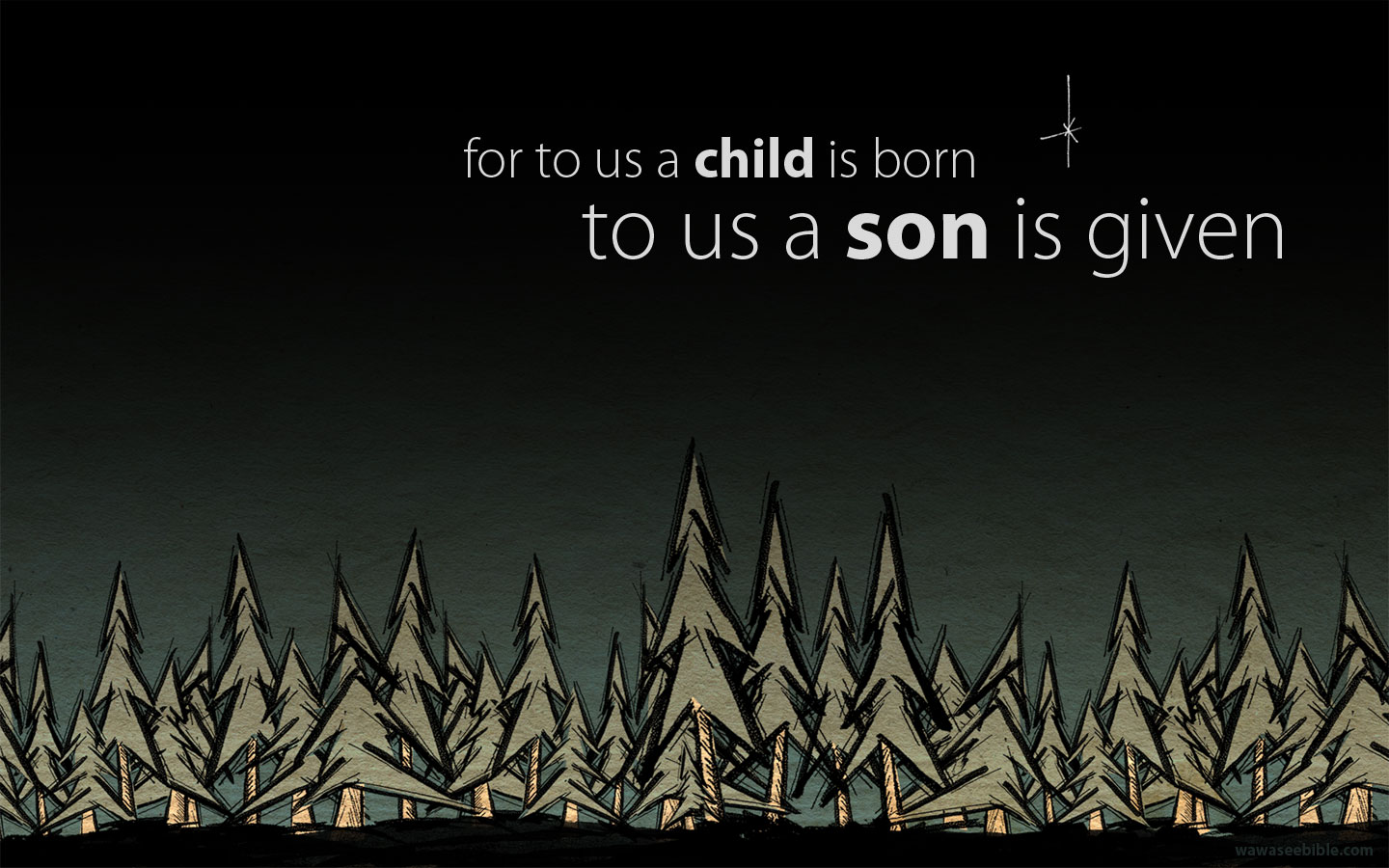


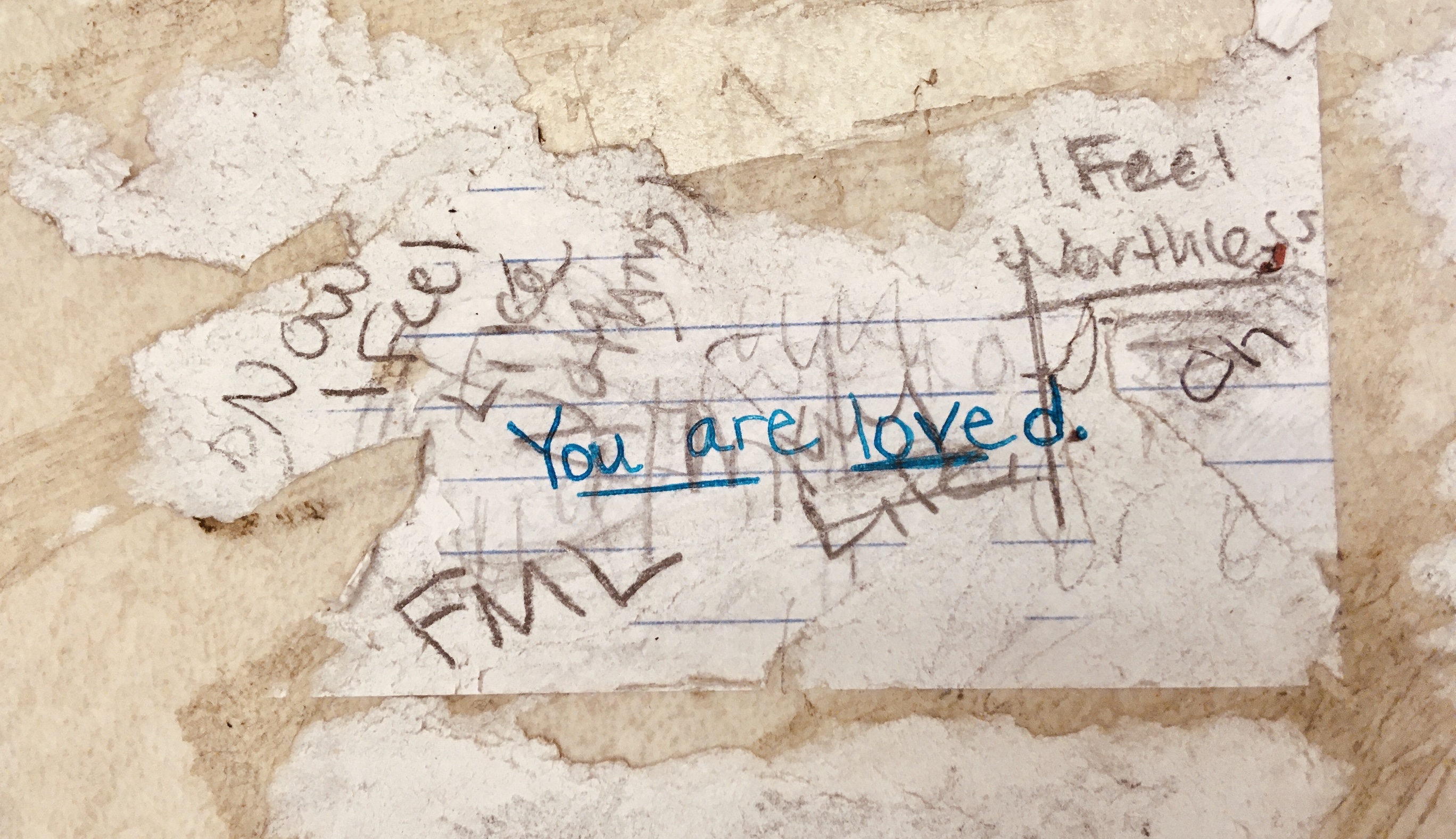




 I have seen the “more LOTR men, please” post shared several times, and most often it comes in form of a lament from women – young ones especially – that there are no men like this. (I am sorry to confess that there have been moments of despair where I have mourned the same.) Or the sharing includes derogatory comments about the character of men and their inability to meet this standard in the real world.






 hisdesertrose