Tag Archives: peace

Whole

Standard

During Advent many people enjoy using “peace” to describe a (hopefully) still and thoughtful season.  In English, “peace” is a narrow word.  We use “peace” to mean an absence of conflict – no one is openly hostile.  Or we just want “a bit of peace” – meaning we desire everything around us to be quiet and calm.  As an elementary school counselor, I can certainly relate to THAT particular desire!  If “quiet” was my sole definition of peace, my life would contain precious little peace!

“Peace” is an English word that tends to have a shallow use amongst the general public, with the exception of a more mystical application amongst Christians.  (For example, many Christians will refer to Jesus Christ rightly as the “Prince of Peace” or refer to the spiritual fruit of “peace” with vague explanations of what “peace” looks like in practice.)  The trouble with restricting peace to a lack of hostility or war, or to the presence of silence, is that we end with a skimpy understanding.  In Scripture, peace is to be recognized as both a rich concept and a glorious reality.  The words most often translated to our simple “peace” are shalom (Hebrew, primarily Old Testament) and eirene (eye-ray-nay – Greek, New Testament).  Though originating from vastly different languages, these two words are applied with congruent meaning in God’s Word.

Shalom.  This is a common greeting in Jewish culture, spoken as a blessing over one another in coming and going.  Shalom means permanent completeness, total wholeness, and soundness or wellbeing in all areas of life.  Given the Advent season, let’s look at a passage from Isaiah, foretelling the birth of Jesus Christ, our Savior:

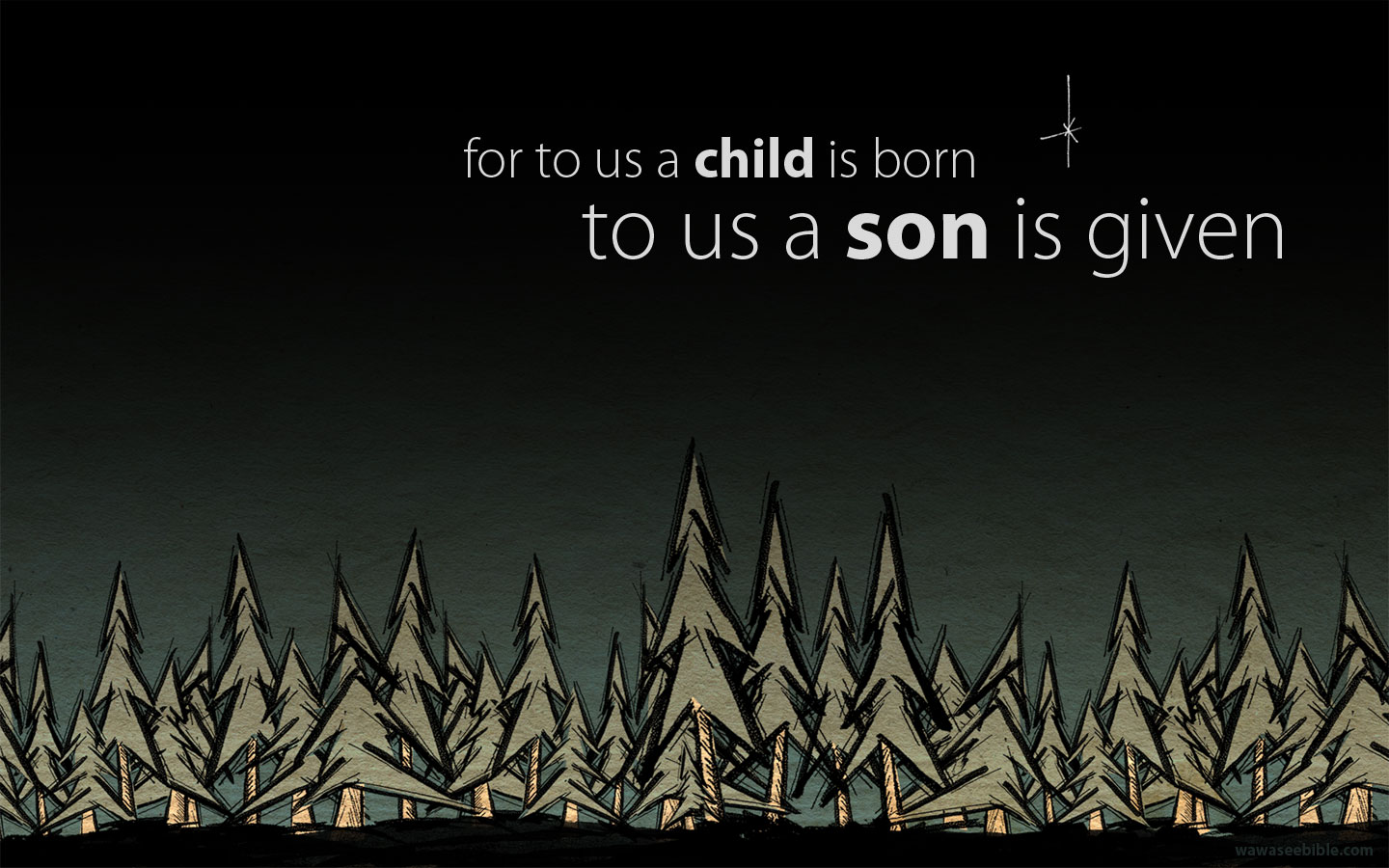
“For a child is born to us, a son is given to us; dominion will rest on his shoulders, and he will be given the name Wonderful Counselor, Mighty God, Eternal Father, Prince of Shalom.” – Isaiah 9:6

Prince of Shalom, Prince of Peace – try reading it again with the definition of “shalom”:

“For a child is born to us….he will be given the name Wonderful Counselor, Mighty God, Eternal Father, Prince of permanent completeness and wellbeing.”
Eirene.  This word is used heavily throughout the Gospels by Jesus.  It also directly opens (and closes) nearly every epistle (letter) in the New Testament, or the concept is tied into the closing.  Eirene means unity to the point of oneness, total and complete wholeness of one’s entire being and life.

“….Grace to you, and eirene [sound wholeness] be yours in full measure.” – 1 Peter 1:2

“Greet one another with a kiss of love.  Eirene [perfect wellbeing] to all who belong to Christ.”
 – 1 Peter 5:14

And for this precious season of celebration: “In the highest heaven, glory to God!  And on earth, eirene [complete wholeness and unity] among people of good will,” the angels declared in praise to the shepherds as Christ was born (Luke 2:8-14).

Through Christ Jesus we do not simply have the absence of conflict or a quiet hush.  All things are made whole and complete in Him, without even a whisper of brokenness.  In Colossians 1:19-20 we read, “For it pleased God to have his full being live in his Son and through his Son to reconcile to himself all things, whether on earth or in heaven, making eirene [permanent wholeness and perfect unity] through him, through having his Son shed his blood by being executed on a stake.” (I recommend reading the full passage for a more pristine context!)  Because of Jesus we are welcomed into the glorious reality of shalom, of eirene: total and complete wholeness.  Nothing missing, nothing broken.  Wholeness is not our promise for some day in the distant future.  Read the verses from Colossians again.  Our loving Heavenly Father was delighted to restore his creation to its original form: whole.  Complete.  One with him.  It is already done.  On the cross Jesus declared, ‘“It is finished”’ (see John 19:28-30).  This declaration sealed Jesus’ sacrifice as our reconciliation for all eternity.

We have been made totally and completely whole by Jesus’ sacrifice; it is already done.  Now our invitation is to live in the glorious reality of wholeness – permanently.

As each year ends, I begin asking God what word he has for me in the new year to come.  My word for 2022 came immediately, a firm whisper growing to a battle-cry in my soul: wholeness.  I adore and despise the word, because I look at myself and the world around me, still seeing the tattered shroud of brokenness that I know Jesus came to tear away.  I know that wholeness is my portion.  I know that God’s wholeness is total and complete.  Yes, that is a redundant comment, but we are as skimpy in our definitions of “wholeness” as we are of “peace.”  We let mostly-well and not-too-bad be our so-called wholeness and miss the reality of God’s kindness.  I say have a “whole” apple – even when it is bruised and scarred.  A student tells me he “has shoes” when the soles have worn as thin as paper and his toes are free in the wind, laces snapped and knotted back together.  That isn’t wholeness.  Those things aren’t like the wholeness God desires for his children.

“Whole,” but not “well — Photo Credit: Burwalde Juice

I am afraid in some ways, afraid of continuing to contend for promises that God has made for wholeness in my body, my soul; for wholeness in my family; for permanent soundness in my husband’s body and soul; for unity and permanent wellbeing in my community and my students.  I continue to ask, and in some ways I have not seen yet.  My heart breaks with the suffering – mental, emotional, and physical – that I see in my beloved ones.  I feel a gaping hole at the loss of my grandmother, who would have been the first to read my newest writing; I wanted one more hug, one more chance to tell her how much her constant love means to me.

This longing for wholeness wracks the deepest core of my being – it is so strong the desire carries a physical weightiness.  My conversations with God in the dark hours of the night, the vivid dreams that are not yet visible in my physical understanding, the hurts of my loved ones that I cannot take on my own shoulders, the many years of journals filled with honest words that yield my waiting to hope time and again – these linger with me constantly.  I cannot tell you the number of tears and sleepless nights spent in pursuing this longing.

Mark 5:21-34 gives us a stunning picture of the pursuit of wholeness.  Jesus is on his way to save the life of a deathly ill little girl.  As he is moving through the crowds, a desperate woman makes her way to him, determined to touch his garment and claim her healing after over a decade of constant bleeding that no doctor could explain and no money could cure.  There is nothing left for her brokenness aside from Jesus.  But why interrupt now?  Could she not have waited until Jesus healed the girl?  (The girl died, by the way, while this nameless nobody was interrupting Jesus with her brokenness.)  This woman had been bleeding for twelve years – could she not have simply waited another hour or so?!  Yet that is exactly our trouble with wholeness; we don’t pursue it at all costs.  We do not pursue wholeness when we are afraid that we will inconvenience someone else (even Jesus) on our mission to live in the reality of being complete.  I do not think it is a matter of not wanting it enough; I believe it is a matter of not truly recognizing the importance and the release of wholeness.  Jesus does not send away this woman who is clinging to her hope of wholeness, just in case you wondered.  The woman is terrified when Jesus acknowledges her surreptitious touch of his garment and the subsequent instant flow of his Life into her body.  Look carefully, though, at Jesus’ response:

‘“Daughter, your faith has healed you.  Go in eirene [perfect and complete wholeness] and be freed from your suffering.”’ – Mark 5:34
I want to be as committed to my wholeness as Jesus is.  I am ready for “wholeness” to be not merely a half-dressed word but a reality I live in for myself and my loved ones.  I refuse to settle for “good enough” or “not too bad.”  I am sick of mostly-well and sort-of-fine.  I am finished with “okay.”  That isn’t enough for me anymore.  Maybe it was once sufficient, but now I am ready for the fullness of what God has prepared for me. 

I am ready for permanent wholeness to be my reality.  Perhaps it is time for each of us to reject our fear of the unknown to the all-knowing God.  Perhaps the time has come for you and me to yield our understanding to the Living Hope that Does Not Disappoint.  Perhaps it is time to begin pursuing wholeness with reckless abandon and a heart tender to God’s kindness, dear heart.  I bless you in your journey as you learn to live in the perfect wholeness that God has for you.

Shalom be with you, brave heart.
Hold the Storm

Standard

“Lord, I want to feel again!” – this has been my ongoing conversation with the Lord for the past two years.  Anyone who knows me knows that I am passionate – about (I should be explicitly honest) everything in the way I approach life and people.  Yet 2017 found me utterly…missing.

Missing: Have You Seen ME?

Numbness is often correlated with shock.  Our bodies are most amazingly designed with a physiological fail-safe to become “numb” when confronted with situations or sensations too intense to process in the moment.  When something is overwhelming, the neurons that signal our bodies with different sensations and instructions to act simply stop sending signals because we don’t have the capacity to handle so many messages at once.  In the face of intensity, our bodies shut down the “feeling” parts.  This is numbness, and it can act as a physical, mental, and emotional shield that protects us in moments of intensity.  Numbness happens when people experience hypothermia and frost-bite: too much cold, and the human body ceases to feel the chill.  Numbness protects people, especially small kids, from environments that are over-stimulating (physically or emotionally) by causing them to “zone out” or ignore various situations.  In trauma and grief, numbness can allow persons to distance themselves from the situation(s) and even continue carrying out normal activity.  And, my dear friends, in caving to a challenging season, I went completely numb.

“I don’t know” was my go-to response – and I actually didn’t know; I didn’t know what I wanted, how I felt, whether I was okay.  I really didn’t know; I couldn’t tell.  It wasn’t that I didn’t care.  The problem was that I didn’t even know whether I cared – and that terrified me.  Or maybe it didn’t – I wasn’t sure.  Robotic, mechanical, functioning on autopilot – no terms are too strong for what it was and none, I assure you, are flattering in the least.

Numbness is a coping mechanism, but it is not a solution.

Oh, I was in deep hiding.  I was so far gone that, by the time I realized, I wasn’t certain I could find my way back from the nothingness.  That was a fearful thing, as I consider it now.  If there is anything I am most terrified of after that, it is to be numb again.  It was a separation, a chasm of nothingness, a consuming void – and I could see no light.  Separation from hope, from light, from Jesus – that is hell.  And I had chosen it – in my pain, in my confusion, I surrendered to the void.  I glimpsed that hell.  Sweet Jesus, never again – never again.

Yet even when I would have hidden, when I chose the nothingness, my Savior did not abandon me.  We are never too far gone for Him to rescue and redeem (Psalm 139:7-12).  And He alone knows how much I needed to be rescued, how deep was the scoring of my wounds, how my thoughts writhed in a turmoil of hopelessness.  For me, the freedom from this void came only when I was finally willing to admit it: I was furious, and I was hurt.  Both feelings were legitimate, honest, and even right – but it was not right for me to either keep or hide them.  It is okay to be angry – it is not okay to stay angry.  It is okay to hurt – it is not okay to stay hurting.  These were truly my feelings, but with no acknowledgement or centering peace to give perspective, they became parasites, feeding on my life.  In my nothingness Jesus met me; even in my hiding, He knew where I was.  He knew my need.  “We finally have our Sabra back,” my family wept with relief as I wept to purge the nothingness that had hollowed me for so very long.

I have spent these two years recovering my feeling.  And, if I may be forthright, it is painful.  It can be agony to feel so deeply and thoroughly.  Like a numb limb regaining feeling, there are the pricking stings of lifeblood flowing freely again.  From deadening numbness to full feeling – in His kindness I am healing from my hiding and from my wounds.  There are times when it is so tempting return to my hiding in the nothingness – or equally tempting to cast myself on the raging sea of emotions and be swept away.  How does one control such wild emotion, such feelings and sensations, the pain and the passion?  I do not want to hide, but do I want to feel?  Am I brave enough to feel again?

One of the people most dear to me shared wisdom.  This friend of mine knows what it is to feel, more than most people ever imagine possible.  We were discussing my role as a counselor in this context, how I work with kids in helping them build the skills they need to be emotionally and relationally healthy.  What is the truth, then, that I can speak over my kids?  What should we be speaking to ourselves?  “Deal with it” – yes, but how?  How do we learn?  In the end, it always comes back to one answer, the Truth: Jesus.  My friend spoke of a story…

Jesus sails aboard a boat in the middle of the Sea of Galilee with his disciples.  Under the strength and skill of the disciples – many of them professional fishermen – they have navigated to this point.  With sudden fury an unexpected storm arises, its wild might threatening to consume the small vessel and its passengers.  What can be done?  Even these avid fishermen are powerless – and utterly terrified.  If anyone should have been able to embrace this storm, it is these men – these men who can now do nothing except panic.  “Jesus,” they beg their sleeping Master, “Jesus, we are perishing.”  Why he isn’t panicking with them?  Can there be any salvation in this place of relentless fury?  Yet Jesus is not overwhelmed, for even this fury does not prevail against him.  Why are his disciples worried?  Where is their faith?  Has a storm stripped it from them?  And Jesus speaks stillness to the fury: the wind calms and the waves gentle immediately.  “Peace, be still,” he says, and there descends a perfect peace.  They are still in the sea.  There is still a journey to complete, but now they do it in awed awareness of the Storm Master.  Yes, even wind and waves obey the voice of Jesus.  (See Mark 4:35-41; Matthew 8:23-7; Luke 8:22-25.)

Approaching the Storm…We all have times when we are caught off-guard by emotional storms.  Storms, storms – I could hide, or I could battle it from the boat – are those my only options?  Hiding from the storm was not the answer.  I tried to stay ashore and avoid the storm – but the cost of the nothingness, the hiding, was more than I was willing to pay.  I also was still shy of the raging storm – its wildness was shocking, and I do not like the lack of control (which was especially disconcerting when I had so long prided myself on my self-control – ha!).  I prefer to focus on things that seem to be within my control – and when I do, I miss the deeper answers that God is providing.  Like the disciples, I try to use my strength and skill to solve my problems – then wail in desperation when the fury of the sea is overtaking me.  I continue to wrestle with the sails and oars of my boat when I should be asking Jesus to simply calm the storm.  I look for my control within the boat, while Jesus is standing ready to provide an encompassing peace.  That is the alternative to the hiding and the striving.  The storm is not to be feared, nor is it to be conquered by sheer force of will.

So what did my dear one say?

Embrace the storm, and let Jesus calm it.”

There is power in the storm, but only Jesus can steady this fury into peaceful strength.  Hold the storm, storm-child; you were made to feel.  I want to know the fullness of God’s heart toward me – and that is no tame shore.  The winds and wild waters exist, but God’s Word is a greater reality: “Peace, be still” (Mark 4:39).  Do not fear the storm; do not fear the feeling.  Hold the storm, storm-child, for you are created for the fullness of it. 

These are the words that God spoke as the peace into my storm:

You feel, but I AM.

And then there was stillness…

This is the reality of embracing the storm, of letting Him be the peace that stills and steadies.  Through it all, He remains I AM.  What would it look like, dear hearts, to chase the storm instead of fearing it?  What would it look like to embrace the heights and depths of emotion in raw honesty, knowing that He is our peace?  What would He speak to us as we stand in the storm and let Him become our stillness, our centering Peace?

Emotions are a gift that allow us to glimpse our Creator-God’s heart toward us, to see as He sees, to take hold of our glory in being made in His image (Genesis 1:26-27).  This is not so that we give in to whims of wayward emotions but so that we relinquish our fear of seeing the full glory in how God made us.  Emotions are true – we truly feel them – but they don’t always tell us the Truth, which is why we need to allow Jesus to be our Storm-Master. Let us feel, my friends.

Hold the storm, storm-child, for the Master of the storm is holding you.

We are not abandoned to the fury.  No more hiding.  No more striving.  Give up your shore and give up your oars.  Embrace the storm and let Jesus calm it.  Let Him speak to and through the storm that you might find fullness in how you are made, for He has declared His creation “very good,” knowing all of you even when you were but a dream and a plan in His heart, not yet born into the world (Genesis 1:31; Psalm 139:13-18).

Perhaps you are emotionally numb now.  Perhaps you are traversing your own terrifying nothingness, seeking your way back to feeling.  Perhaps you know what it is to feel so intensely that the emotion threatens to drown you or that others cringe away from your “outbursts.”  Perhaps you are endeavoring to understand someone who is coping numbly with pain or who startles (even disturbs) you with the intensity of their feeling.  Wherever you are in your seeking and your feeling, remember this, brave hearts:

Revel in wind and waves, for you are in the care of the Storm-Master.

Emotions are a gift from God.  To feel and to grow means that we are alive.  When we cease to feel and grow, we are dead.  Only living things grow.  Only living things feel.  And our God never, ever leaves us alone in the hiding or the feeling.

You are not “too much” for God.  I am not “too much” for Him.  He can handle the fullness of our emotions.  He has given us this beautiful, wild capacity, and He is not afraid of it.  He is not overwhelmed or shocked by our feeling.  He is not disgusted by it, nor by our needing or hiding.  In our feeling, He stills the storm.  In our needing, He does the filling.  In our breaking, He is the Healing.  In our hiding, He does the finding – because He always knows precisely where we are.  He never abandons, beloved.

Hold the storm, storm-child.  Let Jesus, the Storm-Master, still your waters and calm your winds.

Flow

Standard

Poppy, camera pouncer -- only a few weeks old

Poppy, camera pouncer – only a few weeks old. It was love at first sight.

On Monday I lost my sweet lovie from South Africa; my mom had to have Poppy put down.  I will never cuddle her again, my quirky yet faithful companion for the five most difficult years of my life.  My heart hurts, but this post isn’t really about my dog’s death.  More than any other death I have encountered, losing Poppy has laid me bare.

There inside my dream
I heard the river roar;
I stumbled through the darkened mist,
But I couldn’t find the shore.

Now this might seem silly to you.  After all, it’s way more tragic when people die because people have souls and are more important – right?  But let me tell you something.  Creation didn’t choose sin; people did.  Poppy’s death has left my heart in anguish, but not merely for the reasons you might think.  I miss her because I am human and I loved her – love her still; but that is not what truly hurts most.  You see, the consequence of sin is brokenness, and creation is powerless to stop that which people chose.  Though we deserve the death brought by sin, creation does not; it is subject to the consequences of our guilt.  Creation cannot choose something better.  Poppy could not have chosen to make her life better by thinking better thoughts or doing better things.  Her little body, like all of creation, fell prey to the brokenness of sin.

Sin always manifests itself in brokenness – this is the curse of sin that creation has been forced to bear.  Romans 8:20-22 tells us, “For the creation was subjected to futility, not willingly, but because of Him who subjected it in hope; because the creation itself will also be delivered from the bondage of corruption into the glorious liberty of the children of God.  For we know that the whole creation groans and labors with birth pangs together until now.”  What is this “hope” for which creation was subjected to brokenness?  The hope is the revelation of the sons of God through Jesus Christ, which brings with it reconciliation and restoration – the redemption of all created things (Romans 8:19-25).

I could have asked, “Why?  Why my Poppy?  Why is there so much pain?”

Happy memories of life around the world with my Poppy.

Happy memories of life around the world with my Poppy.

But asking “why?” can become a dangerous addiction when the answer is very simple: brokenness.  So I am choosing let Him flood my being with His peace.  Peace doesn’t take away the hurting.  Instead it allows me to recognize that suffering is part of life in a broken world and, in doing so, exchange my ashes for beauty at the feet of Jesus.  He is revealing new depths of His gracious love in the midst of the brokenness of creation.

A voice within the mist
Said, “Tell me what do you seek?”
I said, “I have a mighty thirst
But I feel so tired and weak.”
He said, “I am the river

Full of power and truth.
You’ve been looking outside yourself
When it’s there inside of you.”

Those verses I quoted from Romans 8 are followed by a well-known, oft-quoted verse: “And we know that all things work together for good to those who love God…” (v. 28).  I claim that promise.  As tears run down my face, I can without hesitation proclaim my unwavering trust in God’s working all things together for my good.  Not to say that all things are good in themselves or that pain is not valid, but to recognize that I am free to rest in the surety of His goodness.  I don’t live a glass-half-empty life, but I don’t live a glass-half-full life either;  I live a life that is always full to overflowing, everyday living all-out, a testament of the fullness of His gracious love.

My mom pointed me to Ezekiel 47:1-12.  This passage never fails to move me deeply.  I encourage you to read it devotionally when you have an opportunity to do so, because there is so much more than just what I am going to draw out here.  Ezekiel is seeing a vision of the new Temple and the New Jerusalem that God is preparing for His people, which, as Jesus-followers, we understand to extend far beyond mere physical fulfillment to spiritual reconciliation with the Father and His purpose for His creation.

Bursting with vivid imagery of the restoration of creation, these verses in chapter 47 describe the river of water flowing from the altar in the Temple.  As Ezekiel is led forth, the river becomes broader and deeper until it is utterly uncrossable.  ‘“Son of man, have you seen this?”’ asks the man leading Ezekiel (v. 6).  Oh, can you hear what that question means?  Have you seen, have you comprehended what the Lord is doing?  The river flows down to the sea, and by its waters the sea is healed.  Where the river goes, its water brings life and healing: “everything will live wherever the river goes” (v. 9).  And the life of the river brings abundance.  The sweet waters of the river tenderly restore everything receptive to its touch; healing flows as part of the life it gives.

And the river will flow,
The river will flow.
Through all of the times of your life
The river will flow.
And the river is love;
The river is peace.
And the river will flow through the hearts
Of those who believe.

Revelation 22:1-5 echoes, almost word-for word, the vision of Ezekiel – except that Revelation has an expanded vantage point because the Messiah, Jesus, has already lived, died, and rose again.  In the previous chapter John writes of the beauty of the New Jerusalem with a view expanded with the knowledge of Christ our Messiah; here, we need no temple, for “the Lord God Almighty and the Lamb are its temple” (Rev. 21:22).  John speaks of seeing a “pure river of water of life,” flowing from the very “throne of God and the Lamb” to bring abundant life (Rev. 22:1-2).  Then comes the awe as the manifestation of full redemption is revealed in verse 3: “And there shall be no more curse…”  The flow of the River wipes away the curse of brokenness that comes through sin.  All who thirst, all who desire, may come and take freely of the water of life (Rev. 22:17).  So I ask: are you thirsty and dry today?

So put your hands in mine.
Oh, put your hands in mine,
And let us all go down
And kneel by the river’s side.

We’ll cry our tears of joy,
Cry our tears of pain.
We’ll let them fall down from our eyes
To be washed in the sacred stream,
Even the secret tears
Buried in our memories;
Let them all be swept away to the depths of the endless sea.

The lyrics of this Whiteheart song beautifully capture the heart of the River passages of Ezekiel and Revelation.  When the song says that the river “will flow through all the times of your life,” it is explaining a special verb form that doesn’t translate into English very well.  What the song and the verses are saying is that there is already a release of the River, and the River is flowing continuously.  And what is this healing River of life?  It is Jesus Christ, the Living Water who causes His Life to bubble up within us as an eternal spring that never runs dry but flows abundantly through our hearts and lives (John 4:10, 14).  There is pain, there is joy, and there are secret tears – all are swept up in the River and cleansed that we might receive restoration.  Pain should never define us; instead we should allow it to refine us to a place of deeper strength and greater longing for the fullest outpouring of God’s redemption and restoration of creation.

the river will flowLet the River flow.  Come, Lord Jesus, come.  Amen.

And the river will flow;
The river will flow.
Through all of the times of your life,
The river will flow.
And the river is love;
The river is peace.
And the river will flow through the hearts
Of those who believe.


Take a few minutes to listen to the full Whiteheart song here:

“The River Will Flow” — Whiteheart