Tag Archives: relationship

Commune with Me: From the Garden to the Bathtub and Beyond

Standard

From before the first moment that human eyes partook of Creation, God’s design was for unity, not only between Creator and creation but between created and created. Relationship is, in fact, His best idea for humanity:

It is not good that man should be alone….”
~ Genesis 2:18

Thus, Creator designs woman — and no longer is man alone. Man and woman now walk with Creator in the Garden in the cool of the day, naked before Him and one another, together without shame or hinderance (v. 25)…until the day Creator seeks these beloveds of His, searching in the Garden in the cool evening breezes. ‘”Where are you?”‘ He cries out to them.

Shame had entered the Garden. Now the beloveds hide among the trees to shield their nakedness from the Creator who crafted every part of them with careful attention. I can hear the devastation in Creator’s voice as He responds to their tortured state, ‘”Who told you that you were naked?“‘ (see Genesis 3:8-11). Who told you? “My dear ones, who forced shame upon you?” Creator weeps over his beloveds. And so the first communion shatters. A void of loneliness devours face-to-face relationship, and creation is left starving for its original design.

Yet I need you to know that the Creation Story never ended there, dear hearts. The Story of Creation is, in fact, still being told within and through us to this day, so very many years later.

For all creation waits and groans, longing for the sons of God to be revealed.
Subject to futility, but not forever.
Perfect Communion awaits: our redemption and reconciliation —
Creation and Creator no longer separated.
(see Romans 8:19-23)

Creator’s design was for oneness, for a face-to-face, unashamed reality in which we dwell together with Him and one another in unity: JESUS. Creator’s best idea, His perfect plan. You see, in Ephesians Paul writes that we are to “make every effort to preserve the unity the Spirit gives through the binding power of peace,” because there is one Church, the Body and Bride of Jesus Christ; one faith, one baptism, one Lord, one God and Father of all (Eph. 4:2-6). Ah! Such ideals! Then into that perfection He gives gifts — gifts designed purely to bring us into unity with Himself and one another, that we might be intimately connected and built together most gloriously in love, to fulfill Creation’s original design….perhaps I may simply recommend you read all of Ephesians 4, lest I become entirely carried away.

“Well, that’s nice, Biblically sound and all that, but I really only wanted to know why she mentioned a bathtub.” — here I use creative license to ascertain your potential thoughts. Never fear; I indeed did not forget. I will provide the disclaimer that parts of this story may seem unlovely, so I urge you to read with gentleness toward your own experiences and toward the characters here. Just know that in the script of a Greater Story, it all becomes grace.

In January of 2023 my heart was not rejoicing with the New Year. “Mourning” is a strange word that has been too often used to indicate a certain span of time — an event, an action — when it actually marks a new reality. I was mourning, utterly empty in the wake of the late miscarriage of my son the prior autumn, even as my body and mind still struggled to recover from a trauma they were never designed to experience. In the upstairs bathroom I stared out toward my beloved mountains and wept without seeing as I turned on the sprayer. Just a shower. That is all I attempted — yet it was nothing I truly needed. Overwhelmed with grief and soaking wet, I found myself unable to move, unable to help myself. I was undone. All I could do was curl up in the bottom of the now-dry bathtub with hot tears streaming into my sopping wet hair as the rest of me shivered. I weakly cried out for help to the person who could have best been with me in this grief, to the one to whom I was once married. As he responded in his own pain, I was met at my point of need with screaming and accusations. I was still so wet, so cold. I still needed help. While I lay paralyzed by grief, his rage continued until it became a gun to his head that I later had to pry away while I met his needs. I am empty, Father. Am I empty?

But I wasn’t left alone in that bathtub. Jesus never left me — and I can tell you precious moment after precious moment about His tenderness toward me. To commune is to have a face-to-face, intimate sharing of one’s authentic being. This is why, when we practice the sacrament of Communion, taking the bread and juice (or wine, because that’s what Jesus used, just saying), it is our sacred opportunity to do it as a remembrance of Jesus Christ, whose death and resurrection restored us to our original design for unity (see 1 Corinthians 11:23-26). Every day from the point we choose Him, Jesus communes with us as we become a true dwelling place for His Spirit.

Know me.

Communion is not merely about our vertical experience of relationship though; it is about our horizontal capacity to connect with one another: one Body, one faith, one hope, bound together by the Spirit in peace. “Commune with me,” cries one soul to another, even as our deepest places crave communion with Creator. To commune is to enter a space where we are free to unite in wholeness with one another. See me face-to-face. Know me as I am.

“It is not good that man should be alone…” Where did I find my phone, why was it in the bathroom — I could not tell you. I tried to call my papa — no answer, and he always answers. I tried to call my parents — it wasn’t late, so where were they? My spirit knew I wasn’t truly left lonely, but my body was alone — and I was in need. I longed for the soft flutter of my baby, knowing I will not see his face this side of Heaven. I desperately craved the comfort of my grandma’s voice to carry my loss, but I said goodbye to her the previous year, and she is in Heaven rocking my little Xavier.

So I called my neighbor — why did I call my neighbor? She was nice, I worked with her, we lived next to each other and shared snippets of our lives, both joys and pains — but this was a different kind of need. Mine was a desperate plea of a most intimate nature, the ugly kind that we do not like to share or that we pretend we do not have. Friends, I told you I was in a bathtub. I was wet. I was naked. I was in need. “Commune with me,” my soul screamed. I called her on the phone — why did she answer? — and she set her baby down by his dad and declared, “I’ll be right there.” She walked to my house; she searched for me — past the chaos being created by the person who should have already helped me; she called out to me. She came to be face-to-face. Within moments, the hands of Jesus took the form of the hands of my favorite Angel. She didn’t even flinch at finding me there so entirely undone, and only grace met my grief-filled eyes. She helped me up, wrapped me in a towel and dried me as I stood unmoving, dressed me in pajamas she’d had to dig around for, settled me in a chair, brushed and braided my hair. She spoke words of life and love, face-to-face with my pain and not afraid of it. Face-to-face, hand-to-hand, heart-to-heart. Commune with me.

My whole view of Angel exists in recognition of that moment, of that connection. Tears of gratitude fill my eyes as I write my story, a Great Story. Her name is a glorious representation of her love and the gifts that she shares as she ministers comfort to those around her. Angel has become the sister of my heart as we both walked out of the nightmares created by brokenness and into the freedom of wholeness. I still don’t know why she chose to come on that empty winter night, but I will be forever grateful that she did.

My favorite Angel

You see, dear ones, we were designed for communion. We were designed to walk together, hand in hand, unashamed before our Creator-Father. If you crave communion, you long for your perfect design! That is as it should be. So commune with the ones who choose to be face-to-face, heart-to-heart. Do not settle as you seek the Ruth to your Naomi, the Jonathan to your David, the Mordecai to your Esther, the Lover to your Beloved — and may you be as those precious ones to others around you. Set yourself to walk with those who seek true connection, and above all set yourself to seek first the One who has always been seeking you. It is time to reject shame and embrace communion unto wholeness.

Enjoy the garden in the cool of the day, brave hearts.

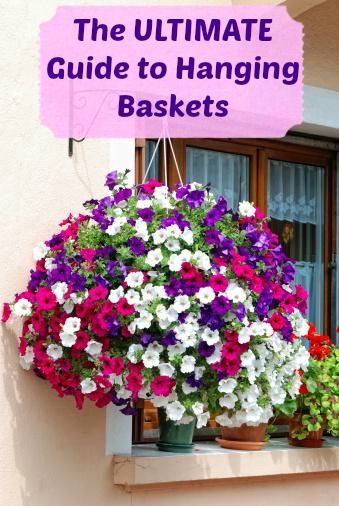
Sabra’s Guide to Hanging Baskets

Standard

Relationships are hard work, and they can be confusing.  Actually, I should be more specific: people are hard work, and people can be confusing.  But there is the potential for beauty, life, and growth.  Specifically, I have been thinking a lot about romantic relationships and marriage.  What makes a healthy romance?  What builds a lasting, thriving marriage?  But most of all, how can we be sure that we’ve found “the one”?

For those of you who (like me!) are sometimes baffled by the “other person” aspect of relationship, I hope you’ll enjoy some anecdotal analogies with me.  Let’s imagine men are gardeners and women are hanging baskets (and don’t be too smug, ladies, because these analogies can just as easily be reversed!).  Relationships can be much simpler than we’re willing to believe, so I’d like to share about a few types of gardeners I’ve come across….

The Brown Thumb by Einav Aviram

“The Brown Thumb” by Einav Aviram

The Zealous Brown-Thumb: This gardener wants a hanging basket of his very own.  He doesn’t know anything about taking care of them, but other people have them, so he’d like one too.  It can’t be that difficult, right?  This gardener really likes to keep his basket with him so he can constantly tend it.  If fervor alone could keep a hanging basket alive, his would thrive.  However, just as zealous watering means that my family discreetly replaces my 93-year-old great-grandmother’s house plants each week, so mere good intentions don’t allow a hanging basket to thrive.  No hanging basket can be hidden indoors (even if the gardener was trying to keep it safe and untouched by passersby), and no hanging basket should be driven around in a hot truck all day in the name of being carefully tended.  Soon this gardener finds his once-beautiful basket wilting and often can’t determine the cause.  His best opportunities to learn are through experience and time spent with well-seasoned gardeners of healthy baskets.

The Basket Browser: This gardener adores hanging baskets, and he knows he’d like one of his own – eventually.  Overall, he just thinks they are really great – and it’s so difficult to decide on one!  He finds one that he really likes, and he hangs it on his shopping cart.  The problem is not that he doesn’t like the one he’s selected; the problem is that he enjoys perusing the selection.  After all, there could always be one just a bit nicer than the one he’s already found.  But he doesn’t want to give up the one(s) that he already found!  This gardener will often leave baskets literally hanging on his cart, expecting them to be waiting (on his cart) when he finishes browsing and is finally ready to decide on which one he wants to hang on his porch.  He’ll be ready eventually, but every basket has a limit of how much uncertainty it will handle before being either taken home or rehung to be chosen by another gardener.

The Game-Plan Gardener: This one plans to garden someday.  He’s going to prepare the perfect porch and the perfect pot with just the right amount of sunlight, and he’ll have plenty of plant food and properly fertilized dirt on hand when the time comes.  The keyword for this gardener is “someday.”  This is the kind of gardener every hanging basket would like to have but also the kind that will not be forced into choosing a basket.  His basket-choosing will be on his own terms and only when he feels everything is just right.  When he chooses, his basket and porch will be the envy of all the neighbors – but no one can tell quite when that will be.  Patience is necessary if you’re holding out to be the hanging basket on his perfect porch.

The Innovative Gardener: Like the last type, this gardener has a strategy – but of a rather different kind.  He looked, and what he saw was a fabulous potted plant.  He thought to himself, “That potted plant could be put into a hanging basket.”  So he prepared his porch, hung a lovely basket, and devotedly spends time coaxing his precious potted plant out of its small pot to transplant it into the larger, brighter hanging basket that he has made ready.  He knows this can be done, and he’s willing to take the risk because the potted plant he found was spectacular to him.  No one else would have done it or thought of doing it.  His hanging basket will thrive – no matter how much it takes, it’s worth the effort to him.

The Bewildered Rookie: This gardener knows a bit about gardening, and he’s determined to find a hanging basket.  He hardly knows where to begin; he doesn’t want to get it wrong.  When he finds something he likes, he’s still not confident in his own abilities, so he has a question: “Are you a hanging basket?”  The hanging basket is like, “Um, yeah.  What does it look like?!”  Breathing a sigh of relief, this gardener grabs his newly discovered basket and eagerly runs home with it.  A few leaves may be lost and a few stems squashed in his mad dash to ensure that no one else gets his basket, but it’s nothing that won’t be healed with a bit of time and loving care.  He is pleased with his basket, and nothing is going to take it away from his porch – because there’s no way he’s going basket-shopping again!

We all wish it could be so simple!

We all wish it could be so simple!

The Gardener-Poet:  This gardener is a true romantic.  If there was ever anyone who would sing to his plants (it’s good for them, you know), it would be him.  No matter what happens, no matter how finicky or delicate his hanging basket, this gardener will continue to overcome every obstacle because he’s completely sold on the idyll of a porch with a hanging basket of his own.  But more than that, this gardener is completely sold on his basket – no other basket will ever be better or lovelier (even if the basket thinks itself drab or undesirable).  There’s no use trying to burst his bubble, so either you’ll go along with it or you won’t.

The Hesitant Green-Thumb: Secretly, this gardener is a true green-thumb, and a hanging basket would thrive under his gentle attentions.  His porch is ready, and he’s got a special spot for his would-be basket.  He hasn’t brought one home yet, but it’s not because he can’t decide.  In fact, he’s always wanted a hanging basket; but he would never get in the way of another gardener.  If a hanging basket didn’t seem as though it would be happy on his porch, he would never so much as put it on his cart – he would never just “try it out” to see if he liked how it looked.  He thinks flowers are precious, and he treats them accordingly; stem-squashing and leaf-smooshing are not options for him.  He’s not always confident that a basket would want to hang on his porch (often assuming that another gardener could offer a better porch), so he’s going to need a clear path to a basket lest he concede porch-privileges to a more assertive gardener.

And the point of all this is…I have met a lot of people – men who are gardeners like the ones I mentioned above, and women who are hanging baskets (or revamped potted plants!) of all sorts.

Men, consider honestly: what type of gardener are you?  What type of gardener will you choose to become?  Will a hanging basket be safe in your care?  Will it have the chance to thrive?  Are you willing to learn as you go?

I’ve often heard guys lament that women are complicated.  Therein lies a great secret of gardening: every hanging basket has different care requirements that must be met in order for it to thrive.  Some need full sun, others full shade, others part sun and part shade.  Some need lots of pruning, others need none.  Some need lots of water, others need only a bit.  Be conscientious of your own basket; you don’t need to care for your basket in the same way that another gardener cares for his basket, because your basket is unique.  Learn some gardening generalities, but take care of your own precious basket in the way that it needs.

Here’s a really important thought for you when it comes to romance and marriage: are you choosing an annual or a perennial?  Annuals are plants that bloom only for a season, and then that’s it.  They are beautiful for a time but never lasting, which means that you should buy the most stunning one you see – and the most expensive one you can afford (because greater expense means a larger plant).  Perennials, on the other hand, ebb and grow with the seasons.  They experience seasons of blooming and seasons of quietness (even sometimes looking dead during the winter); but they keep growing, keep remaining and rooting deeper.  They become better with each passing year as they are well-tended.

Women, are you a perennial or an annual?  Which will you choose to become?  Are you willing to put down deep roots and weather the seasons?  Will you endure both pampering and pruning as needed?  Are you prepared to enjoy the porch on which you are hung, or do you not actually want to be a hanging basket?  We need both self-awareness and other-awareness in order for our growing experience to be fruitful.  (Pun intended.)

I grew up playing in this lush, vibrant garden that is my great-grandparents' yard.  Over forty years of love and care have made it unsurpassably beautiful.

I grew up playing in this lush, vibrant garden that is my great-grandparents’ yard. After more than six decades of love and care, its beauty is unsurpassed.

“Love planted deeply becomes what it ought to, and hearts given freely become what they ought to be” (“Ought to Be” by Audrey Assad).  Romance and marriage are meant to be like that.  Ideally, we get to choose something that begins well.  But no matter what the beginning, we should be always seeking for love to grow richer, fuller, and deeper.  That’s the kind of love and marriage I want to cultivate – the kind in which the best is always yet to come.

When we choose a spouse, we often choose as though we are selecting an annual, looking for something that has the brightest blooms NOW and the shiniest leaves NOW.  In Christendom, we have embraced the lie of “annual love” (the best NOW).  I am sorry to say, we have a name for this false notion of love: “finding the one.”  We look for something that will be big enough and splendid enough to be rationed out for as many years as necessary.  Unfortunately, many people then find that their love “fades” or their feelings are altered with time.  Why?  Because they mistakenly assume that the best already happenedThere is, with annual love, the underlying notion that the love and loveliness of romance and marriage are “used up” over time. 

But the reality is that true love becomes better over time and with careful tending.  In light of this precious truth, we are free to look for that little nub of a perennial, a teensy starter plant, or for a plant full of buds rather than blooms.  Why?  Because, after a few years and with gentle coaxing, little starters become strong, beautiful plants – the heirloom plants that everyone envies but few are willing to wait for.  Because there will come a day when the buds, so long awaited, burst into the fullness of the flowers that they were always meant to be.  True love becomes so, so much better with time and intentional care.  And, because it is so beautifully freeing, I’ll share this wonderful secret with you as well:  your “one” is the one you choose.  That’s it.  That’s all.  There is no “one” better than the one you chose, no “one” God intended for you instead.  I know not every romance or marriage “works out”; this happens because people aren’t perfect and don’t always make perfect choices.  But be willing to choose, and be willing to cultivate a healthy garden with the one you choose.  Heirloom plants don’t simply “happen,” and neither do wonderful marriages.

Again, I remind you that these analogies of gardeners and plants can be reversed, and the same anecdotes and questions can be applied.  Some gardeners simply enjoy trampling hanging baskets or changing them out faster than seasons turn for reasons I can scarcely begin to fathom.  Some hanging baskets are afraid to show their true colors for fear that they will be judged as too much or not enough in some way.  Gardening has many joys, but it isn’t easy.

I could have readily added more descriptions of various gardeners and their hanging baskets.  My real intention, however, was not to place all people into certain categories but rather to share what God has been teaching me about romance and people and imperfection – and sometimes a bit of humor is the best mode of delivery for deep truth.  The only perfect Gardener is our good God (see John 15:1-8), who teaches us what it means to be tender plants cared for by a loving hand, being steadied by Jesus and learning to bear healthy fruit.  From our Good Gardener, we can learn how to provide similar faithful care for the precious “plants” in our lives.  Ultimately, His care alone is steady and unfailing; He alone knows all our needs, our weak branches, and our potential fruits.  So let us learn to be as fearless and wise in our gardening endeavors – be they romance or other relationships – as He is in His.  He tirelessly tends us; and now, brave hearts, it is our turn to create space for roots to grow deep and gardens to thrive.

My great-grandparents -- This is love planted deeply.  More than sixty years of love has cultivated this "garden," in addition to the actual garden pictured above.  Grandpa and Grandma, thank you for creating a beautiful love for our family to flourish in!

My great-grandparents — This is love planted deeply. More than sixty years of love has cultivated this “garden,” in addition to the actual garden pictured above. Grandpa and Grandma, thank you for creating a beautiful love for our family to flourish in!

The Flipside

Standard

This past fall I posted a blog entitled, “The Truth About Fairy-tales” in which I wrote about the Fairy-tale Heart of God.  I mentioned the wonderful way that He created men and women to find relationship (friendship, romance, etc.) with each other.  This is really a continuation of those ideas.  Through some recent goings-on in my life, the Lord has been showing me, very gently, my own inherent need for relationship – and the needs of others for the same thing.

When I use the term “relationship,” I am talking about all kinds of relationship.  We need romance as well as friendship.  We need to care for others and also be cared for.  We need light-hearted fun as well as wise counsel.  As human beings who bear the image of our Creator, part of our design is that we both need and crave relationships, for they are the sweet intimacy in which we share our hearts and lives with the people we are closest to.  And do you know that both the needing and the craving for relationship are good and healthy?  It is only how we choose to meet those inherent longings that can lead us to dark places and down paths we never intended to walk.

Do you feel fragile, ready to shatter at the slightest pressure?

Do you feel fragile, ready to shatter at the slightest pressure?

Just like everything else in creation, relationships have been tainted by the ugliness of sin.  Relationships often show signs of sin’s brokenness because they are the product of imperfect people.  Abuse, manipulation, deceit, neglect, betrayal of trust – these are most hurtful when they are perpetrated by the people we love, the people who should take care of us.  When we are hurt in relationships, we begin to shield ourselves, walking wounded.  Left to our own devices, we often become angry, bitter, or jaded.  We welcome self-pity and despair into our lives.  And then, most dreadful of all, we allow that brokenness to seep into our spirits and eat away at our God-given identity.  “Unloved, unwanted, broken, hopeless, useless, used, filthy, ashamed, guilty, dissatisfied – never whole” – these are some of the malicious lies that stain our lives when we let brokenness define us.

We then put up intangible walls to protect ourselves from greater hurt, not realizing that we are simply permitting our wounds to fester as we dwell in unholy, unnecessary agony.

Do you feel hollow, strong on the outside but empty and dead on the inside?

Do you feel hollow, strong on the outside but empty and dead on the inside?

Or perhaps your life has been fine and you’ve been surrounded by decent people.  You keep telling yourself that you should be content, that so many other people have faced deep hurts that you never had to experience.  Yet even as you tell yourself this, you feel hollow – something is missing, but you aren’t quite sure that is okay.  In spite of every relationship you have, nothing feels like it is truly enough – nothing feels quite satisfying.  You may think that Shakespeare was right: “Tis better to have loved and lost, than never to have loved at all” – that it is better to be wounded than simply to live and love shallowly.  Then, of course, you might feel bad for thinking such a thing, as though you were wishing pain upon yourself.  My question is, why should you have to be hurt deeply to love deeply?  Must others crush us in order for us to experience the fullness of love?  Where is the balance?

In truth, I think we all carry both a bit of brokenness and a bit of emptiness.  We find the flipside of fairy-tales in this paradox of longing and self-preservation.  When we feel broken or empty, we make desperate choices, seeking to meet our needs for relationship through unhealthy means.  Oftentimes this involves looking to people – or to one person – to meet all of our needs.  We create false visions, hoping that we can attain the wholeness we seem to be lacking: “If only I had a [mother, a husband, a best friend…], then I would be fine.”

We reject that which is lovely and right about fairy-tales, and we cling to that deceiving notion, that fairy-tale discontent that whispers, “If I just had…I would be whole.”  We forget about the endless Love Story written for us by the Fairy-Tale Heart of our Lord and look to people to be the source of our wholeness.  The problem with this mode of thought is that it is both selfish and, ultimately, self-destructive.  Still, our hearts yearn for the intimacy of relationship, and the desire to know and be known is so overwhelming that we are compelled to sate it.

Surely there must be a better way.

Be courageous and allow yourself to find healing in relationship, first with the One whose love is limitless and then with the beautiful, imperfect people around you.

Be courageous and allow yourself to find healing in relationship — first with the One whose love is limitless and then with the beautiful, imperfect people around you.

Whether you are wounded or simply feel hollow, the only thing that can bring restoration is our loving Savior, Jesus Christ, who bore every sin to ransom us from an empty, shattered existence.  We still need and long for relationship, but we cannot meet it through people alone.  No one person could ever love us enough or give us enough or care for us enough to make us whole.  No person, regardless of how much that person tries or wants to do so, can fully satisfy us.  And no matter how many people you gather around yourself, they can never give you all that you need.  The truth is that we cannot adequately love or be loved until we know the love of the One who first loved us and gave His life for us (Romans 5:8).  Because of sin’s curse, we need to first be healed – made whole – by Jesus in the area of relationship so that we can enjoy the happy human interaction that we so desire.  We cannot have the healthy relationships that we were created for until we find our wholeness in Jesus, who will never fail us and whose presence will never leave us.

Jesus is calling you into His Fairy-tale.  Will you let Him romance you today?

Howzit?

Standard

While living in South Africa my family was frequently greeted, “Howzit?”  This catchy little phrase is a condensed version of “how is it going” – and “howzit” just rolls off the tongue so much more smoothly!  I find myself still using this colloquialism often, although I try to avoid confusing people with my quirky multi-cultural habits.

Don't settle for the mask of "fine."

Don’t settle for the mask of “fine.”

“Howzit” is a tiny phrase for a deep question.  Unfortunately, we tend to use the “how’s-it-going” bit as a casual greeting in passing.  Somehow, we manage to make a very intimate question into a phrase of mere utility.  And though the way we ask it might imply a distinct lack of care for the person we are asking, the ubiquitous and universal “fine” responses we receive are far worse.  Within the Church, we often perpetuate – unknowingly, perhaps – the idea that, once you have met Jesus and accepted Him as your Savior, you enter an even-keeled, continual state of “fineness.”  We somehow draw the conclusion that, because Jesus is our Restorer, our lives shouldn’t be messy and we should always be “okay.”

We act as though God is bothered by our humanness. But the truth is that life is messy.  Sometimes it is lovely, sometimes it hurts, and sometimes it just seems “off.”  The trouble is that we are bothered by our own humanness – and the humanness of others.  Because of this, as the Church, we have a tendency to settle for that “all-is-well” mien.  And when we do that, we end up with “fine” relationships, “fine” lives, “fine” families, and “fine” jobs – a whole world of false fineness built as we hide our messes or complacently slide through the cracks of fellowship.

People who ask me how I am faring will get an honest answer, and I’ve found that responding to (most) people’s flippant inquiries with anything other than “Fine” or “Well” makes them rather uncomfortable.  It is most frustrating to me, however, when I ask that question and receive the ubiquitous response of “fine” when I know that someone is not fine.  When I ask, I ask because I care, I want to know, and I want to do something about it – even if that “something” is just listening.  When people tell me they are fine but I can see the agony, the confusion, or the frustration screaming silently from their eyes, I am not okay with that.  I am not okay with letting people slip under the radar, unnoticed and solitary.  I am not okay with letting people be “okay” – whatever that means.  When “fine” is not actually fine, I am not satisfied.

The Body of Christ – the Church – is meant for so much more than “fine” and Sunday-pretty façades.

Time in fellowship is always time well-spent.

Me and two of my best friends, enjoying the night stars and each other’s company. Time in fellowship is always time well-spent.

As the Church, when we settle for “fine,” we are preventing ourselves from experiencing the wholeness and intimacy of fellowship within the Body of Christ.  Suddenly, in our “fine” lives, there is no chance to bear one another’s burdens (Gal. 6:2; Rom. 15:1-6) and no opportunity to do good to our fellow believers (Gal. 6:10).  We close ourselves off from allowing ourselves to love and be loved in a way that fulfills the law of Christ (Gal. 5:14).  We cannot “comfort…and edify one another” (1 Thess. 5:11) or bear with one another in love and enjoy unity in Christ through the Holy Spirit (Eph. 4:2-6).  And if we cannot do these things, we are not truly living as the Body of Christ. 

You see, in the Body of Christ, when one suffers, all suffer; and when one rejoices, the others rejoice in unison (1 Cor. 12:26).  In the Body of Christ, we are safe to confess our sins and embrace the fullness of God’s forgiveness (1 Jn. 1:6-9).  Within the Body of Christ, there is a beautiful cycle of giving and receiving that should be occurring.  It is in this place of fellowship and honest intimacy with Christ and each other that all our needs are met.

Don’t settle for “fine.”  We were not created for “fine” but rather for all the highs and lows of being humans with a good, good God who never fails.  Do not fear your humanness, for you were created in the image of our matchless God, to reflect His glory.  Choose vulnerability and find the wholeness you were meant for within the Body of Christ.  Journeys are best taken in community, so let us journey well and journey together, my friends!

Fellowship of the Ring

Life is a journey — take companions!

The Truth about Fairy-tales

Standard

thought about Disney's FrozenA friend shared this picture on Facebook right about the time Frozen came out.  I have now watched the movie, and it tweaked my brain into thinking about some very interesting concepts.  For instance: being independent and without responsibility doesn’t constitute freedom; true freedom comes with relationship and loving.  But back to the point of what this image says.  The whole idea that women don’t need men actually started with Brave.  Deviating from their well-known fairy-tales, Disney’s message in Brave was, essentially, girl power – women are powerful, men are fools, and we don’t need each other.  (Yes, I was really disappointed, to say the least.)  There also seems to be this idea floating around that fairy-tales are “out” because they just aren’t applicable to “real life.”  But let me tell you that those are lies, and when I say that, I am completely serious.  Let me tell you why:

Fairy-tales are straight from the heart of God.

Now, before you think, “That is ridiculous,” allow me to explain.  There is nothing more “fairy-tale” than the Bible, the story of God’s passionate love for His people.  The idea of this fairy-tale love, this perfect, selfless, eternal love, is woven throughout the Scripture.  That is in fact the very foundation of God’s Word.  You think I am kidding?  There are whole books of Scripture devoted to portraying that love – Hosea and Song of Solomon, for starters – and God Himself is love (1 John 4:16).  By definition “fairy-tales” are something intended to deceive people, albeit in a pleasant way.  Why would fairy-tales be deceiving?  Because surely life can’t actually be like that….Or can it?  Fairy-tales are based on ideals, not on what is but on what should be and could be.  That is how God sees the world He made.  He sees what is but He longs for what should be, for His best plan to be manifest in the earth.  As Christians, we are enabled to see not only the one-dimensionality of life as it is but the fullness of life as it should be.  This is our view into eternity through the flawless lens of God’s goodness.  That is why recognizing the Fairy-tale Heart of God is so important.

Still, that is not the only facet of God’s Fairy-tale Heart.  Our so-called “fairy-tales” survive because, like any other lasting story, they have at their core a thread of truth.  Fairy-tales picture ideals for the roles of men and women, but I want to tell you that those are not just make-believe; they are part of God’s plan for every man and woman He has created.  Understand that we are not looking at the damsel in distress and the cocky hero as models; we are looking at the beautiful princess and the mighty warrior, because they display God’s heart for the roles of men and women.  This is not just about “falling in love” or some romantic fluff.  This is true for every man and every woman.  The gift of nurture and loveliness is ingrained in every daughter, the gift to empower the men in their lives to be strong and the women to walk in the gifts that bring the life and love of God into everyday situations.  The gift of strength and adventure is ingrained in every son, the gift to fight with boldness the battles that need to be fought, guarding the women in their lives with their strength and reminding the men to be strong and courageous.

I do not write this to promote fairy-tales, nor do I write blithely, pretending that every aspect of man-made fairy-tales is good for us to emulate.  Rather, I write for this reason: Every daughter is a lovely princess and every son is a mighty warrior.  To deny that is to deny the deepest God-breathed questions and longings of our hearts.  Do women have strength?  Of course.  Can men be nurturing? Most certainly.  But this is the deep attraction, the reason men and women need each other, not simply romantically but as friends, as brothers and sisters in Christ.  God created men and women to each bear a unique part of His image, and that is nothing to be ashamed of.  Instead, we should delight in it and use that knowledge to build one another up.  (Not sure about this?  Check out the books Wild At Heart and Captivating by John and Stasi Eldredge – they are eye-opening and will change the way you look at the sons and daughters around you and the way you see yourself.)

Why, then, I asked, is the fatal lie being spread that men and women don’t need each other?  This is what God whispered to my heart:

“People are rejecting My Fairy-tale as a deception.”

Can you feel the heart of God breaking in those words?  My own heart broke when He said it.  We are giving in to the lies and the brokenness; we are giving in to the pain of ruined relationships by putting up shields around our hearts and declaring that the masculine and the feminine have no place together, that we stay strong by staying separate (though we prefer the word “independent”).   But this is the fear talking; all we are doing is attempting to avoid experiencing further pain.  As Wesley told Buttercup in The Princess Bride, “Life is pain.”  Fairy-tales are not meant to deny that life can be painful but rather to show us what should be and can be.  Pain allows us to see new depths of love.  If we deflect the pain, we deflect the love as well.  Let us embrace with abandon the Fairy-tale Heart of God, who has lavished His matchless love upon us, His Beloved Bride.  He is alluring you; can you not hear?

“The Lord your God in your midst, the Mighty One, will save;  He will rejoice over you with gladness, He will quiet you with His love, He will rejoice over you with singing.”  (Zephaniah 3:17)

heart“There is no fear in love; but perfect love casts out fear, because fear involves torment. But he who fears has not been made perfect in love.”  (1 John 4:18)

Practice the Presence

Standard

I was laughing in church this morning as the service closed – I kept it to myself since the reason behind it was completely irrelevant to the sermon (which was awesome, in case anyone wondered).  So often we talk about God’s presence – being in the presence of the Lord, feeling His presence – in everyday life.  At least, the “spiritual” people do.  The rest of us are left to wonder what the “presence of the Lord” is and why we aren’t experiencing what other people seem to be experiencing.

Yoda using the ForceLet’s be real: what does “being in God’s presence” mean?  What even is God’s presence?  Here’s the problem: when we talk about God’s “presence,” we think of something intangible and transcendent, like the Force – something that can’t be seen or touched – you either have it or you don’t.  But that is not at all what God’s presence is.  It is so, so much simpler than that.

Imagine that you are alone in a room, back to the door, working on something.  Eventually you sense that someone is behind you.  There was not a sound, but you can sense that someone else is presentThat is, very simply, what presence is: the sense that someone or something is present and near.

Imagine with me again.  When you turn around, you see that the person behind you is an acquaintance.  You sensed that someone was there, but you didn’t necessarily know who it was.  That is how it is with God sometimes – we sense something, something wonderful and comforting and powerful and full of peace, but we don’t always recognize it as His presence.

Let’s take this a different direction.  Instead of an acquaintance, you turn around to find your best friend.  You knew it was your best friend before a word was uttered, before you turned, because you have spent so much time with your friend that you just knew.  You knew, very distinctly, that it was your best friend and no other behind you.  There was no question in your mind.  This is how it is when we build a personal relationship with God.  We recognize His presence immediately.  The most wonderful part about it, though, is that He is always present, which means that we can always enjoy His presence.

I grew up sensing God’s presence, but it isn’t because I am super spiritual or because my family is just so “in” with God that we have something special.  Sensing the Lord’s presence is something that I had to learn.  I may have learned it at a young age, but I had to learn it nonetheless.  We have to practice the presence of God, or we will never get better at sensing it.  We are all created in God’s image, so we all have a longing for His presence, but we will never sense His presence if we don’t practice it.  A true understanding of presence is built on the foundation of relationship.  Just as you knew it was your friend behind you and not another and just as you sensed but did not recognize the presence of your acquaintance, so it is with God.  If we do not truly know who He is, we will always be uncertain as to whether we are experiencing His presence, and we will always uncertain of whether He is really here.

We can’t be attuned to the presence of someone we don’t know.  To build our sensitivity to God’s presence we must get to know Him – digging into His Word and spending time in conversation with Him (i.e. prayer).  Relationship doesn’t just happen; it has to grow over time and with diligent effort.  If you want to get to know someone, you have to spend time with that person.  It is the same in our relationship with God.  As our relationship with Him deepens, we will become increasingly sensitive to His continual presence in our lives.